
Your athlete can be fast to a light and still be late in the game.
That is the limitation of traditional reaction training.
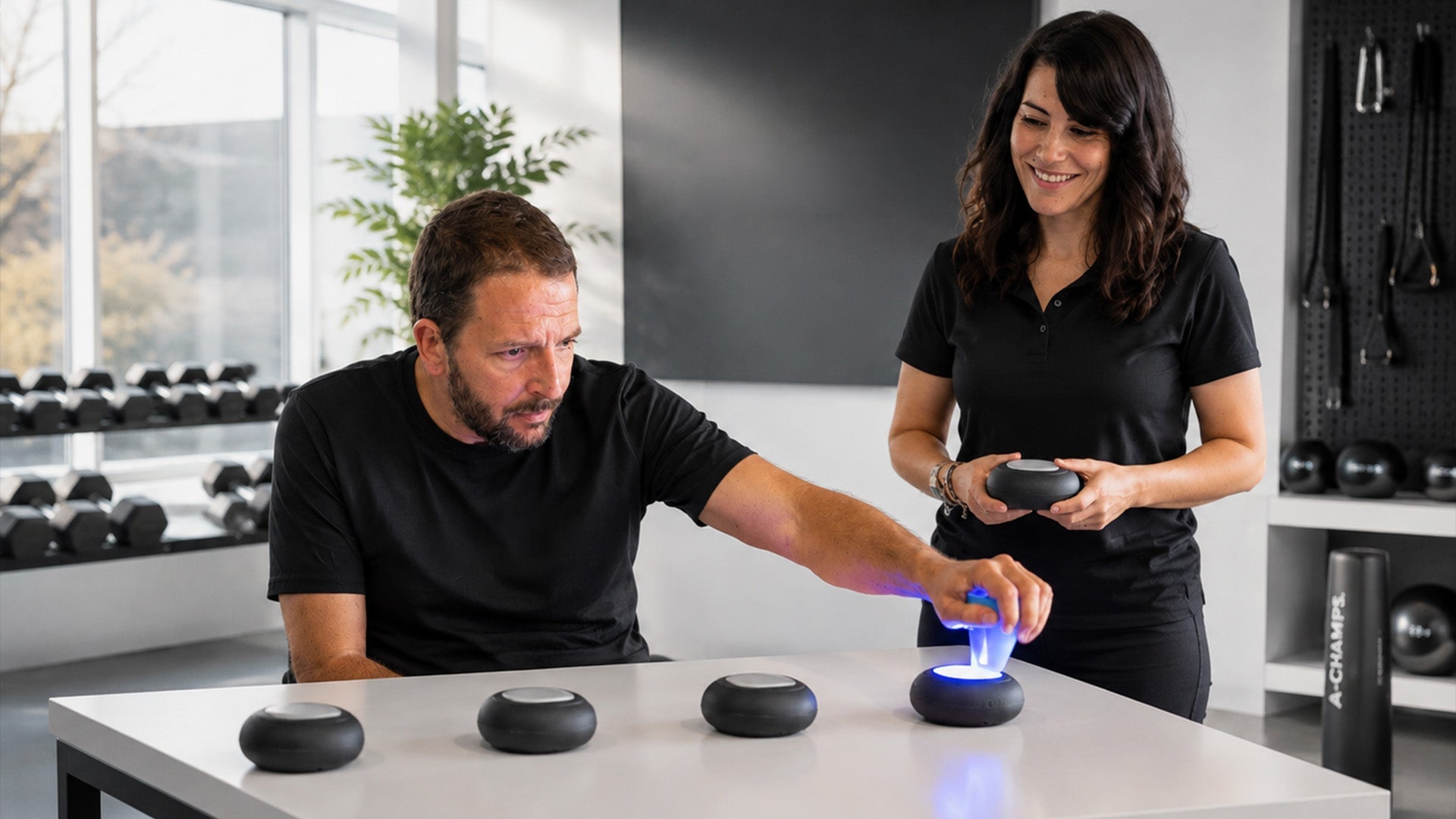
Many drills train your athletes or clients to respond quickly to a simple signal. A light turns on. They touch it. The system records a time. That can be useful. It can create focus, engagement, and a clear cue-response task.
But real performance is rarely that clean.
In sport, your athletes do not just react to one signal. They read the opponent, scan the space, process pressure, choose between options, and move with timing and control. In rehabilitation or return-to-function work, your clients do not simply repeat a movement. They rebuild confidence, balance, coordination, adaptability, and control under changing conditions.
Reaction training has value. But when it stays isolated, predictable, and tap-based, it only trains part of the performance problem.
The next step is not faster tapping.
The next step is better Reactive Intelligence.
Reaction Training Has Value - But It Has Limits
Reaction training is not wrong.
Simple cue-response tasks can help you create focus. They can make drills more engaging. They can give your athletes or clients a clear cue, a clear response, and useful task-specific feedback.
That has a place.
The problem starts when reaction training is treated as the complete answer.
A fast response to a simple cue is not the same as a good decision under pressure. Touching a target quickly is not the same as moving effectively in a sport, clinic, gym, or real-world environment. A drill can produce fast numbers while still missing the complexity your athlete or client is preparing for.
The question is not:
How fast can someone touch the signal?
The better question is:
What are you training them to perceive, decide, and do?
That question changes the entire training design.

Real Performance Starts Before the Reaction
Real performance does not begin with movement.
It begins with information.
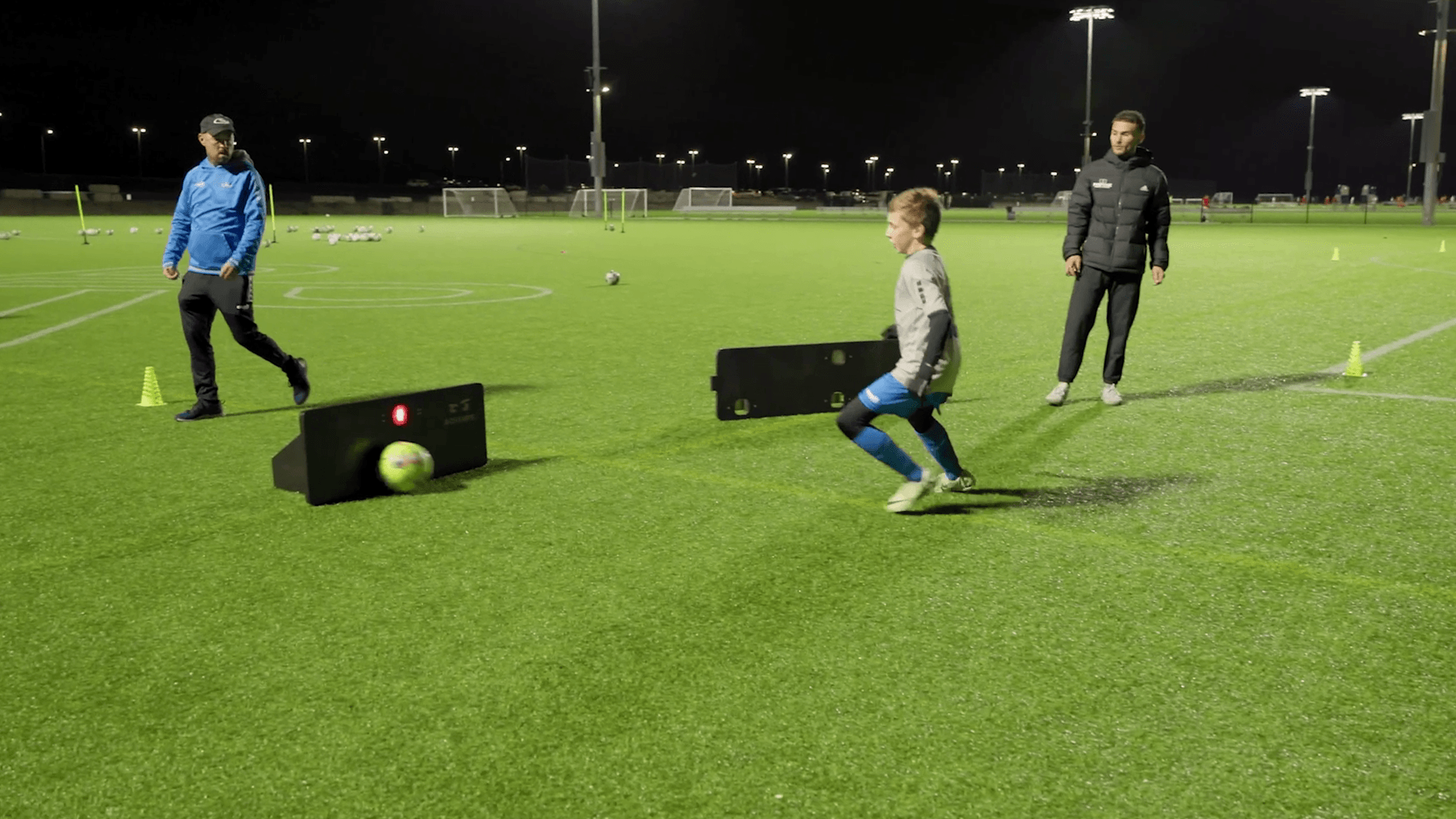
Your soccer player scans before receiving the ball. Your tennis player reads the opponent and the ball flight before moving. Your basketball player reacts to spacing, pressure, and timing. Your rehab client must respond to changes in balance, body position, task demand, and confidence.
The body moves, but movement quality is shaped by what the person perceives and decides first.
That is why A-Champs explains Reactive Intelligence through a simple public model:
Perceive → Decide → Move
Perceive means reading the cue, environment, opponent, space, body position, or task.
Decide means processing that information, filtering distractions, and selecting the right response.
Move means executing with timing, control, balance, and adaptability.
Traditional reaction training often focuses mainly on the final response. But the quality of that response depends on the stages before it. If your athlete reads the wrong cue, chooses the wrong action, or moves without control, speed alone is not enough.
Real performance is not just reaction time.
It is the connection between perception, decision-making, and movement.
The Problem With Tap-First Training
Many reaction-light drills reward your athlete for getting to a target and touching it as fast as possible.
That can be useful for simple stimulus-response work. But it can also create a narrow training behavior: chase the light, tap the target, repeat.
The issue is not the light.
The issue is the task design.
If every drill ends with the same basic response, your athlete may become better at the drill without training the broader movement qualities that matter in sport or performance environments.
In real sport, your athletes often need to accelerate, decelerate, change direction, scan, inhibit a movement, choose between options, maintain balance, or execute a sport-specific action. In rehabilitation, your goal may be controlled stepping, reaching, shifting, stabilizing, or progressing toward more adaptable movement.
That is different from simply touching a target.
A fast tap can be measured.
A meaningful movement response must be coached.
That is where your professional role matters.
You Design the Task
Modern reaction training should not be device-led.
It should be professional-led.
You define the goal. You design the task. You decide which movement matters, which cue matters, which level of complexity is appropriate, and how your athlete or client should progress.
The system should support that process, not replace it.
This is one of the most important differences between basic reaction drills and Professional Cognitive-Motor Training.
Professional Cognitive-Motor Training connects:
-
sensory input;
-
attention;
-
decision-making;
-
movement;
-
feedback;
-
progression.
The goal is not to make drills more random. The goal is to create controlled complexity.
You can start with a simple cue-response task, then add decision-making. You can begin with a controlled movement, then add balance, timing, or visual-cognitive demand. You can move from predictable drills toward more representative movement tasks involving pressure, scanning, and direction changes.
The system matters.
But you remain the decision-maker.
From Reaction Time to Perceive → Decide → Move
Traditional reaction training often asks:
How fast did the athlete respond?
Professional Cognitive-Motor Training asks a broader set of questions.
What did your athlete perceive?
Did they read the correct cue? Did they scan early enough? Did they notice the relevant information?
What did your athlete decide?
Did they choose the right action? Did they filter distraction? Did they respond to the correct rule or situation?
How did your athlete move?
Did they accelerate with control? Decelerate effectively? Change direction with balance? Reach, stabilize, or reposition with purpose?
This does not make reaction time irrelevant.
It places reaction time inside a more complete training loop.
Speed matters. But speed without perception, decision-making, and movement quality is incomplete.
That is why A-Champs uses reaction training as an entry point, not the final definition of the brand.
The higher objective is Reactive Intelligence: the ability to perceive information, make decisions, and move effectively under changing conditions.

Why Movement Context Matters
The more representative the task demand, the more useful the training can become.
That does not mean every drill must look exactly like a game. It also does not mean every exercise must be complex from the beginning.
Good training progresses.
You may begin with a simple cue. Then add direction. Then add a choice. Then add time pressure. Then add fatigue. Then add a sport-specific action.
In rehab or return-to-function work, you may begin with a controlled reach or step. Then add visual cueing. Then add balance demand. Then add dual-task control. Then add more variable movement.
The point is not chaos.
The point is progression.
Traditional reaction drills often stop at the cue-response level. Professional Cognitive-Motor Training gives you more room to progress the task toward the real demands your athlete or client is preparing for.
This matters because real movement happens under changing conditions.
Your athlete must adapt.
Your client must adapt.
Your training task should prepare them for that reality.
Better Training Connects Cue, Decision, Movement, Feedback, and Progression
A stronger reaction training environment does not just flash a signal.
It helps you connect the full task:
Cue → Decision → Movement → Feedback → Progression
The cue gives your athlete or client information.
The decision forces them to interpret that information.
The movement turns the decision into action.
The feedback shows what happened.
The progression allows you to increase difficulty over time.
This is the difference between adding technology to a drill and building a professional training system.
Technology alone does not create better training.
Better task design does.
A-Champs is built around that idea.
The purpose of the system is not to make people chase lights. The purpose is to help you create structured, multisensory cueing and feedback tasks that connect perception, decision-making, movement, coaching, and progression.
How A-Champs Supports Decisions in Motion
A-Champs is not positioned as a basic reaction-light system.
A-Champs develops professional Cognitive-Motor Training systems for coaches, performance trainers, neuro-athletic professionals, rehabilitation specialists, academies, clubs, schools, and high-performance environments.
The methodology comes first.
The products make the methodology practical.
ROXProX Laser is the flagship A-Champs system for advanced Professional Cognitive-Motor Training. It combines visual, auditory, and tactile cueing with laser-beam sensing, LED matrix cognition, seamless movement, and advanced task design.
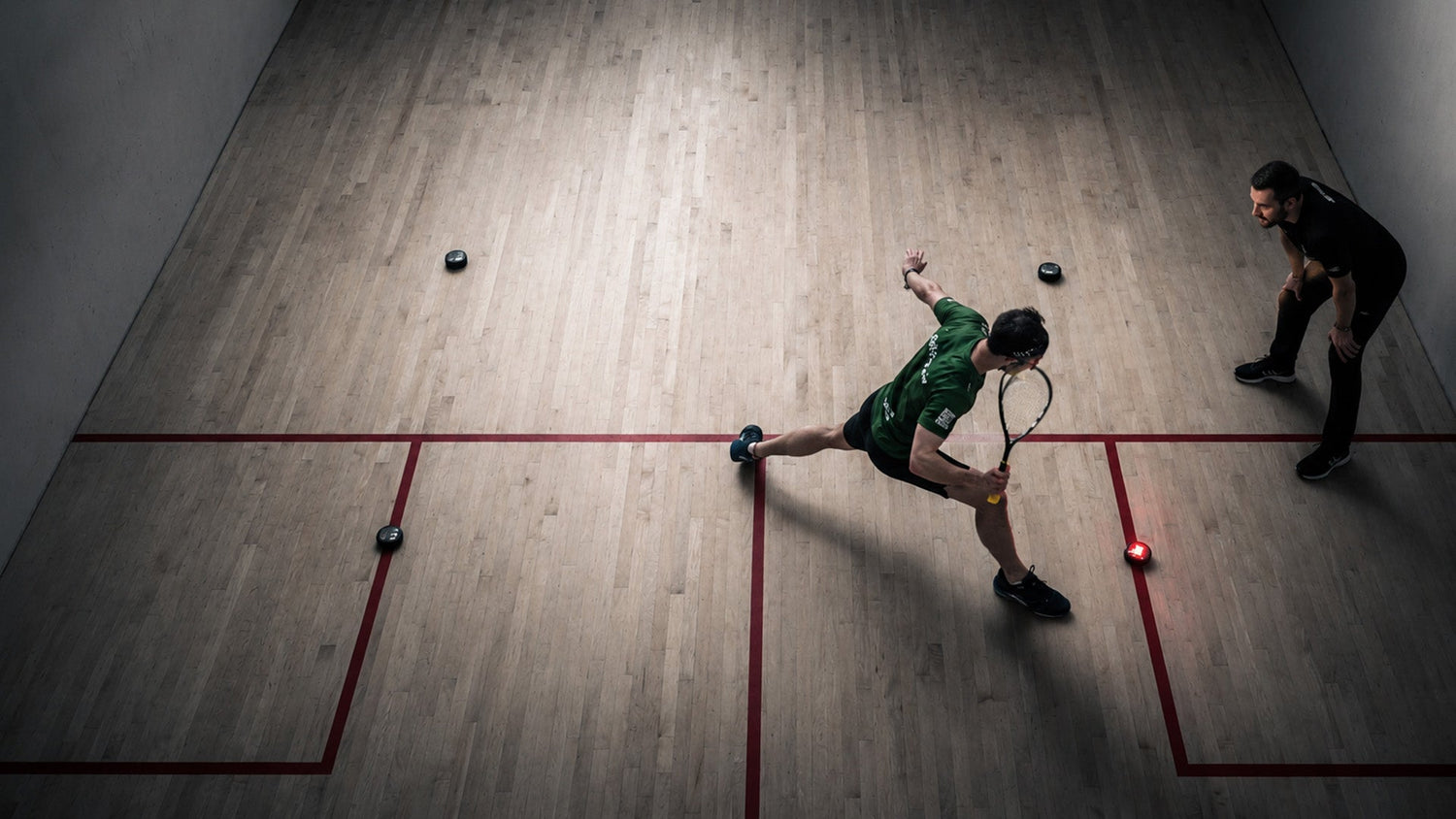
You can use lights, sound, vibration, symbols, numbers, letters, movement rules, and laser-based interaction to create tasks that challenge perception, decision-making, movement, feedback, and progression without forcing tap-first responses.
That matters because many professional tasks require decisions in motion.
Your athlete may need to sprint through a zone, change direction, react to a symbol, scan before moving, or respond to a rule. Your client may need to step, reach, shift, stabilize, or complete a controlled movement while responding to changing information.
ROXProX Laser gives you more freedom to design those tasks.
ROX Touch, CogniCage, and accessories extend the ecosystem for different environments and use cases. But the principle stays the same:
A-Champs helps you train the connection between information and action.

What to Look for in Modern Reaction Training Equipment
When you evaluate reaction training equipment, the question should not only be:
Does it measure speed?
The better question is:
Can it support better task design?
A professional system should help you:
-
train perception, not only response speed;
-
include decision-making;
-
preserve natural movement;
-
progress from simple to complex tasks;
-
use visual, auditory, and tactile cues where relevant;
-
adapt drills to different athletes, clients, and environments;
-
support movement quality, not just target contact;
-
provide feedback that helps you coach the next repetition.
The goal is not to make drills look more technological.
The goal is to make training more representative, more adaptable, and more professionally useful.
A reaction-light tool can create a signal.
A professional Cognitive-Motor Training system helps you turn that signal into a better training task.
The Future Is Not Faster Tapping
Traditional reaction training is a useful entry point.
But it is not enough when your goal is performance under pressure, movement adaptability, return-to-function progression, or professional training design.
Real performance requires more than a fast response to a simple cue.
It requires the ability to:
Perceive what matters.
Decide what to do.
Move with timing, control, and adaptability.
That is Reactive Intelligence.
A-Champs helps you move beyond tap-first reaction training and build Professional Cognitive-Motor Training tasks that connect cue, decision, movement, feedback, and progression.
The future of reaction training is not just faster tapping.
It is better decisions in motion.