

Rehabilitation tip: A-Champs interactive physical therapy equipment brings cognitive-motor training like the ROXProX protocol below into clinics and home recovery programs.
The RECOVER project, conducted by the Faculty of Human Kinetics – University of Lisbon and LABMOV (Laboratory of Human Movement Learning and Control), used the ROXProX system from A-Champs to assess and enhance post-COVID rehabilitation through cognitive-motor training. The study shows promising results on how smart equipment like ROXProX can optimize physical and neurological recovery in just 12 weeks.

Study Design: ROXProX in Cognitive-Motor Assessment
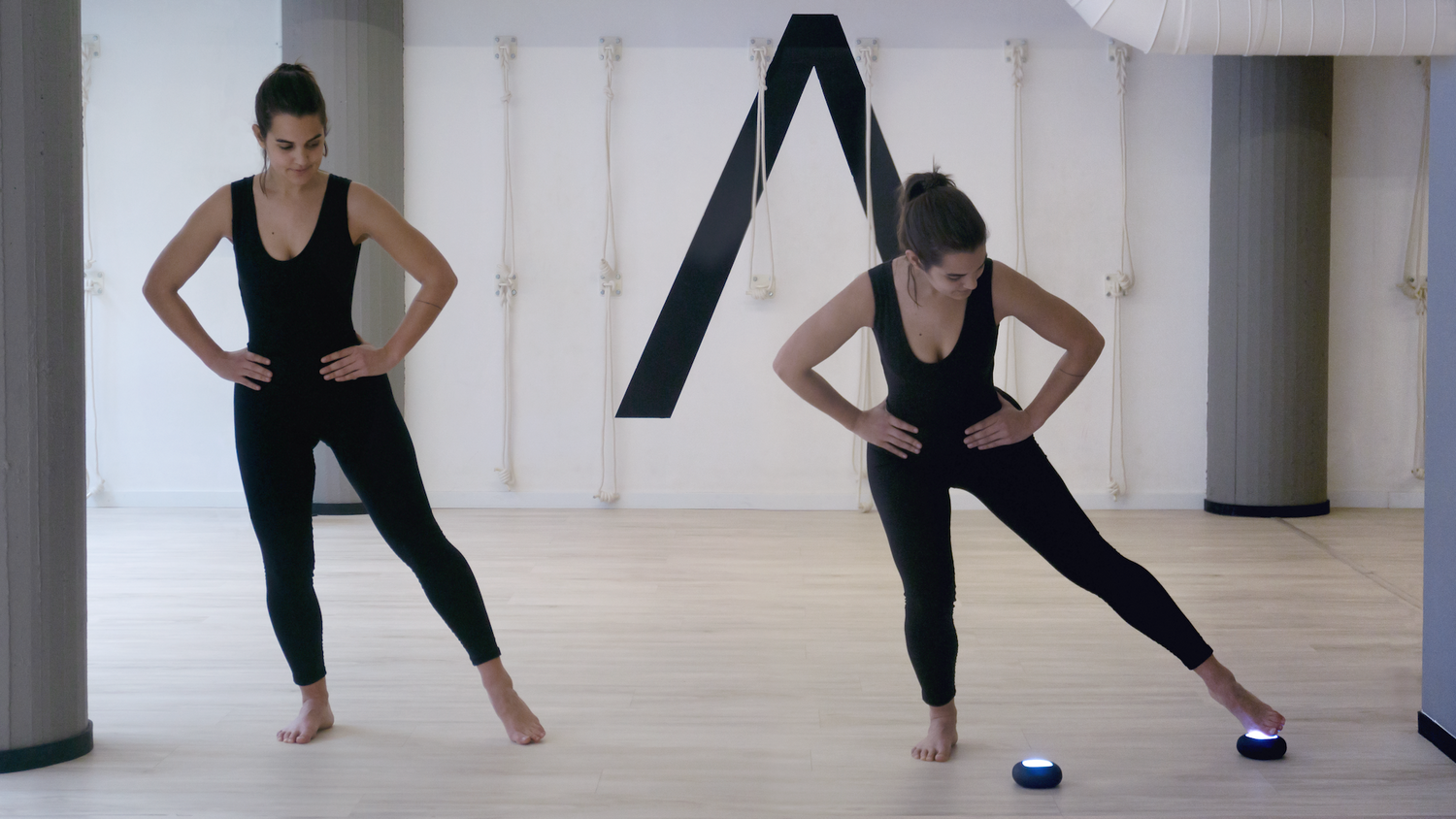
The ROXProX system was used to evaluate reaction speed, balance, and cognitive multitasking. Participants performed tasks on both stable and unstable surfaces using ROX pods, responding to visual stimuli under various decision-making scenarios.
- Task 1: React to one specific color (blue)
- Task 2: React only to blue while ignoring red (cognitive inhibition)
Each task was tested under two conditions:
- Stable floor surface
- Unstable AIREX® balance pad
Participant Overview
- 45 patients contacted
- 19 completed baseline testing
- 12 completed full 12-week intervention
The Training Program
The 12-week multicomponent exercise protocol included:
- 1 supervised gym session per week
- 2 unsupervised home sessions (aerobic and resistance training)
- ROXProX sessions with visual/cognitive reaction tasks
Bring cognitive-motor rehab to your clinic. The ROXProX pairs balance and reaction tasks the way this protocol does, with measurable progress for every patient.
Explore the full interactive physical therapy equipment range for rehab and recovery.
Key Outcomes & Results
- Average reaction times improved in 3 out of 4 testing conditions after the 12-week program.
- Condition C2 (decision-making on a stable surface) showed the greatest improvement with a mean reaction time decrease of 20 milliseconds (from 0.674s to 0.654s).
- Standard deviations decreased across all conditions except C1, indicating more consistent performance among participants after the intervention.
- The median reaction time improved in all conditions except C1, suggesting a general upward shift in baseline cognitive-motor response.
What This Means for Recovery
The study proves that smart rehabilitation using ROXProX not only improves physical balance and agility but also enhances executive brain function. These results are especially critical for post-COVID patients experiencing fatigue, brain fog, and neuromuscular impairments.
Scientific Implications
This project highlights how multisensory, interactive training can help improve attention, selective focus, and the integration of movement and cognition. ROXProX drills require users to interpret light and color stimuli while maintaining postural control, which replicates real-world motor and neurological challenges.
Next Steps
The research team at LABMOV recommends continued use of ROXProX in future post-viral rehabilitation studies, geriatric balance protocols, and neurological recovery programs. Its ability to engage the brain and body makes it a powerful tool for modern physiotherapy and movement science.
Learn More About the ROX System
FAQs
Who conducted the RECOVER study using ROXProX?
The study was conducted by LABMOV at the Faculty of Human Kinetics – University of Lisbon, coordinated by Dr. Carolina Vila-Chã.
What does the ROXProX test measure?
ROXProX evaluates multitasking ability, cognitive flexibility, selective attention, and static balance using interactive light and sound cues.
Why is cognitive training important for post-COVID recovery?
Post-COVID patients often experience cognitive delays and reduced coordination. ROXProX helps restore neuromotor control through targeted cognitive tasks.
How long did the participants train?
Participants completed a 12-week protocol with weekly supervised training and twice-weekly unsupervised exercises supported by ROX drills.
Can ROXProX be used in other rehab settings?
Yes. ROXProX is adaptable for neurological rehab, senior balance training, post-injury protocols, and cognitive-motor enhancement in athletic populations.
Related reading: Building the nervous system back after injury, the science of neuroplasticity in ROX training, and Smart Return to Play framework.
📚 This guide is part of the Rehab & Recovery Hub. Explore all our related guides and drills in one place.