
Rehabilitation does not stop at repeating the movement.
Controlled exercises matter. Strength, range of motion, balance, coordination, and confidence all matter. In early stages, clean repetition can be exactly what your client or patient needs.
But real life is rarely clean.
Your client may need to step off a curb, react to a sound, reach while maintaining balance, turn in a crowded space, carry an object, scan the environment, or return to sport-specific situations where timing and decisions matter.
That is why rehabilitation cannot rely only on isolated movement repetition.
At some point, your task design needs to connect what the person perceives, what they decide, and how they move.
That is where Cognitive-Motor Training becomes relevant for rehabilitation.
Cognitive-Motor Training for Rehabilitation should not be presented as a clinical promise, a shortcut to faster recovery, an injury-prevention claim, or an automatic return-to-play improvement.
It is a professional methodology that helps qualified professionals design structured tasks involving cueing, decision-making, movement, feedback, and progression.
The goal is not to make rehabilitation more complicated.
The goal is to help you progress from controlled movement toward more adaptable movement under changing conditions.

Rehabilitation Needs Control First - But Not Control Only
Early rehabilitation often requires control.
You may need to reduce complexity, limit speed, manage load, protect movement quality, and give the person a clear task they can complete with confidence.
That is appropriate.
A controlled environment helps you teach the movement, observe compensation, build trust, and create a starting point for progression.
The problem starts when controlled movement becomes the final target.
In daily life, work, sport, and active environments, people rarely move with perfect predictability. They respond to changing information. They adjust to surfaces, sounds, obstacles, people, timing, fatigue, and attention demands.
A step is not always just a step.
A reach is not always just a reach.
A balance task is not always just a balance task.
The real question is not only:
Can your client perform the movement in a controlled setting?
The stronger question is:
Can they adapt that movement when the task changes?
That question changes the rehabilitation design.
What Cognitive-Motor Training Means in Rehabilitation
Cognitive-Motor Training in rehabilitation means designing tasks where movement is connected to information, decision-making, feedback, and progression.
It is not brain training separated from the body.
It is not random lights added to an exercise.
It is not entertainment replacing clinical judgment.
It is a way to help you create movement tasks where the person must perceive information, decide what matters, and move with control.
A cognitive-motor rehabilitation task may include:
-
a visual cue that guides a step, reach, turn, or weight shift;
-
an auditory cue that changes timing or attention;
-
a tactile cue that directs awareness or movement control;
-
a rule that requires the person to choose between responses;
-
a dual-task demand that adds cognitive load carefully;
-
feedback that helps you adjust the next repetition;
-
a progression from predictable to less predictable conditions.
The key is professional intent.
You are not adding cues because they look modern.
You are adding the right cue, decision, movement, and feedback because the task needs to prepare the person for a more adaptable movement demand.
Perceive → Decide → Move in Rehabilitation
A-Champs explains Reactive Intelligence through a simple public model:
Perceive → Decide → Move
Perceive means reading the cue, body position, environment, space, task, or change in demand.
Decide means processing that information, filtering distraction, and choosing the appropriate response.
Move means executing with timing, balance, control, coordination, and adaptability.
In rehabilitation, this loop can be applied carefully and progressively.
Your client may perceive a visual cue before stepping.
They may decide whether to reach, stabilize, shift weight, or change direction.
They may move with control while you observe timing, alignment, confidence, balance, and task quality.
Feedback then helps you decide what comes next.
That may mean simplifying the task, repeating it, changing the cue, adding a decision, increasing movement variability, or progressing toward a more representative situation.
This is why the expanded training-development loop matters:
Perceive → Decide → Move → Feedback → Progression
Processing is not removed. It sits inside the Decide stage. The point is to keep the public model clear while still giving you a practical progression structure.
From Repetition to Adaptability
Repetition is necessary.
But repetition alone does not always prepare someone for changing conditions.
Your client may need to repeat a movement many times before it becomes reliable. Then you may need to change the task so they learn to adapt.
That progression might look like:
-
Start with a controlled movement.
-
Add one clear cue.
-
Add a simple decision.
-
Add timing or direction.
-
Add balance, posture, or coordination demand.
-
Add feedback and adjust the next repetition.
-
Progress toward a more representative real-world or return-to-sport-style task.
This does not mean rushing complexity.
It means progressing the task with purpose.
Sometimes the right decision is to keep the task simple. Sometimes the right decision is to add a cue. Sometimes the right decision is to increase variability, reduce predictability, or bring the task closer to the real environment the person is preparing for.
That is professional rehabilitation design.
Complexity is not the goal.
Adaptability is the goal.
Cueing and Feedback Must Be Used Precisely
In rehabilitation, cueing and feedback are not the same thing.
Cues guide what the person should notice, decide, or do.
Feedback helps you and the person understand what happened and how the task should progress.
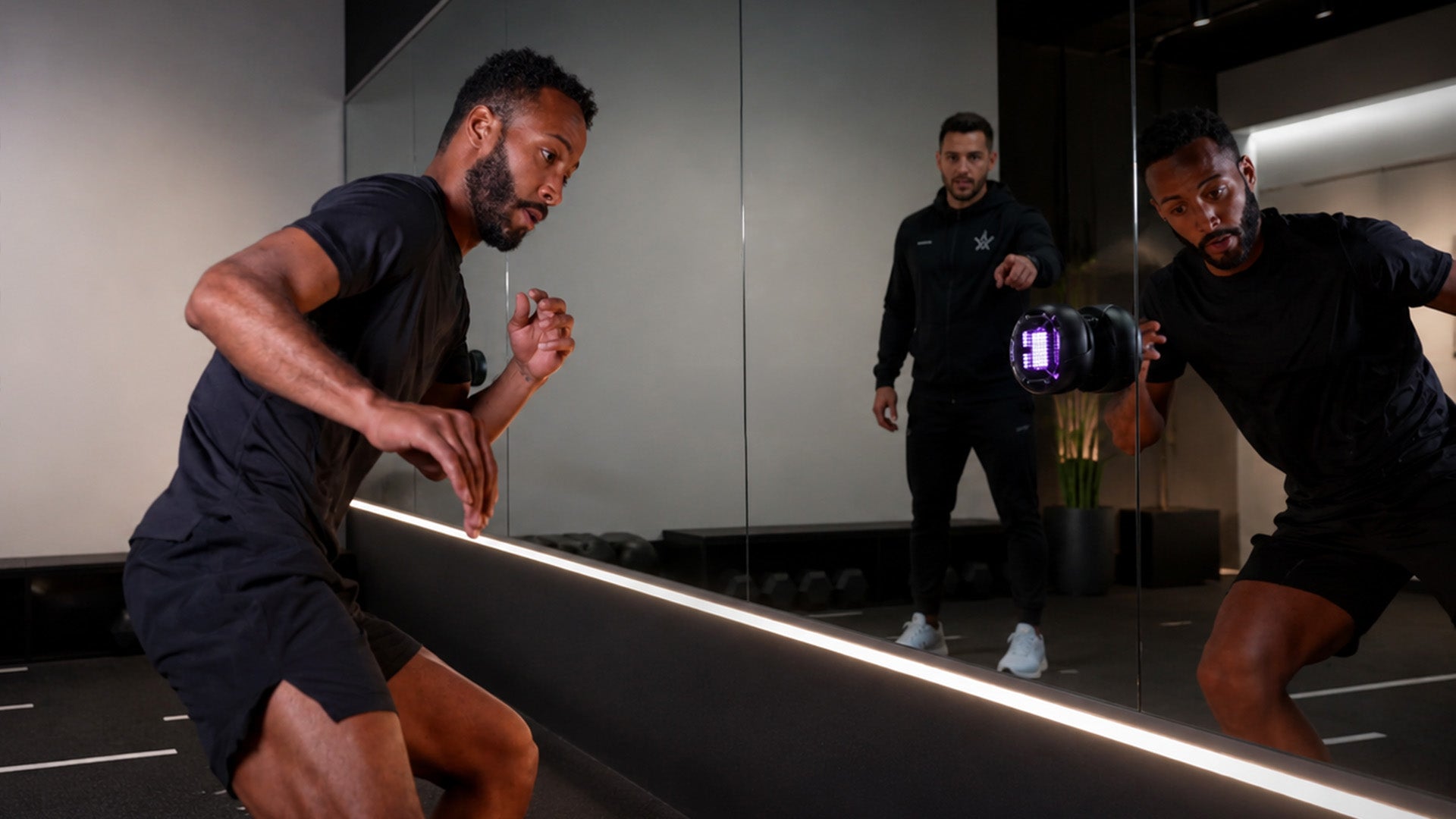
Visual, auditory, and tactile cues can help shape a movement task. A light may guide attention. A sound may change timing. Vibration may direct awareness or, in selected contexts, return information about the task.
Feedback may come from your observation, task outcome, app data, timing, scores, movement quality, or the person’s own experience.
The best umbrella language is multisensory cueing and feedback.
When shorter wording is needed, multisensory cueing is usually enough.
This distinction protects the quality of the work. It keeps A-Champs away from vague “multisensory feedback” language when the signal is actually guiding the task rather than returning information after the response.
Why This Matters for Return-to-Function
Return-to-function is not only about whether someone can complete a movement once.
It is about whether they can manage movement demands in more realistic conditions.
Your client may need to:
-
step while reacting to a cue;
-
reach while maintaining balance;
-
turn while scanning the environment;
-
adjust to timing changes;
-
move while attention is divided;
-
respond to a sound or visual signal;
-
control posture while making a decision;
-
build confidence under gradually changing conditions.
These are not guaranteed outcomes.
They are training targets that qualified professionals may address through structured cognitive-motor tasks.
These tasks should not be presented as preventing injury, accelerating recovery, treating conditions, or replacing your assessment.
The practical value is stronger and more credible:
A-Champs helps qualified professionals create structured, engaging, cognitive-motor rehabilitation tasks that connect cueing, decision-making, movement, feedback, and progression.
Why This Matters for Return-to-Sport
Return-to-sport introduces another layer of complexity.
Sport does not ask athletes only to move correctly. It asks them to move while reading pressure, space, timing, teammates, opponents, cues, and changing rules.
That does not mean you should make rehabilitation look like sport too early.
It means your progression may eventually need to include sport-relevant perception, decision-making, and movement demands.
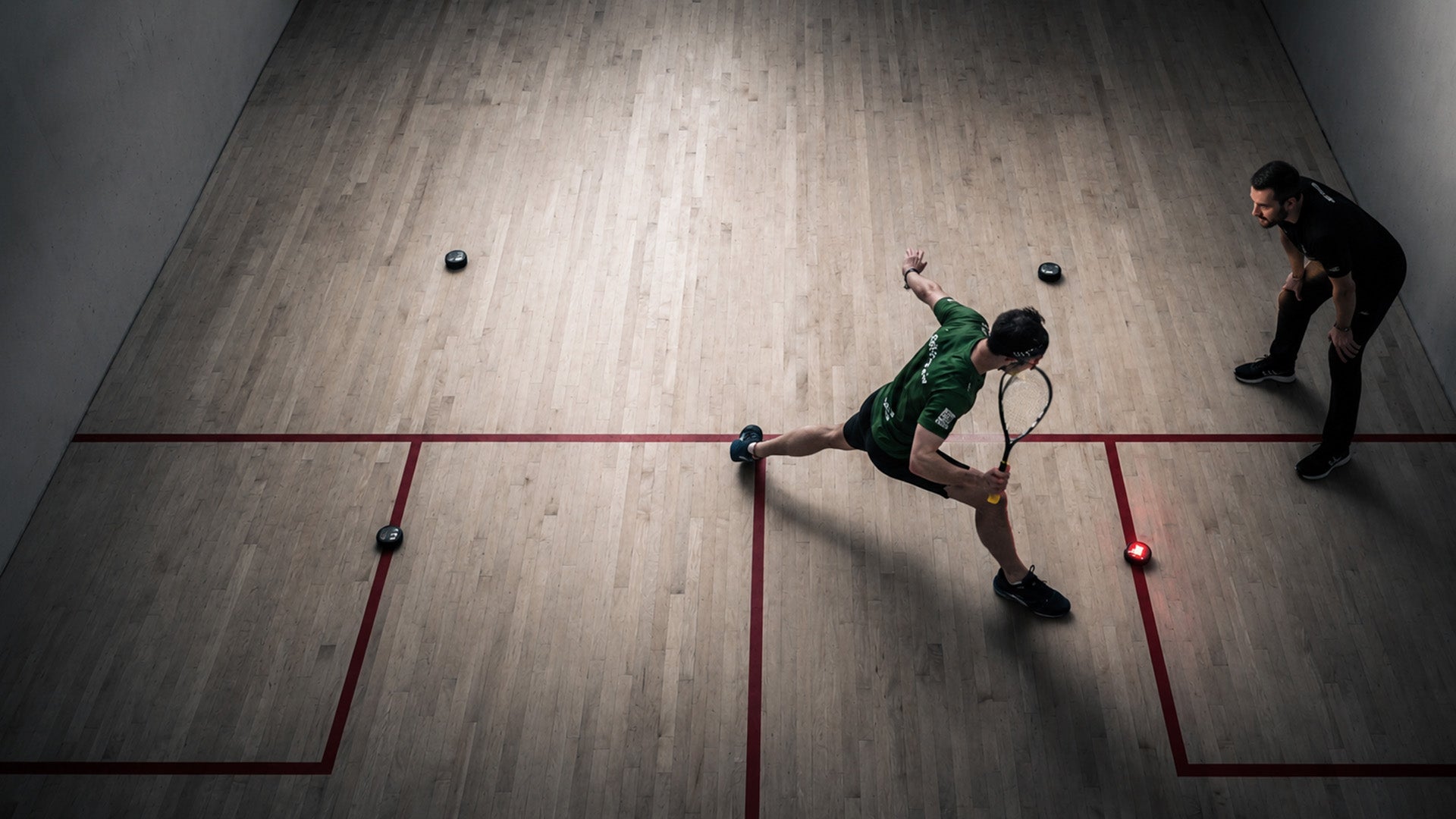
For example, you may progress from a controlled step to a cued step, then to a directional choice, then to a timed response, then to a more representative sport-specific movement.
The purpose is not to guarantee game transfer.
The purpose is to help you prepare the athlete for more relevant task demands under professional control.
That is where A-Champs fits in rehabilitation: professional task design, not clinical promises.
The Professional Remains the Decision-Maker
Technology can provide cues.
Technology can record timing.
Technology can create variability.
Technology can support feedback and progression.
But you remain the decision-maker.
You define the rehabilitation objective.
You decide what the person should perceive.
You decide what decision the task should create.
You choose the movement response.
You observe movement quality.
You interpret feedback.
You progress or simplify the task.
A-Champs supports that process. It does not replace your clinical reasoning, coaching judgment, or professional assessment.
That standard keeps you in control of the rehabilitation process.
How A-Champs Supports Cognitive-Motor Rehabilitation Tasks
The methodology comes first.
The products make it practical.
A-Champs helps qualified professionals build rehabilitation and return-to-function tasks that connect cueing, decision-making, movement, feedback, and progression inside a structured training environment.
ROXProX Laser is the flagship A-Champs system for advanced Professional Cognitive-Motor Training. It combines visual, auditory, and tactile cueing with laser-beam sensing, LED matrix cognition, seamless movement, and advanced task design. Professionals can use lights, sound, vibration, symbols, numbers, letters, movement rules, and laser-based interaction to create tasks that challenge perception, decision-making, movement, feedback, and progression without forcing tap-first responses.
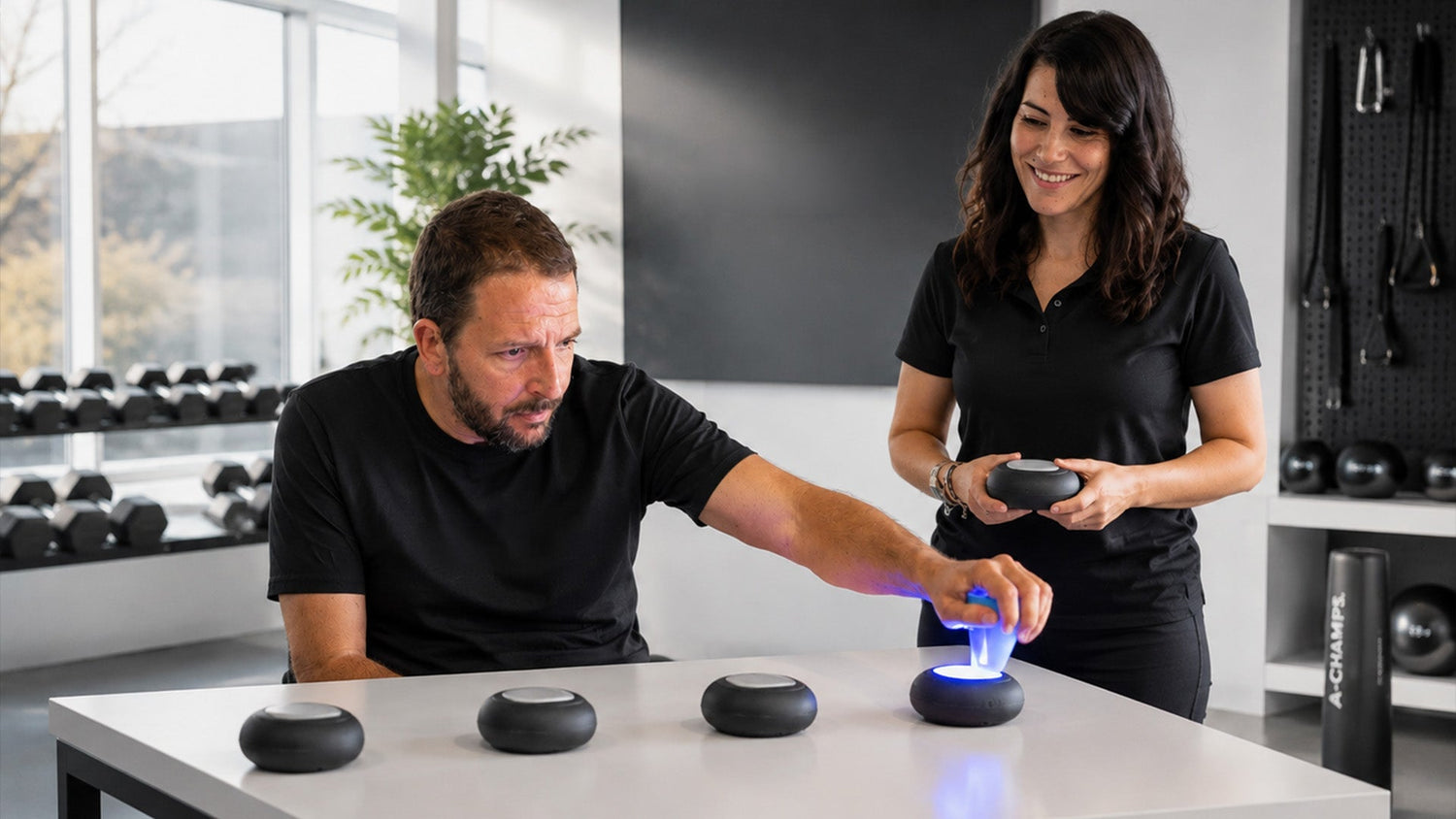
ROX Touch is the professional entry point into the A-Champs ecosystem. It supports accessible cognitive-motor tasks through visual, auditory, and tactile cueing, with 12 sensitivity levels that allow professionals to adjust the interaction to the user, the task, and the training environment.
CogniCage expands the methodology into an immersive facility-level environment. It supports whole-body cognitive-motor tasks involving space, movement, scanning, reaching, stepping, balance, coordination, and 360° interaction.
The hierarchy matters.
ROXProX Laser remains the flagship proof of the methodology. ROX Touch, CogniCage, and accessories extend the ecosystem without replacing the flagship story.
The product is not the clinical answer.
The professional task design is the answer.
The product gives you more ways to apply that task design.

What Responsible Rehabilitation Training Requires
Cognitive-Motor Training for Rehabilitation is valuable when it helps you design better tasks - not when it promises outcomes for you.
A-Champs is designed to support qualified professionals as they create structured tasks involving multisensory cueing and feedback, decision-making, movement, and progression.
You decide when the task is appropriate. You define the objective. You observe the response. You interpret the feedback. You progress the challenge based on your client’s needs, your assessment, and the training context.
That keeps the work professional: evidence-informed task design, guided by your judgment, adapted to your client, and progressed with discipline.
It respects the complexity of rehabilitation.
It respects the role of the practitioner.
It keeps the training process credible, professional, and appropriate for rehabilitation.
What Professionals Should Ask Before Adding Cognitive-Motor Demands
Before adding cues, decisions, or complexity to a rehabilitation task, ask:
-
What is the rehabilitation objective?
-
What should your client perceive?
-
What decision should they make?
-
What movement should follow?
-
Is the task appropriate for their current level?
-
Does this cue make the task clearer or just more complex?
-
What feedback will help you coach the next repetition?
-
Should the task be simplified, repeated, or progressed?
-
What real-world or return-to-sport demand is this task preparing for?
-
Is this improving task relevance, or just adding noise?
These questions keep the work professional.
They prevent cognitive-motor training from becoming random activity.
They also make the A-Champs role clear:
You design the rehabilitation progression. A-Champs supports the environment.

From Controlled Movement to Real-World Adaptability
Rehabilitation often starts with control.
But many clients and athletes are preparing for environments that are less controlled.
They need to perceive information, make decisions, and move with timing, balance, confidence, and adaptability.
That is why Cognitive-Motor Training matters in rehabilitation.
It helps you move from isolated repetition toward more relevant task demands.
It helps you connect:
Perceive → Decide → Move → Feedback → Progression
A-Champs gives qualified professionals a system to design and progress these tasks through Professional Cognitive-Motor Training.
The objective is Reactive Intelligence.
Not clinical promises.
Not random complexity.
Better movement decisions under changing conditions.