

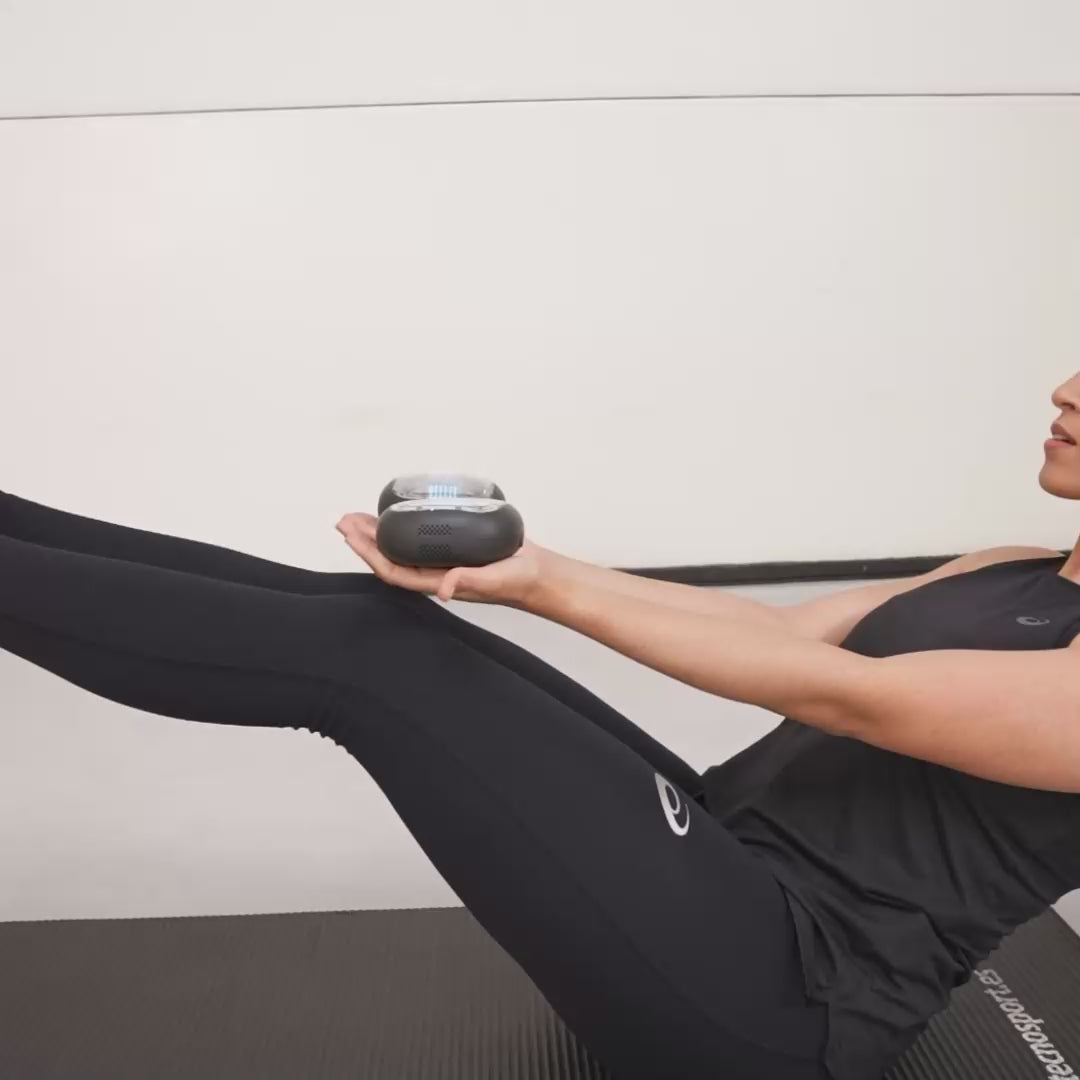
Create adaptive rehabilitation tasks that connect perception, decision-making, and controlled movement — while you remain in control.
Perceive
Decide
Act
Repetition Matters. Predictability Has Limits.

Keep Attention in the Task

Train Movement in Context

Progress With Purpose
Add a Decision to the Movement.
Turn familiar exercises into Professional Cognitive-Motor Training tasks. The patient perceives a cue, decides what it means, and moves with timing and control.
Choose the Task. Guide the Response. Progress the Session.
Use an existing exercise, adapt the setup, or create your own task around the rehabilitation goal.

Choose or Create
Select an exercise, define the rule, and set the movement demand.

Guide the Response
Coach the patient through Perceive → Decide → Move.

Use Feedback to Progress
Review returned information and adjust difficulty, timing, or movement demand.

Make Rehabilitation More Engaging, Adaptive, and Measurable.
You control the goal and progression. A-Champs gives you more ways to shape the task.
Purposeful Engagement
Keep the patient attentive and involved without making the session feel like a game.
Movement Relevance
Use returned task information to review, adjust, and progress the session.
Clinic Differentiation
Create a modern professional experience built around task quality, not novelty.
Build More Than Tap-Light Rehabilitation Tasks.

More Than Visual Tapping
More Than Visual Tapping
Movement Without Forced Contact
Add Cueing and Feedback to Balance and Body-Control Tasks.
A therapist can combine a cue, a response rule, controlled movement, and returned information inside one structured task.
Therapist-Guided Design
You set the goal, rule, movement demand, and progression.

Tactile Cueing in Context
A vibration can signal the required response during a selected task.

Controlled Progression
Adjust cue type, timing, decision demand, or movement complexity.

Use A-Champs Across Rehabilitation Contexts.
One Methodology. Multiple Rehabilitation Setups.

ROXProX Laser

ROX Touch

CogniCage

Accessories

App, Exercise Content, and Training Data
The Therapist Stays in Control.
You define the rehabilitation goal.
You select the task.
You guide the movement.
You adjust the progression.
A-Champs helps you make that work more interactive, adaptive, and repeatable. It does not diagnose, treat, or replace clinical judgment.
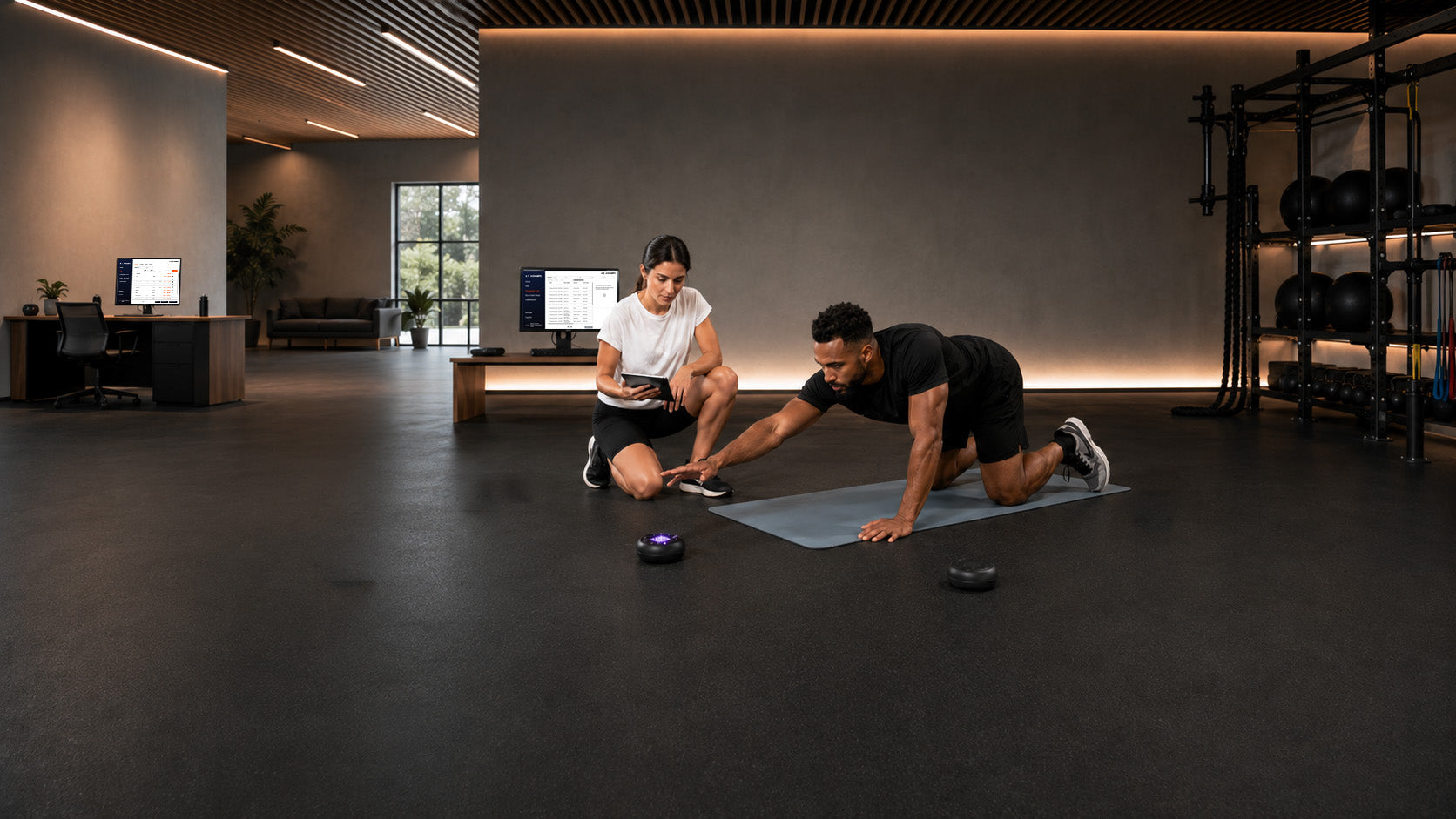
Create therapist-led tasks that connect perception, decisions, movement, and progression — inside a system built for professional workflow.
Core day-to-day training is included with every A-Champs system.
Choose exercises, create tasks, adapt setups, and progress sessions.
You remain responsible for the goal, judgment, and progression.

Rehabilitation
-
A-Champs is a professional Cognitive-Motor Training ecosystem. It helps therapists create structured tasks that connect perception, decisions, movement, cueing, feedback, and progression.
-
Qualified professionals can use A-Champs to design therapist-led tasks for physical therapy, return-to-function, and performance-rehabilitation contexts. You define the goal and control the progression.
-
No. A-Champs does not diagnose, treat, cure, prevent injury, or replace professional assessment. It supports task design within a qualified professional's rehabilitation process.
-
Basic systems often focus on visual tapping. A-Champs supports broader task design through multisensory cueing, natural movement, laser sensing, LED matrix cognition, decision rules, feedback, and progression.
-
ROXProX Laser is the flagship for advanced decision-based tasks, natural movement, laser sensing, and LED matrix cognition. ROX Touch is the professional entry point for visual, auditory, and tactile cueing with 12 sensitivity levels. CogniCage is designed for facility-level environments.
-
Yes. The professional workflow supports exercise content, task setup, custom task creation, and progression. You can start with an exercise, adapt it, or create your own.
-
No. Core professional day-to-day training is included. Optional subscriptions may support dashboards, analytics, reporting, organization or team management, partner tools, and enterprise capabilities.