

Ready to pick one? See our guide to the best soccer rebounder for solo and team training.
A soccer rebounder is one of the most effective tools for developing technical skills on your own. Think of it as a training partner that never gets tired—returning the ball at unpredictable angles and speeds to keep you sharp and reactive.
From improving your first touch and passing accuracy to practicing shooting and quick turns, a rebounder helps you simulate game situations with consistent, high-repetition training. Unlike a wall, a rebounder is portable and purpose-built to provide both ground and aerial returns, allowing for more variety and intensity in your sessions.

1. Pass and Control Drills
Strengthen your first touch, coordination, and ball mastery.
- Perform two-touch and one-touch passes from varying distances
- Use both feet to trap and control the return ball
- Add directional control before passing again
- Practice receiving lofted returns with your thigh or foot
- Focus on weak foot reps for balanced development
2. Pass and Turn Drills
Train the ability to receive under pressure and turn quickly.
- Pass into the rebounder, control the ball, and turn sharply
- Experiment with different types of turns: inside foot, outside foot, half-turns, and drag-backs
- Use cones or markers to simulate defenders and turn into space
- Alternate feet and turn directions to improve balance and awareness
- Add a quick dribble or sprint after the turn to mimic match play

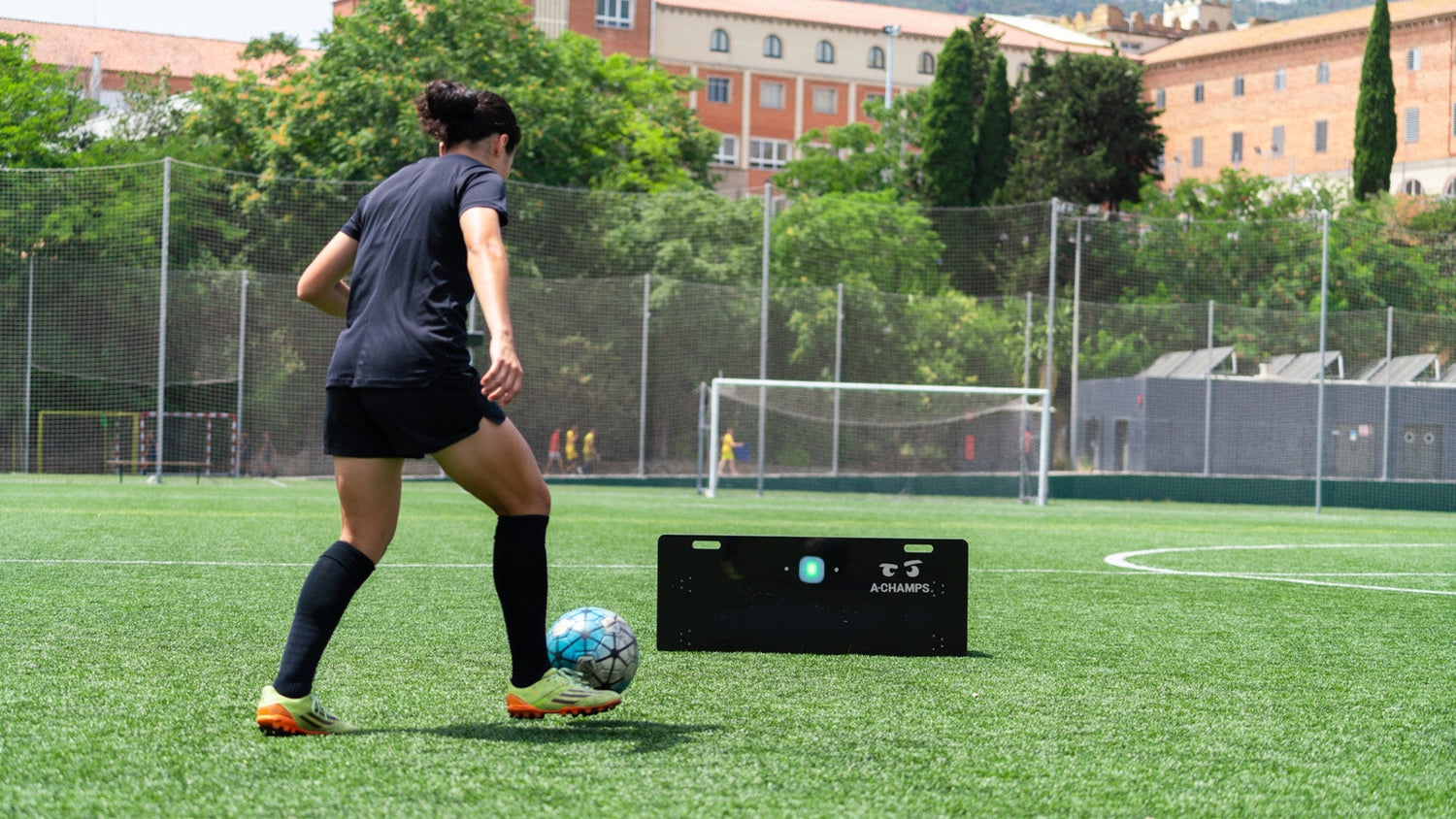
Your tireless training partner. The RebounderGo returns the ball at unpredictable angles so you can rep first touch, passing and finishing solo.
Browse the full soccer training equipment range to build your home setup.
3. Pass and Finish Drills
Improve your ability to control, set up, and shoot with precision.
- Place the rebounder between you and the goal, pass, control the return, and shoot
- Vary the rebounder's position to practice shooting from different angles
- Use one-touch finishes when possible to simulate fast-paced scenarios
- Aim for specific targets using cones or markers to boost shot accuracy
- Switch between dominant and non-dominant foot to stay unpredictable
- Add movement before receiving to simulate match fatigue and timing
Final Tips
- Consistency is key. Frequent, focused training delivers the biggest gains.
- Work at high intensity. Push yourself to react quickly and stay sharp.
- Vary your drills. Mixing different actions improves adaptability and keeps training fun.
- Use both feet. A well-rounded player can control, pass, and finish under pressure with either foot.
Whether you're looking to refine your first touch, build composure in front of goal, or become more agile in possession, a soccer rebounder is one of the most versatile pieces of soccer training equipment you can use. It offers the freedom and flexibility to train on your terms—anywhere, anytime.
Frequently Asked Questions
What’s the difference between a soccer goal and a rebounder?
A soccer goal is used for finishing drills and scoring, while a rebounder returns the ball at various angles and speeds for technical skill development such as passing, control, and reaction time.
Can I use a wall instead of a rebounder?
Yes, but a purpose-built rebounder is portable and designed to offer more realistic bounces and variable returns, which makes it more versatile and effective than a fixed surface.
How often should I train with a rebounder?
Short, focused sessions—3 to 5 times a week—can be very effective. Even 20-minute drills done consistently will yield noticeable improvements.
Is a rebounder good for all positions?
Yes. Whether you play as a defender, midfielder, or striker, ball control, turning under pressure, and quick decision-making are essential skills that a rebounder helps develop.
Related reading: Best soccer training equipment and What equipment you should get for soccer.
📚 This guide is part of the Training Equipment Hub. Explore all our related guides and drills in one place.