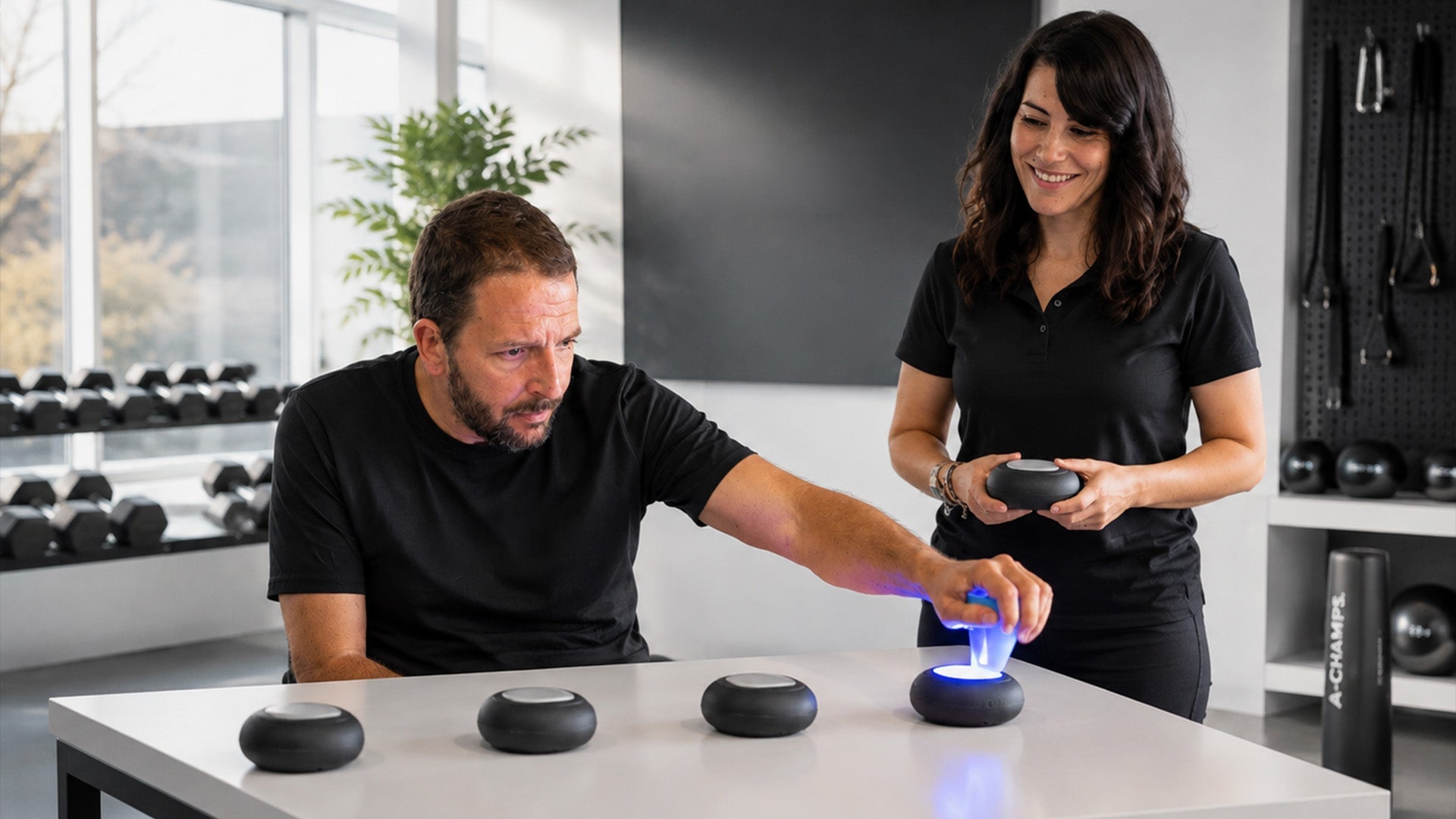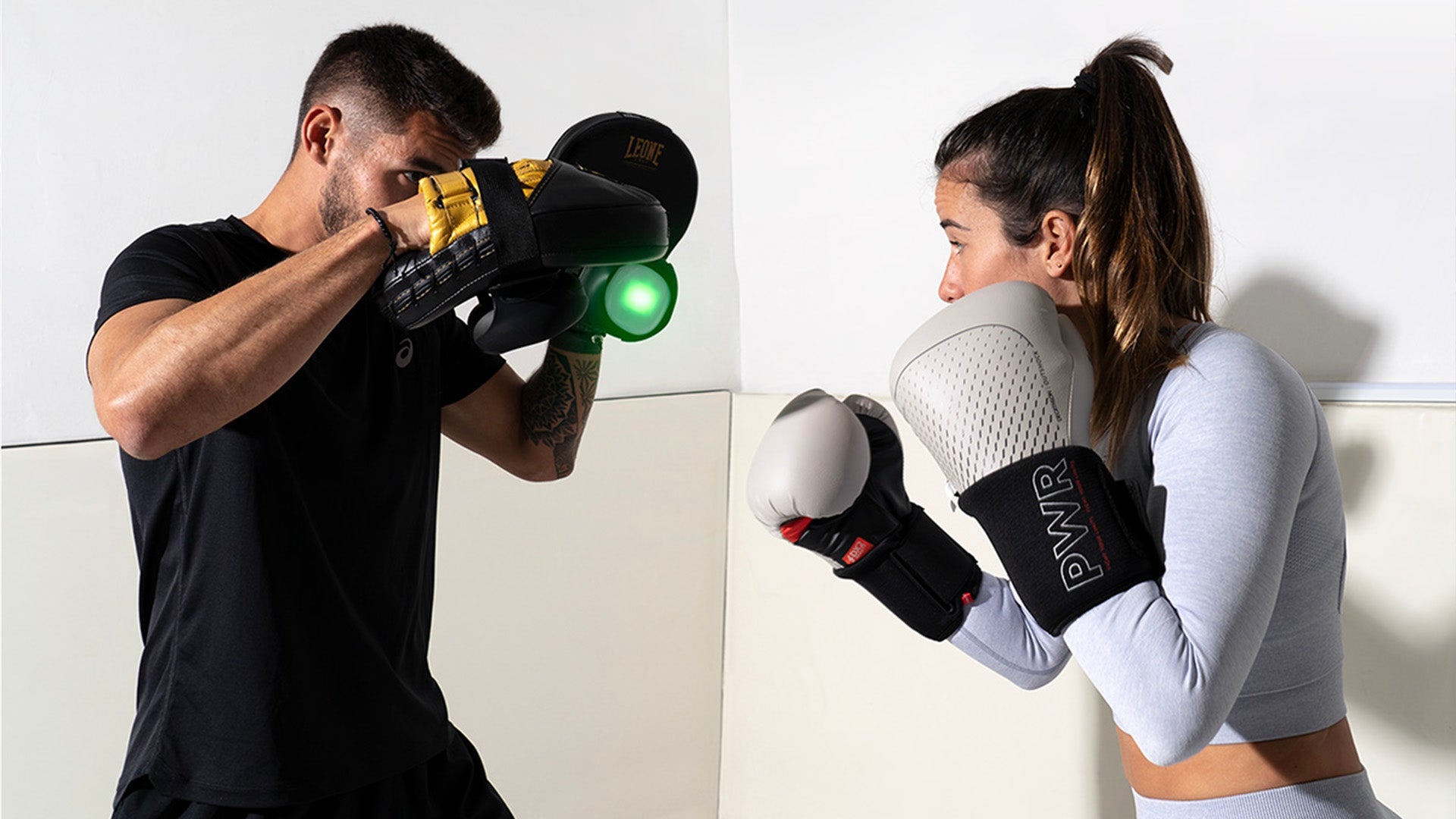

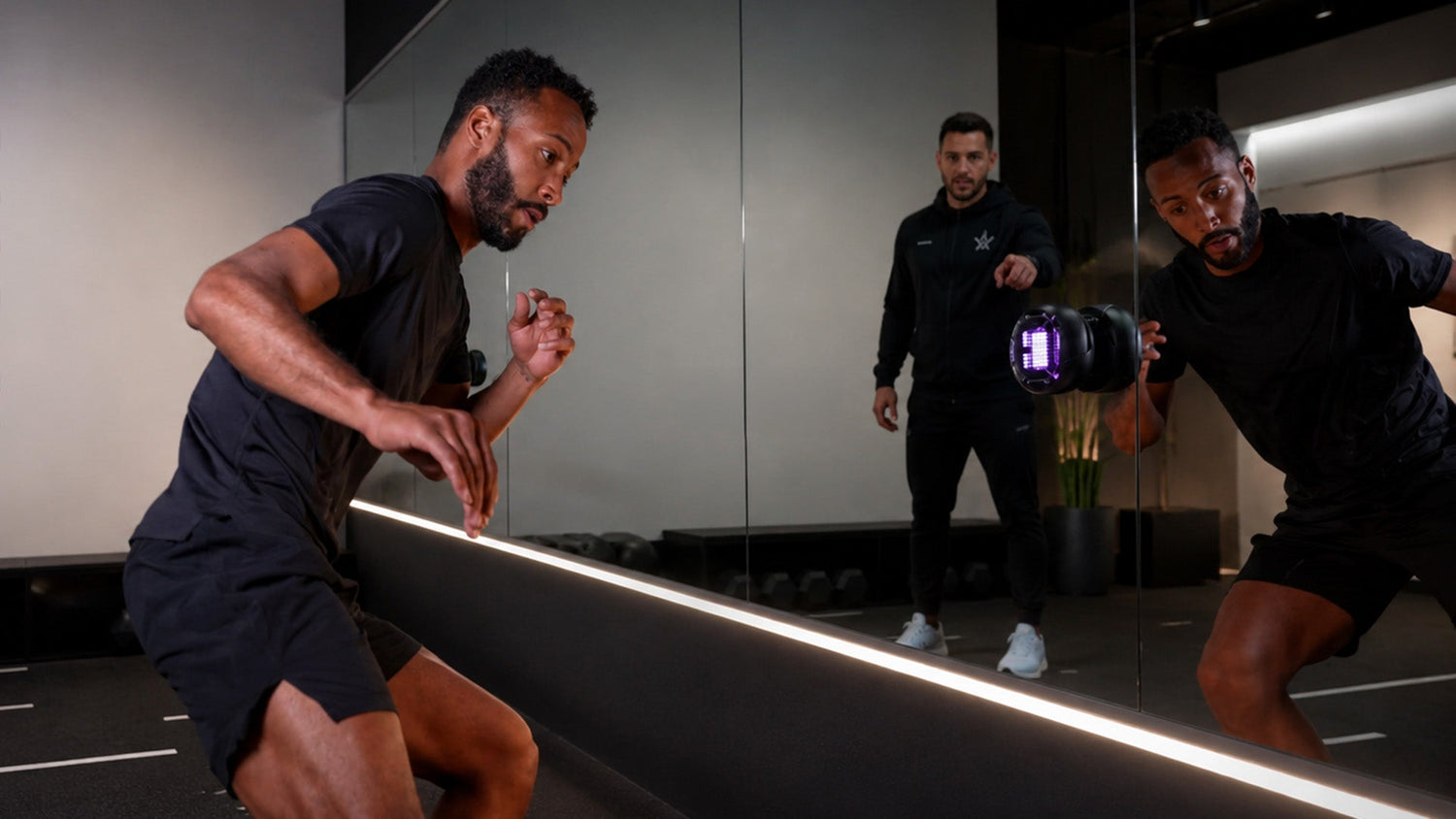
A cue can make a drill faster.
A better cue can make the task more meaningful.
That is the difference.
In professional training, the goal is not to add more lights, more sounds, or more signals for effect. The goal is to help the athlete, client, or patient notice the right information, make the right decision, and move with purpose.
This is where multisensory cueing matters.
For A-Champs, multisensory cueing is not a feature story. It is part of professional task design. Visual, auditory, and tactile cues give coaches, therapists, and trainers more ways to shape the challenge, adjust the difficulty, and progress cognitive-motor tasks based on the person, the objective, and the training context.
The cue is not the goal.
The task is the goal.
Movement Tasks Need the Right Cues
Every training task gives the athlete or client information.
A coach gives an instruction.
A therapist changes the setup.
A light appears.
A sound signals a change.
A tactile cue directs attention.
A symbol, number, or color changes the decision.
The question is not simply:
How many cues can we add?
The better question is:
Which cue helps create the right task?
A performance coach may want an athlete to scan, choose a direction, and accelerate. A neuro-athletic professional may want to combine visual attention, balance, coordination, and movement control. A therapist may want a client to progress from a controlled exercise toward more adaptable real-world movement.
The cue should serve that objective.
This is why A-Champs should not be understood as a reaction-light system. The stronger role is professional Cognitive-Motor Training: helping qualified professionals create tasks that connect perception, decision-making, movement, feedback, and progression.
What Multisensory Cueing Means
Multisensory cueing uses more than one type of signal to guide what a person perceives, decides, or does during a training task.
That can include:
-
visual cues such as lights, colors, numbers, symbols, or spatial targets;
-
auditory cues such as sounds, timing signals, or rule changes;
-
tactile cues such as vibration used to guide attention or movement control;
-
professional instructions from the coach, trainer, or therapist;
-
task rules that define what the athlete or client should do next.
The value is not in the cue alone.
The value is in how the professional uses the cue.
A visual cue can be simple: move left when the light appears.
It can also become more complex: respond only to a specific color, symbol, number, or sequence.
An auditory cue can signal start, stop, rhythm, timing, or a change in rule.
A tactile cue can direct attention without relying only on vision.
This gives the professional more options to match the task to the person’s skill level and the objective of the exercise.
Cues Guide the Task. Feedback Helps Progress It.
Cues and feedback play different roles in training.
Cues help shape the task.
A visual signal can guide attention. An auditory cue can change timing. A tactile cue can direct awareness or movement control.
Feedback helps the professional and the athlete or client understand what happened.
That feedback may come from the coach, therapist, task result, app data, timing, score, or - in selected tasks - tactile vibration.
The important point is not the terminology itself.
The important point is task design.
Professionals need to decide which cue is useful, what decision it should create, what movement should follow, and what feedback will help progress the next repetition.
That is why the most accurate umbrella term is:
multisensory cueing and feedback.
When shorter language is needed, multisensory cueing is usually enough.
How Cueing Supports Perceive → Decide → Move
A-Champs explains Reactive Intelligence through a simple public model:
Perceive → Decide → Move
Perceive means reading the cue, environment, space, body position, opponent, or task.
Decide means processing that information, filtering distractions, and choosing the right response.
Move means executing with timing, control, balance, and adaptability.
Multisensory cueing gives professionals more ways to shape this loop.
A coach can use a visual cue to create a direction change.
A trainer can use a symbol or number to add decision-making.
A therapist can use tactile cueing to guide awareness during a controlled movement.
A neuro-athletic professional can combine visual, auditory, tactile, balance, and coordination demands inside one progressive task.
The cue creates the challenge.
The athlete or client interprets it.
The movement becomes the response.
This is different from simply reacting to a signal. It is training the relationship between perception, decision-making, and movement.
The public A-Champs model should stay consistent as Perceive → Decide → Move, with processing included inside the Decide stage.

Controlled Complexity, Not More Noise
More cues do not automatically create better training.
A task can become louder, brighter, and more complicated without becoming more useful.
Good cueing creates controlled complexity.
That means the professional decides which demand to increase and why.
For example, the professional may adjust:
-
the number of cue options;
-
the type of cue;
-
the timing of the cue;
-
the movement response;
-
the balance demand;
-
the decision rule;
-
the speed of execution;
-
the amount of feedback;
-
the progression from simple to complex.
This is where multisensory cueing becomes valuable.
It allows the coach, therapist, or trainer to build a task that matches the current level of the athlete or client and then progress it with more precision.
The purpose is not randomness.
The purpose is progression.
Why This Matters in Performance Training
In performance training, athletes often look good in closed drills but struggle when the situation changes.
They may be fast in a straight line but late to read pressure.
They may move well in a planned drill but hesitate when they need to choose.
They may react quickly to one signal but struggle when the task includes scanning, timing, space, and decision-making.
Multisensory cueing helps performance coaches build tasks where the athlete must do more than move fast.
The athlete may need to:
-
scan before moving;
-
respond to a color, number, or symbol;
-
choose between directions;
-
accelerate or decelerate;
-
react under time pressure;
-
execute a sport-specific movement;
-
adjust to a changing rule.
The goal is not to guarantee sport transfer.
The goal is to make the training task more representative of the type of perception, decision-making, and movement demands the athlete faces in sport.
That is the stronger A-Champs lane: not isolated tapping, but professional task design for decisions in motion.
Why This Matters in Neuro-Athletic Training
In neuro-athletic training, the starting point is often different.
The professional may focus on sensory input, brain-body integration, balance, coordination, timing, attention, and movement control.
Here, cueing must be precise.
Visual cues may guide attention or recognition.
Auditory cues may support rhythm, timing, or attention shifts.
Tactile cues may guide awareness or control.
Movement tasks may include balance, coordination, orientation, or controlled complexity.
A-Champs can support this work by giving neuro-athletic professionals a structured way to bring sensory and cognitive-motor demands into dynamic movement tasks.
The claim must stay disciplined.
A-Champs does not diagnose, treat, fix sensory systems, or guarantee nervous-system adaptation. It gives professionals a practical environment to design cognitive-motor tasks involving sensory cueing, decision-making, movement, feedback, and progression.
Why This Matters in Rehabilitation and Return-to-Function
In rehabilitation or return-to-function settings, the environment may be more controlled, but the goal often extends beyond the clinic.
Clients need to prepare for real-world movement demands:
stepping off a curb;
reacting to a sound;
adjusting to a change in balance;
navigating people around them;
or returning to sport-specific situations.
Qualified professionals can use cueing, movement tasks, and feedback to progress from controlled exercises toward more adaptable real-life movement.
This is where multisensory cueing can be useful.
A therapist may begin with a simple, controlled task. Then they may add a visual cue, a timing demand, a balance challenge, a dual-task element, or feedback that helps the client understand and adjust the movement.
The key is progression under professional judgment.
A-Champs should not be described as treating conditions, accelerating recovery, preventing injury, or replacing clinical assessment. The responsible claim is that A-Champs can help qualified professionals create structured cognitive-motor tasks involving cueing, movement, feedback, and progression.
How A-Champs Applies Cueing, Feedback, and Progression
The methodology comes first.
The products make it practical.
A-Champs helps professionals design tasks that combine cueing, decision-making, movement, feedback, and progression inside a structured training environment.
ROXProX Laser is the flagship A-Champs system for advanced Professional Cognitive-Motor Training. It combines visual, auditory, and tactile cueing with laser-beam sensing, LED matrix cognition, seamless movement, and advanced task design. Professionals can use lights, sound, vibration, symbols, numbers, letters, movement rules, and laser-based interaction to create tasks that challenge perception, decision-making, movement, feedback, and progression without forcing tap-first responses.

ROX Touch is the professional entry point into the A-Champs ecosystem. It supports accessible cognitive-motor tasks through visual, auditory, and tactile cueing, with 12 sensitivity levels that allow professionals to adjust the interaction to the user, the task, and the training environment.
CogniCage expands the methodology into an immersive facility-level environment where professionals can build whole-body cognitive-motor tasks involving space, movement, scanning, balance, reaching, jumping, landing, and coordination.
The product hierarchy matters.
A-Champs does not lead with features. The features exist to help professionals apply the methodology. ROXProX Laser remains the flagship proof of that methodology.
What Professionals Should Ask Before Adding a Cue
Before adding a cue, the professional should ask:
-
What is the objective of this exercise?
-
What should the athlete or client notice?
-
What decision should they make?
-
What movement should follow?
-
Is this cue appropriate for their current skill level?
-
Does the cue make the task clearer or just more complex?
-
What feedback will help me coach the next repetition?
-
How can this task progress over time?
These questions keep cueing professional.
They also protect the role of the coach, therapist, or trainer.
The system can provide cues and task data.
The professional designs the task.
The professional interprets the response.
The professional progresses the challenge.
Better Cues. Better Task Design.
Multisensory cueing is not about adding signals for the sake of it.
It is about giving professionals more ways to shape the task.
Better cues can help define what the athlete or client must notice.
Better cues can create more meaningful decisions.
Better cues can support movement tasks that match the person’s level and the objective of the exercise.
Feedback and task data can then help the professional adjust and progress the challenge.
That is the value.
A-Champs helps professionals use multisensory cueing and feedback inside Professional Cognitive-Motor Training tasks for Reactive Intelligence.
The goal is not more stimulation.
The goal is better task design - and better decisions in motion.