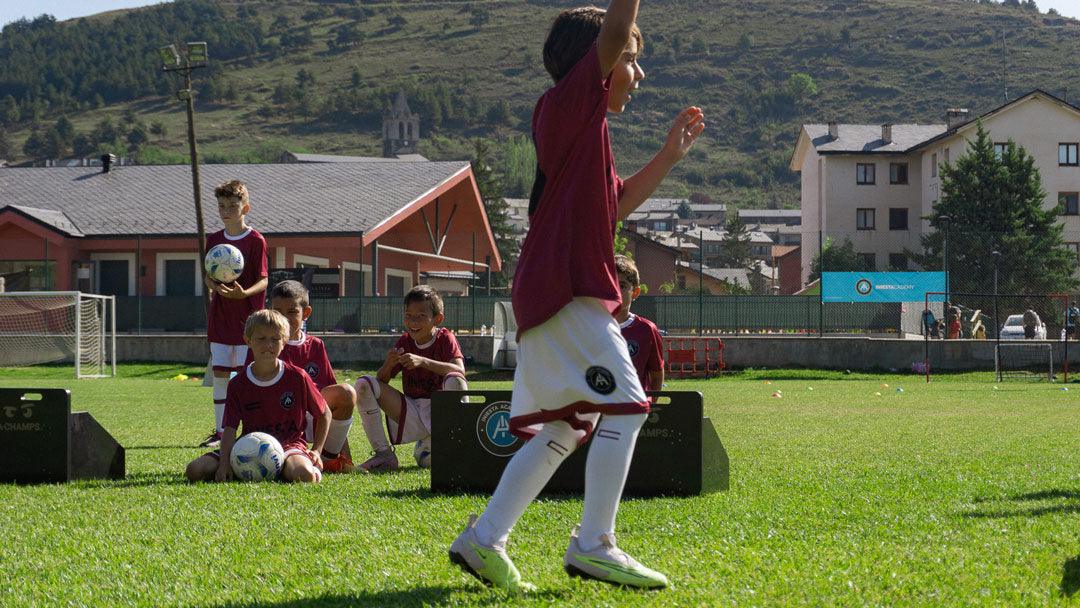

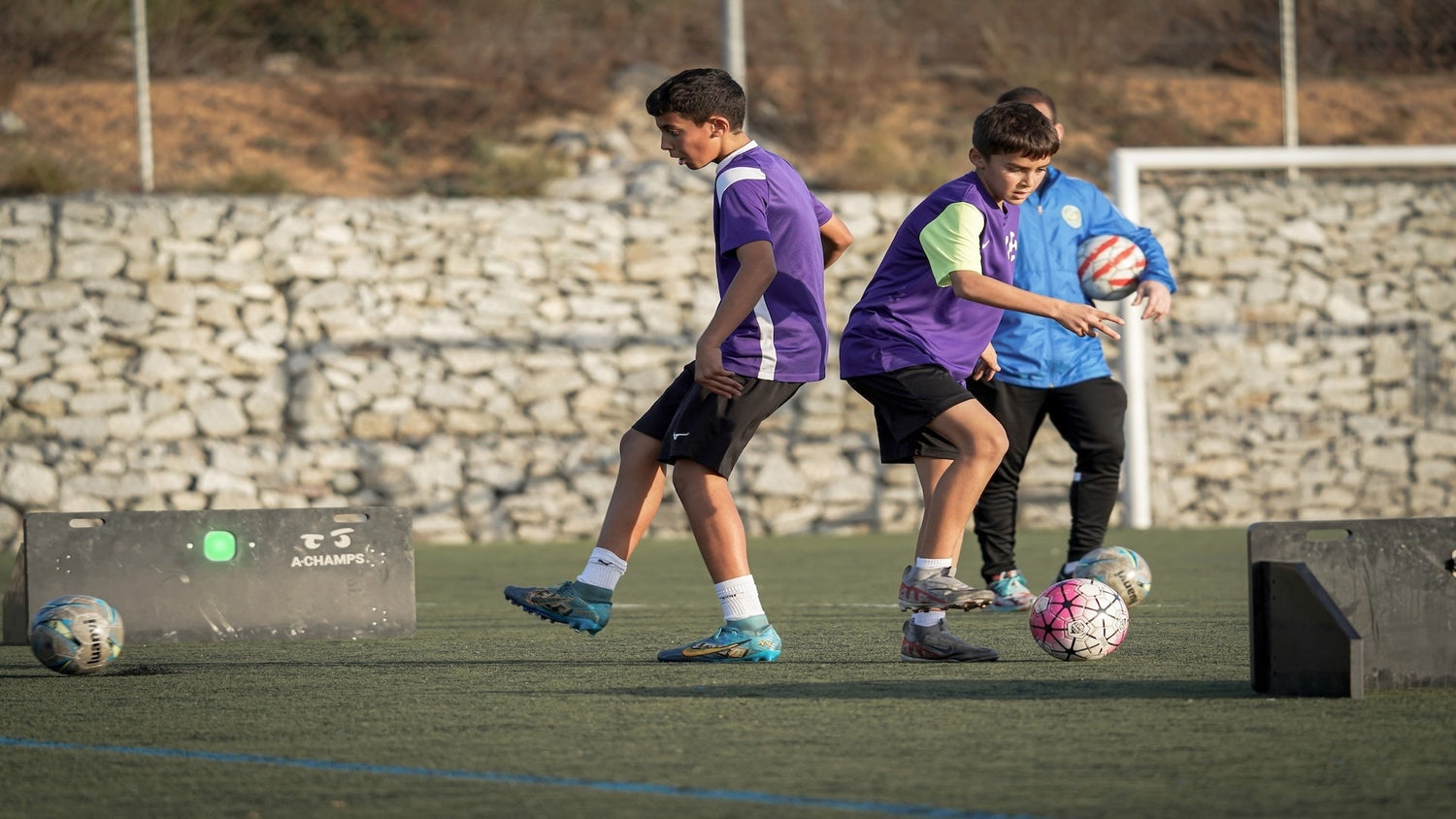

Train your scanning and soccer IQ with the A-Champs ROXProX: reactive light, sound and vibration cues reward players for keeping their head up and reading the field before the ball arrives.
In elite soccer, milliseconds and micro-decisions define performance. One of the most overlooked yet impactful cognitive skills is visual exploration frequency (VEF)—the rate at which players scan their surroundings before receiving the ball. A groundbreaking study by University of Konstanz researchers Ashwin Phatak and Markus Gruber analyzed this skill in 35 elite midfielders from the Euro 2016 championship. The findings revealed measurable links between scanning behaviors, passing accuracy, and turnover rates.

What Is Visual Exploration Frequency (VEF)?
VEF refers to how often a player turns their head or body to gather information from their environment prior to receiving the ball. In the study, VEF was broken down into:
- Scans: Head or body turns made away from the ball to observe the field
- Transition Scans: Visual scans made while the ball is en route to the player
- Total Scans: Combined total of both scans and transition scans
Study Design and Methodology
The study evaluated Euro 2016 midfielders who played at least 250 minutes. Researchers analyzed match footage and linked VEF data to performance metrics like pass completion and turnover rates. Scans per second were calculated during periods when teams were in possession of the ball.
Data was cross-referenced with match statistics from WhoScored.com and verified using interrater reliability testing. Regression models were applied to determine correlation between scan behaviors and performance outcomes.
Key Findings: More Scans = Better Passes
- Positive Correlation with Passing: Total scan rate was significantly correlated with higher pass completion (p = 0.015, R2 = 4.0%).
- Reduced Turnovers: Transition scan rate had a significant negative correlation with turnovers per minute (p = 0.023, R2 = 3.5%).
Interpreting the Impact of VEF on Soccer IQ
Even though the R2 values appear modest, in elite football where margins are razor-thin, a 3–4% improvement in passing or ball retention can define matches. Players who scan more frequently before receiving the ball make smarter passes and retain possession better under pressure.
Midfielders who excel at scanning can anticipate defensive movements, exploit space, and accelerate play tempo—key components of high soccer IQ.
Make scanning a measurable habit. The ROXProX rewards head-up scanning with reactive cues, building the visual-exploration frequency elite midfielders rely on.
Explore the full A-Champs training range to train soccer IQ.
VEF as a Training Tool for Cognitive Performance
The study suggests that VEF can be trained and integrated into modern performance development strategies. Incorporating scanning into drills helps players:
- Improve decision-making speed
- Reduce cognitive load during play
- Enhance spatial awareness
Conclusion: Train the Eyes, Elevate the Mind
The study underscores the value of visual scanning as a key indicator of soccer intelligence. It shows that developing a high VEF is linked to better passing and fewer turnovers—cornerstones of elite midfield play. With tools like A-Champs ROX, coaches can begin training VEF just like any other skill.
Related reading: How to Improve Soccer Scanning: Top Techniques and Drills, Understanding Scanning in Soccer, and How to Improve Soccer Decision-Making.
FAQs
What is VEF in soccer?
VEF stands for Visual Exploration Frequency. It measures how often a player scans their environment before receiving the ball.
Why are transition scans important?
Transition scans occur while the ball is en route. They’re linked to lower turnover rates, indicating better ball control and decision-making under pressure.
Can scanning improve passing accuracy?
Yes. The study showed a statistically significant correlation between higher scan rates and improved pass completion percentage.
How can VEF be trained?
VEF can be developed through drills that require players to scan before making decisions—often enhanced using tools like reaction lights or cognitive stimuli.
Where was the study conducted?
The research was conducted by Ashwin Phatak and Markus Gruber at the University of Konstanz in Germany.
📚 This guide is part of the Soccer Scanning Hub. Explore all our related guides and drills in one place.