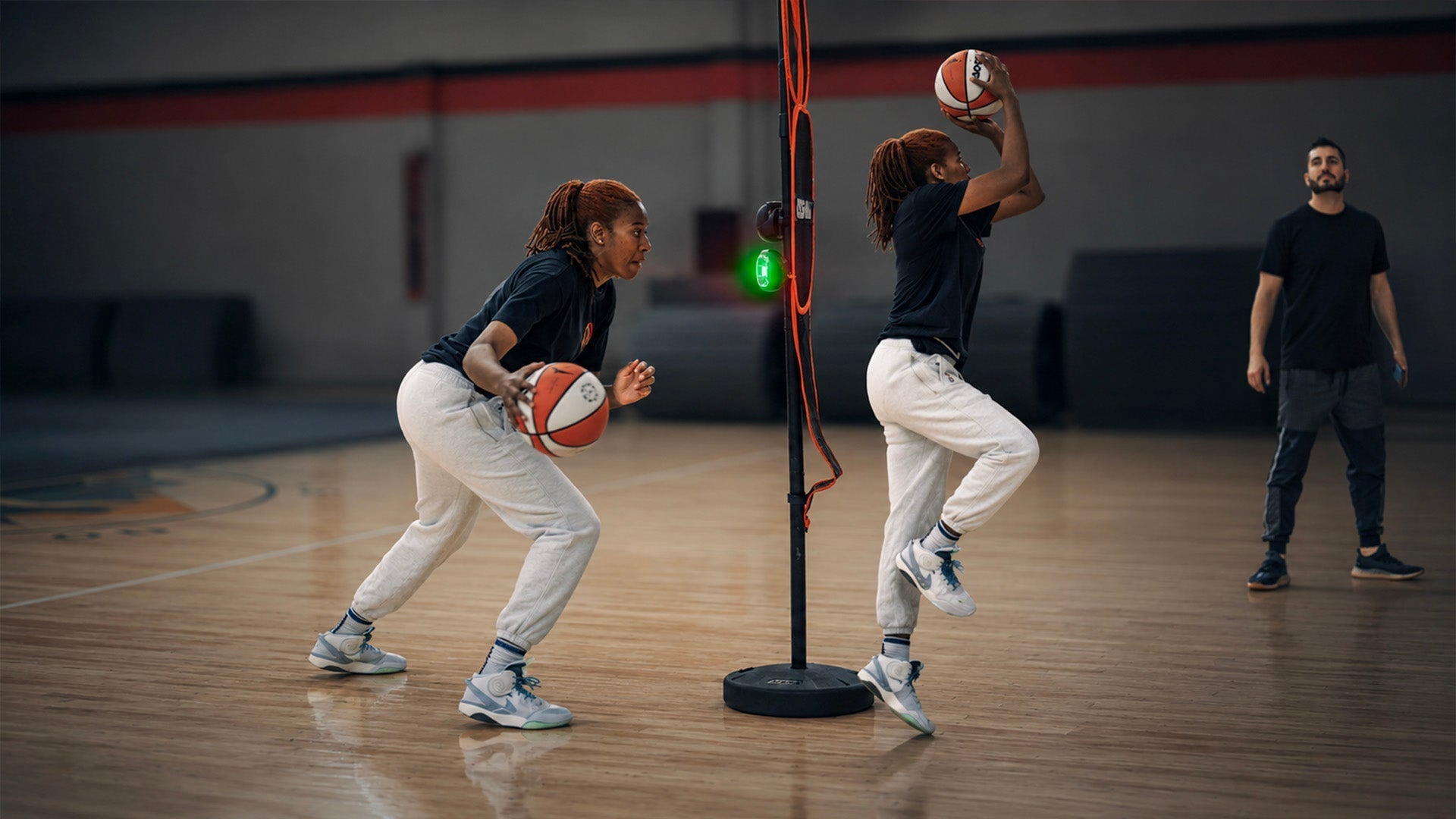


Short answer: Sports academies, performance centres and training centres build their reaction training around reaction-light systems, supported by reactive cones, rebounders and cognitive tools. The pods present timed light, sound or vibration cues and measure response time, accuracy and left-versus-right symmetry, so a whole squad can be put through the same standardized drill and compared. What matters when buying is how many athletes one system covers, how it holds up to daily use, whether the data comes included, how many sports it serves, and whether the same kit also works in return-to-play rehab
Reaction training is now a standard part of athlete development, and the equipment has to suit a busy site rather than a single user: it has to scale across a roster, survive heavy daily use, produce data that can be compared over a season, and ideally covers both performance and rehabilitation. Below are the categories these centres buy, what to check before ordering, and how to build a reaction-training station that serves a whole roster.
The four equipment categories academies and performance centres buy
Most setups are built from four equipment categories:
- Reaction-light systems are the core. Pods light up, sound or vibrate on a timed sequence, the athlete responds, and the system records reaction time and accuracy.
- Reactive cones and agility tools add change-of-direction and footwork to the cue, so reaction work transfers to movement on the pitch or court.
- Rebounders and reactive ball tools train hand-eye and unpredictable-ball reactions for sport-specific work.
- Cognitive and decision tools layer choice and memory onto the reaction, building decision speed under load.
The advantage of a single platform is that one set of pods can serve all four roles, which keeps cost, storage and training time manageable for a facility.
Reaction-light systems: the core of a facility setup
The light system is the backbone. and its ceiling is set by how many units talk to each other at once. The ROXProX pods deliver light, sound and vibration cues, read both touch and touchless responses, and network up to 24 units across 40 metres — enough to run a squad of 20 through the same drill in one session instead of three rotations. Twelve sensitivity levels let the same pod be used for a hand tap and for a foot strike. For larger rosters, the ROXPro and ROX systems scale the same approach across more athletes and stations.
Because every rep is logged per pod, a drill with pods on both sides returns a left-versus-right comparison, which is the same reading rehab staff use when clearing an athlete to train again. Data goes to a free app, so a centre keeps its athlete history without a recurring software fee.
Reactive cones and agility tools
A reaction only counts when it turns into a movement. ROXCone and ROXConeX bring the light cue into cone drills for change of direction, while the Speed Measurement & Dribbling Set adds timed speed and dribbling work. Together they let a coach build agility circuits where the next move is decided by a cue, not by a script the athlete has already memorised.
Rebounders and reactive ball tools
For sport-specific hand-eye work and unpredictable-ball reactions, the answer is a rebounder. The Smart RebounderGo, RebounderGo and Rebounder Performance Set pair a returning ball with reaction cues, which suits soccer, basketball and goalkeeping work.

Cognitive and decision tools
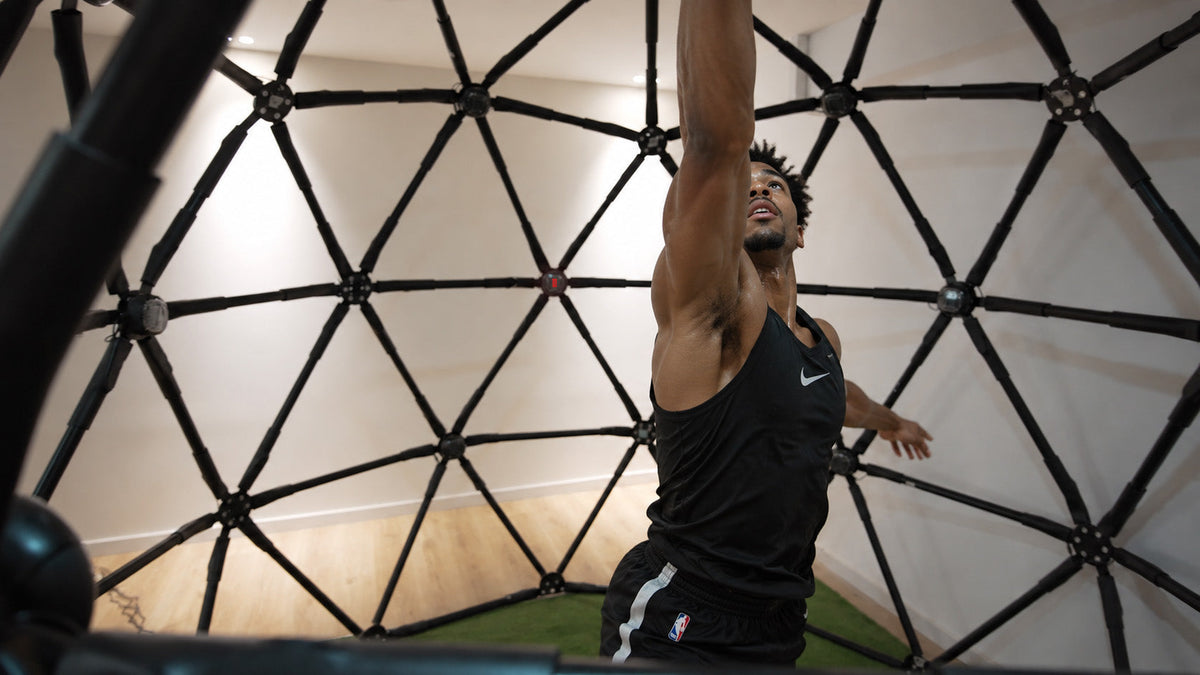
Speed alone is not the goal. To train decision-making, cognitive load goes on top of the reaction: the CogniCage adds choice, memory and pattern work, building the decision speed that separates a fast reaction from a smart one.
What do facilities look for when buying reaction equipment?
| Requirement | Why it matters to a facility |
|---|---|
| Multi-athlete scalability | Run a full roster through standardized, comparable drills |
| Durability | Survive heavy daily use across many users |
| Objective data, included | Track and compare results over a season without a paywall |
| Multi-sport range | One platform serves every sport the facility coaches |
| Rehab and return-to-play | Same kit covers the treatment room and the training floor |
| Quick setup and storage | Fast turnaround between sessions and groups |
How do you build a reaction-training station for an academy?
- Start with a reaction-light set as the core, sized to the number of athletes per group.
- Add reactive cones for change-of-direction and agility work.
- Add a rebounder for sport-specific hand-eye and ball reactions.
- Layer a cognitive tool for decision and choice-reaction drills.
- Standardize a few benchmark drills so results compare across athletes and over time.
Equipment by setting
- Sports academies need scalable, standardized kit to develop many young athletes and track progress over a season.
- Performance centres need precise, data-rich tools for elite athletes and testing.
- Training centres need versatile, durable equipment that serves a mix of sports and levels.
- Return-to-play and rehab rooms within these facilities need the same reaction tools graded for clinical use, which the Neuro Rehab Set provides.
Because A-Champs builds all of these around the same pods, a facility can equip every room from one ecosystem.
Equipping a facility? The ROXProX scales across athletes and stations with light, sound and vibration drills, every rep logged in a free app and no subscription.
Browse the full A-Champs training range to build a setup for your academy, performance centre or training centre.
Frequently asked questions
What is the main equipment academies use for reaction training?
The core is a reaction-light system: pods that present timed light, sound or vibration cues and measure response time and accuracy. Academies support this with reactive cones, rebounders and cognitive tools to cover agility, ball skills and decision-making.
What should a performance centre look for in reaction equipment?
How many athletes one system covers, how the hardware holds up to daily use, whether the data is included rather than behind a subscription, how many sports the drill library serves, and whether the same setup works for return-to-play rehab.
Can one system cover both performance and rehab in a facility?
Yes. Because A-Champs builds its performance and rehab products around the same pods, a facility can use one ecosystem from the training floor to the treatment room, which keeps the reaction measure consistent across the return-to-play pathway.
How many reaction pods does an academy need?
It depends on group size rather than squad size. A-Champs systems network up to 24 units across 40 metres, so a group of 20 can work through the same drill without splitting into rotations. Smaller groups run comfortably on sets of three or six.
📚 This guide is part of the Reaction Time Training Hub. Explore all our related guides and drills in one place.