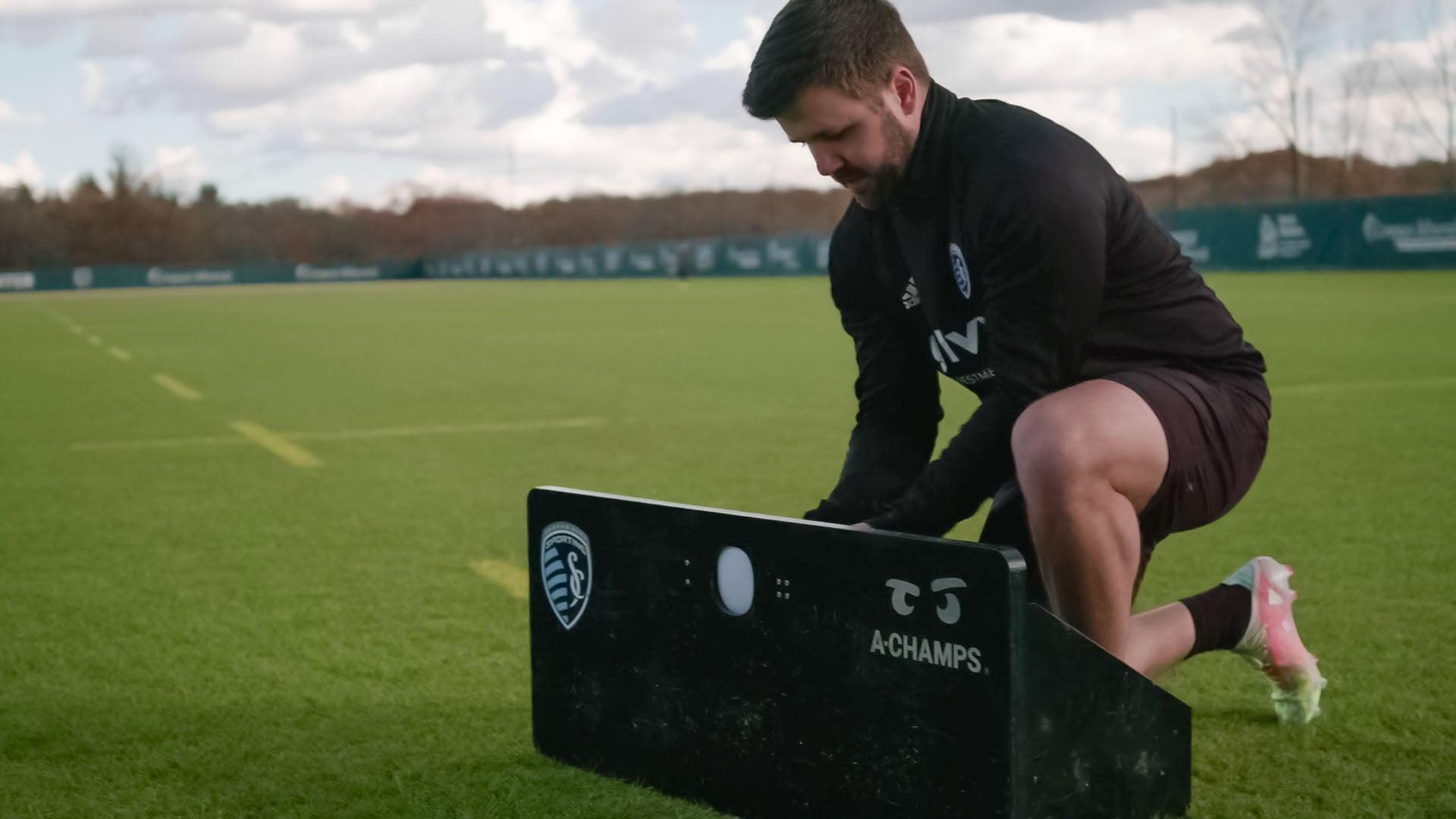

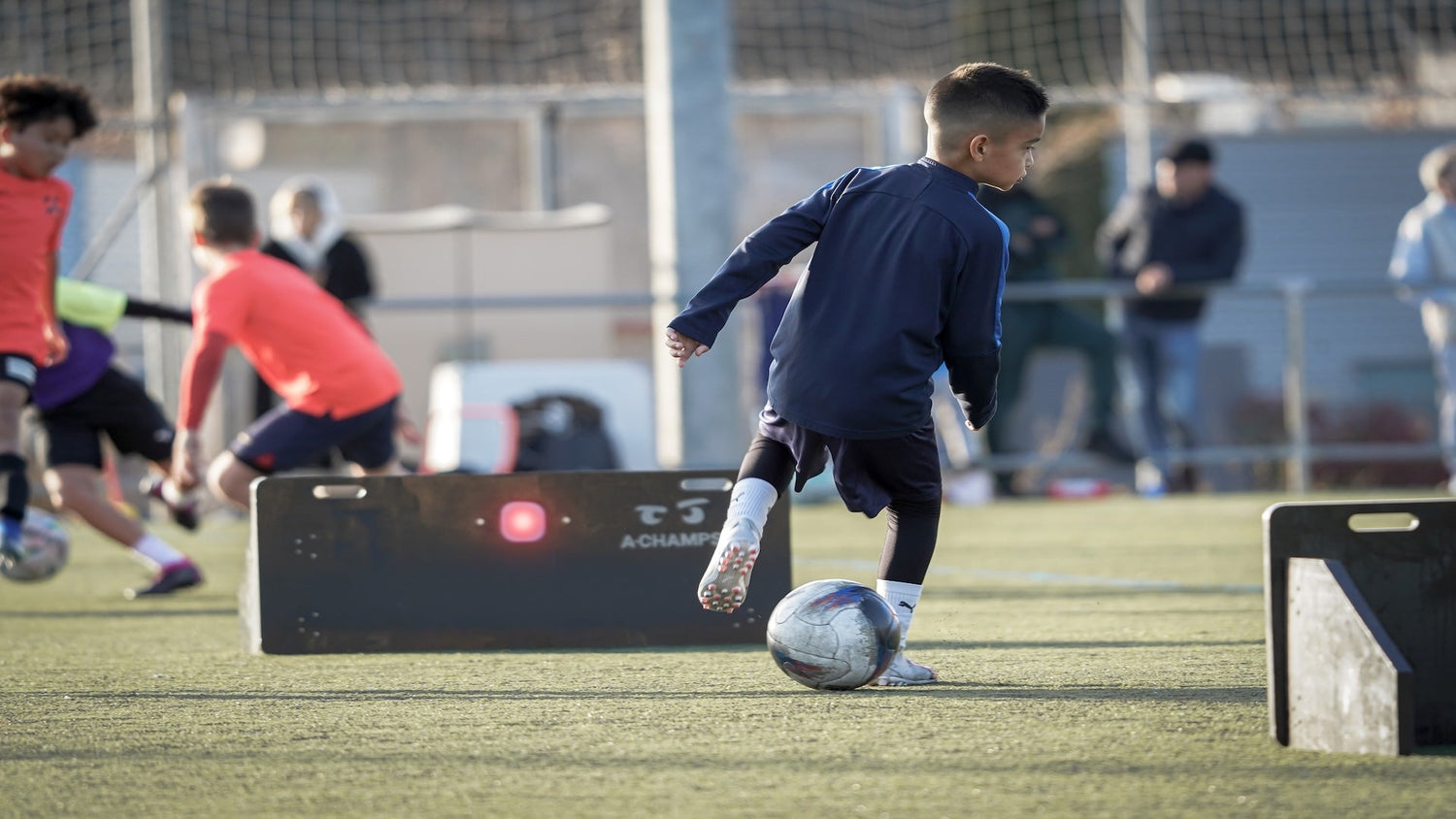

Train context-specific scanning under pressure with the right gear — browse A-Champs soccer training equipment.
Visual scanning is more than just a head turn—it's a high-performance behavior that can shape outcomes in elite football. While it's widely understood that awareness precedes action, new insights from a study published by Routledge confirm how scanning frequency and contextual scanning behavior correlate to technical effectiveness on the pitch. These findings further reinforce the benefits of integrated cognitive tools like A-Champs ROX.
Scanning Frequency Shifts Based on Field Context
The study found that scanning frequency varies significantly by field position and game phase. Players scanned most often in the attacking half and when preparing to receive a forward pass, suggesting that context determines scanning behavior as much as playing position.
According to the research:
- Players increased their scan frequency by over 25% in attacking transitions.
- Players conducted more scans within 5 seconds of ball receipt than at other time intervals.
- When facing forward, players had a scan rate nearly 0.6 times per second—a significant mental workload under pressure.
Scan more, lose the ball less. The ROXProX recreates high-pressure, context-specific scanning with reactive light and sound cues.
Browse the full soccer training equipment range to train game intelligence.
Why This Matters for Coaches and Players
These statistics validate what many performance coaches have observed: scanning behavior is not static. It is adaptable, trainable, and influenced by tactical awareness and game phase. By emphasizing context-specific scanning, coaches can help players:
- Enhance predictive decision-making
- Reduce turnovers through anticipation
- Improve passing accuracy during high-pressure phases
Train Scanning with A-Champs
Using A-Champs ROX, coaches can simulate high-cognitive-load situations that mirror live play. By combining scanning with physical stimuli (lights, sounds, vibration), the ROX system helps athletes condition visual and mental responsiveness.
- Game-like drills: Develop reactive scanning under pressure
- Data feedback: Measure scan response speed and adjust difficulty
- Multi-sensory load: Combine decision-making with movement

Conclusion: Scanning Is a Game Intelligence Multiplier
Scanning is no longer a 'nice-to-have'—it's a proven component of soccer IQ. Whether it’s anticipating the next move or processing field dynamics in real time, scanning drives performance. The study by Cortsen & Rascher reinforces that smarter players scan more, and smarter training helps them scan better. Explore the ROX training collection and help your players level up their mental game.
Related reading: Understanding scanning in soccer, how to improve soccer scanning, and Visual scanning and soccer IQ.
FAQs
What is scanning frequency in soccer?
Scanning frequency refers to how often a player turns their head or body to observe their surroundings before receiving the ball.
Why does scanning rate vary across the field?
Players scan more in attacking or high-pressure situations to better anticipate threats or opportunities.
How can I train scanning more effectively?
Use reaction-based tools like A-Champs ROX to simulate match-like stimulus, improving scanning habits and response speed.
Does scanning improve decision-making?
Yes, scanning allows players to gather contextual data before acting, leading to better decisions and fewer turnovers.
📚 This guide is part of the Soccer Scanning Hub. Explore all our related guides and drills in one place.