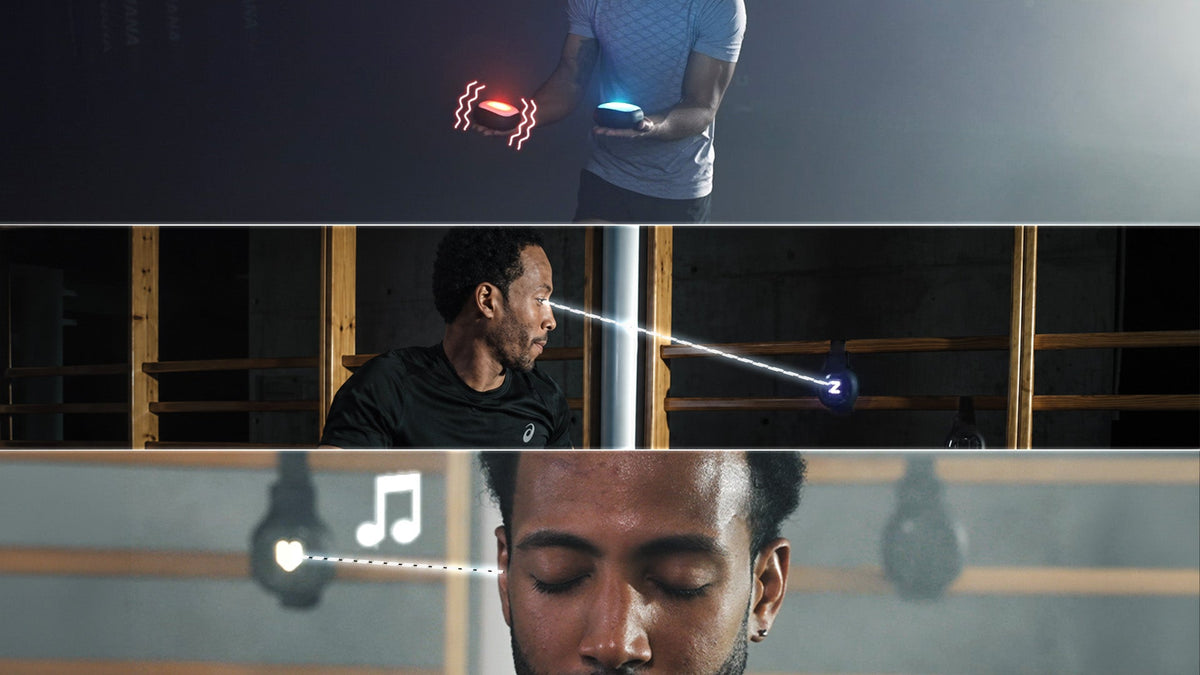


Build a testing protocol your whole program can run. The battery below covers power, speed, agility and reaction, and A-Champs ROXProX Laser makes the reaction and cognitive tests objective, repeatable and scalable across a full squad.
If you can't measure it, you can't manage it. Standardized athletic testing gives coaches a baseline, flags strengths and weaknesses, and, done consistently, shows whether training is actually working. This guide lays out a complete, low-tech testing battery suitable for individual athletes, teams, academies and performance centers, plus how to run an efficient testing day and track results over time.
Why standardized testing matters
A consistent battery lets you compare an athlete against their own past results, against teammates, and against normative benchmarks for their sport and age. The keys are standardization (same protocol, same conditions every time), repeatability, and recording everything so the data is useful months later. For how this fits a smart-training approach, see our piece on athletic testing and smart training.
The core battery
Vertical jump (lower-body power): countermovement jump, best of three. A simple, reliable marker of explosive power and a good fatigue indicator over a season.
10-20 m sprint (linear speed): times acceleration and top-end speed. Use a consistent start and timing method.
5-10-5 pro agility shuttle (change of direction): the standard short-shuttle COD test. From a straddled start on the middle line, sprint 5 yd (4.57 m) to one side, 10 yd (9.14 m) back across to the other, then 5 yd (4.57 m) to finish on the middle line, for a total of 20 yd (18.29 m).
T-test (multidirectional agility): forward, lateral and backpedal movement in one test, useful for court and field sports. Set one cone 10 yd (9.14 m) ahead of the start and two more 5 yd (4.57 m) to each side of it. Sprint forward to the centre cone, shuffle 5 yd (4.57 m) left, shuffle 10 yd (9.14 m) right, shuffle 5 yd (4.57 m) back to the centre, then backpedal 10 yd (9.14 m) to the start, for a total of 40 yd (36.58 m).
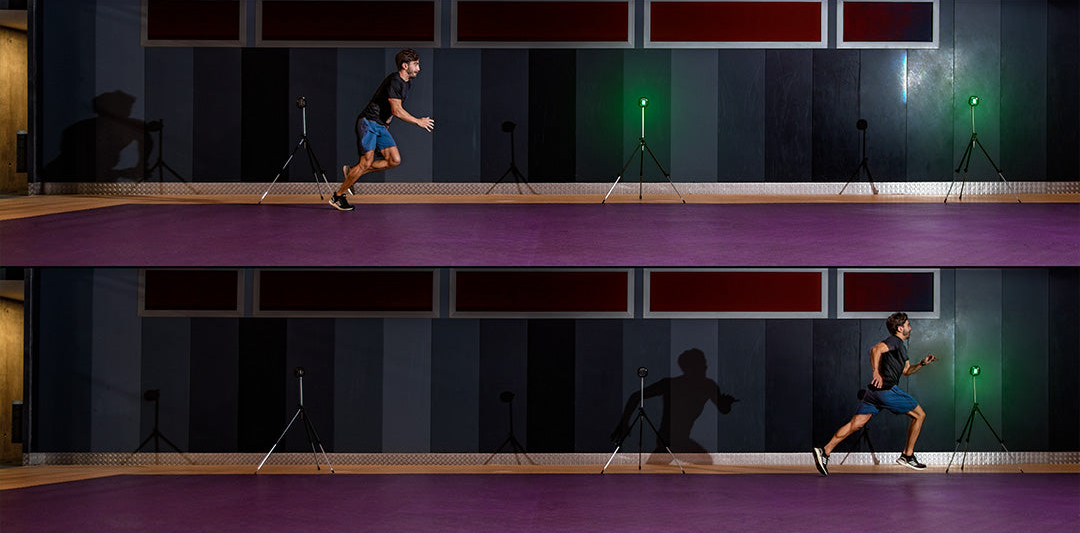
Reaction time (cognitive-motor speed): the quality most testing batteries ignore, yet it separates good athletes from elite ones. A light-based test gives an objective, repeatable number rather than a stopwatch guess. Background in our guide to reaction time and how to improve it.
Add an objective reaction and agility test to your battery. A-Champs ROXProX Laser measures reaction time and reactive change-of-direction with a repeatable, light-based protocol, with no stopwatch guesswork.
For multi-station setups, the system scales across a whole squad. Explore all A-Champs equipment.
Running testing day across a squad
For teams and facilities, efficiency is everything. Set the battery up as stations and rotate small groups through: a standardized warm-up first, then power (vertical jump), speed (sprint), agility (5-10-5 and T-test), and reaction last, since cognitive tasks are sensitive to fatigue. With several ROXProX Laser units you can run multiple reaction stations at once, testing many athletes in a single session. Test at consistent points in the calendar, such as pre-season, mid-season and end of season, under similar conditions each time.
Tracking and benchmarking
Record every result against the athlete's name, date and conditions. Over a season, the trend matters more than any single number. Improving reaction time and stable or rising power outputs are signs your program is working, while declines can flag fatigue or overtraining. Academies and performance centers can use this longitudinal data to individualize training and show progress to athletes and parents. ROXProX Laser's objective reaction data slots neatly into that record. See also the science of ROX Touch training.
FAQs
What tests should be in an athletic performance battery?
A well-rounded battery covers lower-body power (vertical jump), linear speed (10-20 m sprint), change-of-direction agility (5-10-5 shuttle and T-test) and reaction time. Together these capture the main physical and cognitive-motor qualities most sports depend on.
How often should athletes be tested?
Most programs test at consistent calendar points, typically pre-season, mid-season and end of season, under similar conditions each time. This gives meaningful trend data without disrupting training or causing testing fatigue.
How can a facility test many athletes efficiently?
Set the battery up as rotating stations with a standardized warm-up, and place fatigue-sensitive tests like reaction time last. Running several reaction-light stations in parallel lets a facility test a full squad in one session while capturing objective, repeatable data.
Related reading: athletic testing and smart training, the keys to the best soccer agility training, and how to improve reaction time.
This guide is part of the Athletic Testing Hub. Explore all our related guides and drills in one place.