
Quick answer: Change-of-direction (COD) speed is a pre-planned movement: you already know where you are going. Reactive agility adds an unpredictable stimulus, so you must perceive, decide, then move. Research shows the two are only moderately related and that the decision-making component is what distinguishes higher-level athletes. Light-based reaction tools train the reactive component that pre-planned drills miss.

Want to train true reactive agility? The ROXProX Laser reaction system supplies the unpredictable cue that turns a change-of-direction drill into a real decision.
Cones, ladders, and pre-set shuttle runs have a place in every program, but they share one big limitation: the athlete already knows where to go. In a match, almost no movement is pre-planned. Understanding the difference between change-of-direction speed and reactive agility is one of the most useful distinctions in performance training, and the research is clear about why it matters.
Two different skills
In their landmark review, Sheppard and Young (2006) redefined agility as "a rapid whole-body movement with change of velocity or direction in response to a stimulus." That last phrase is the whole point. Change-of-direction (COD) speed is the physical ability to decelerate, reorient, and reaccelerate along a known path. Reactive agility wraps a perceptual-cognitive layer around that movement: the athlete must first read a cue, decide, and only then move. The same review noted that agility draws on cognitive components such as visual scanning, anticipation, and decision speed, not just physical qualities like strength and power.
| Change of direction (COD) | Reactive agility | |
|---|---|---|
| The path | Known in advance and pre-planned. | Unknown until the cue appears. |
| What the athlete does | Decelerate, reorient, reaccelerate. | Perceive, decide, then decelerate, reorient, reaccelerate. |
| What it trains | Movement mechanics and the physical qualities behind them. | Those same mechanics plus scanning, anticipation and decision speed. |
| Typical drill | Cone shuttle, agility ladder, pre-set 5-10-5. | The same movement triggered by a randomized light, sound or opponent cue. |
| How they relate | Only moderately correlated: a fast COD time does not predict a fast reactive time, and the reactive component is what separates higher-level athletes. | |
Why the distinction is practical, not academic
Studies repeatedly find that COD tests and reactive-agility tests are only moderately correlated, meaning an athlete can be quick on a pre-planned shuttle yet slow to react when the direction is unknown, and vice versa. Training only the pre-planned version can therefore flatter your testing while leaving the game-relevant skill untrained. Spiteri and colleagues (2018) made the case directly: agility improves most when training integrates perception and action, requiring the athlete to respond to a live, unpredictable stimulus rather than rehearse a fixed pattern.
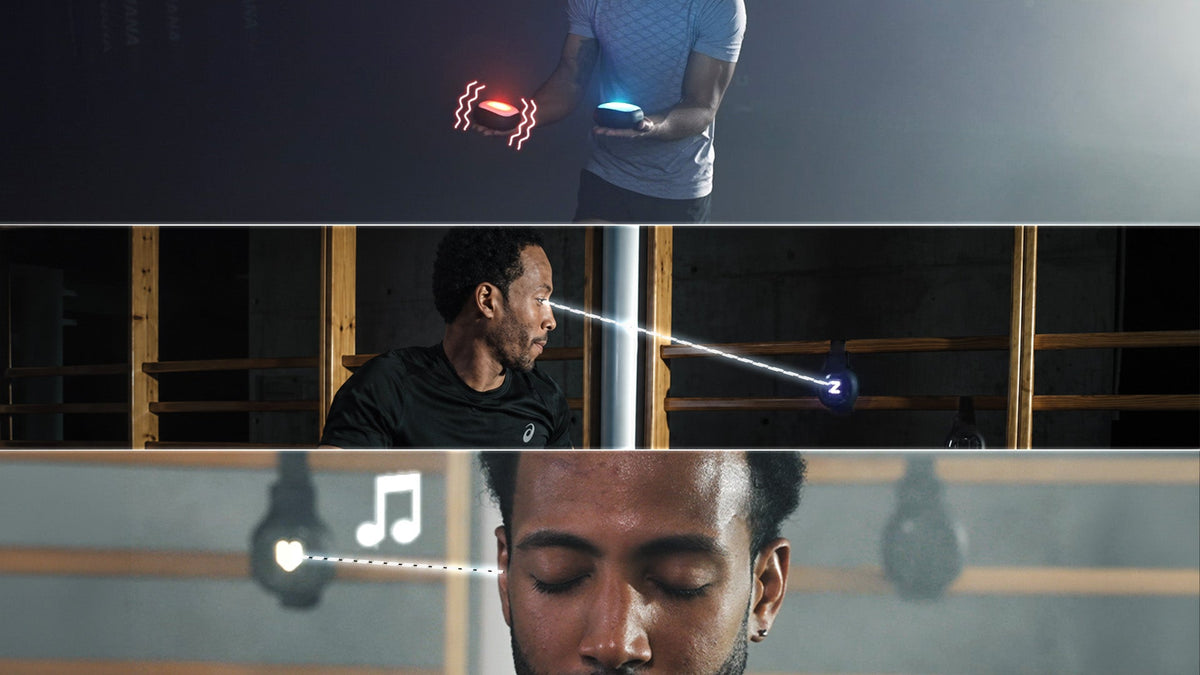
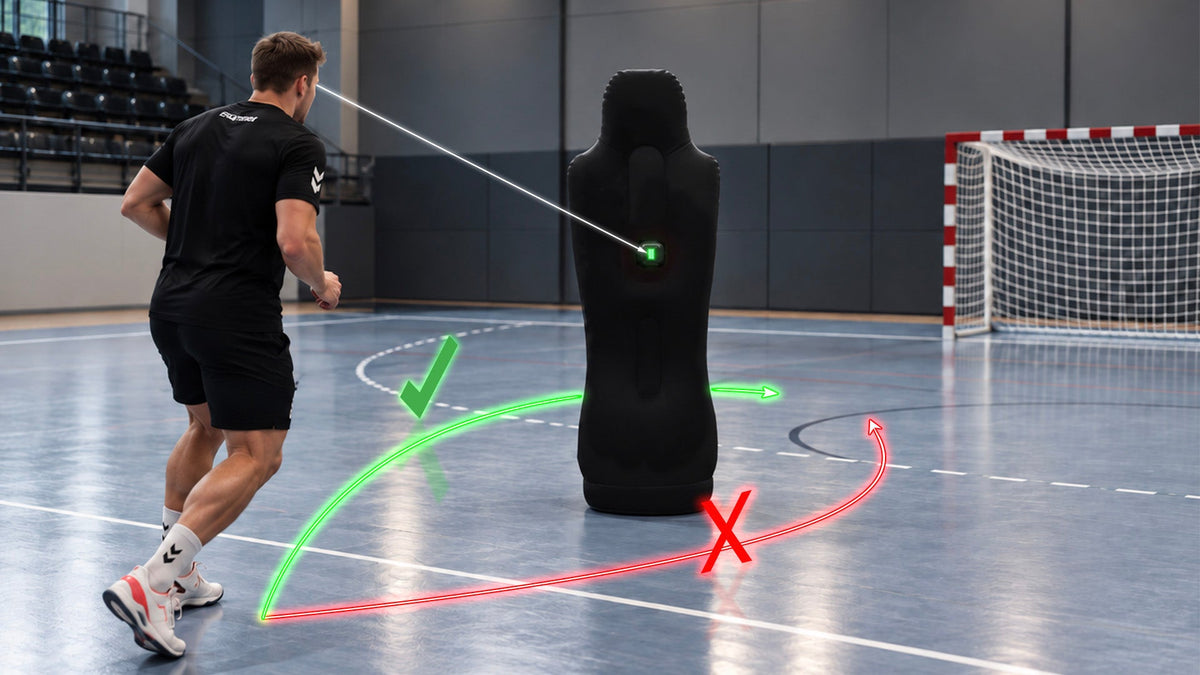
Stop pre-planning the cut. With the ROXProX Laser, the athlete doesn't know which way to move until the cue fires, training the decision that real agility demands.
Browse the full A-Champs training range for reactive agility setups.
Can reactive agility be measured?
Yes, and reliably. Hoffman (2020) evaluated a light-based reactive-agility device in 31 competitive youth soccer players across several reactive drills and found it produced reliable scores that aligned with coaches' independent judgments of agility, demonstrating construct validity. Reliable measurement matters because it lets coaches benchmark the reactive component specifically, rather than assuming a fast cone time means a fast reaction.
What reaction lights actually train
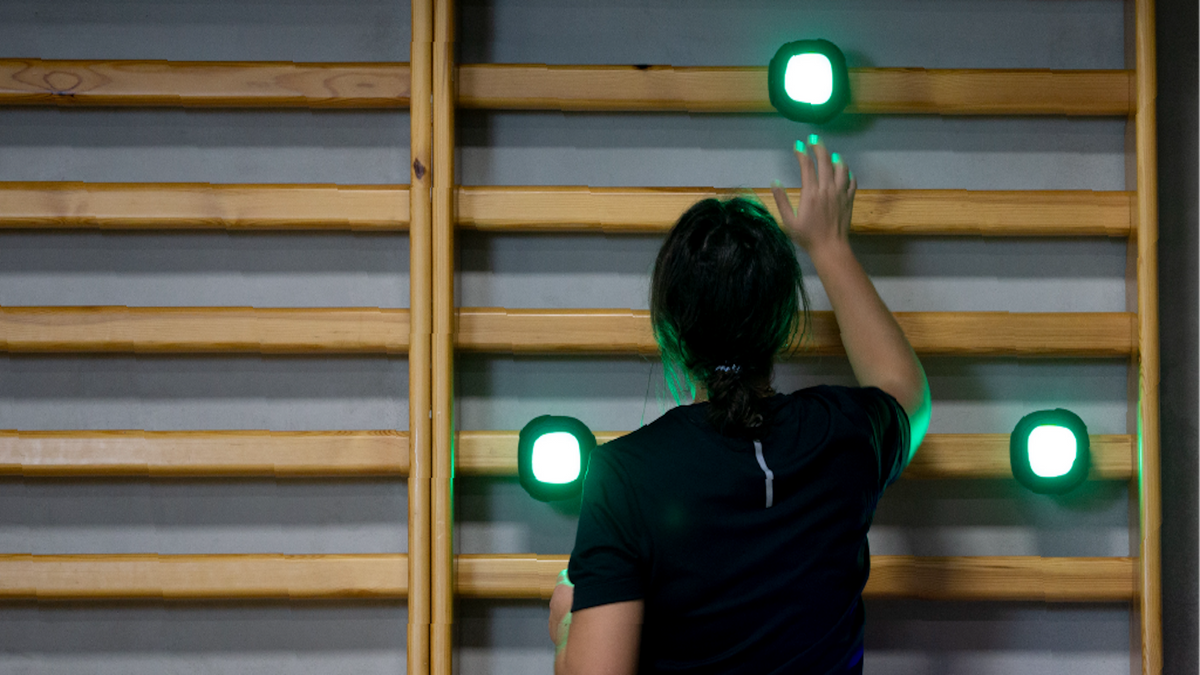
A light-and-sound system doesn't replace strength, sprint, or COD mechanics. It adds the missing reactive layer on top of them. When the cue is unpredictable, the athlete must:
- Scan and perceive the stimulus while already moving.
- Decide which response the cue requires (direction, limb, distance).
- Execute the change of direction at speed.
That perceive-decide-execute loop is precisely the part of agility that pre-planned drills cannot reach. The practical recipe: keep your COD mechanics work for movement quality, then convert a portion of it to reactive drills using randomized cues from a system like the ROXProX Laser or ROXPro.
Frequently asked questions
What is the difference between change of direction and reactive agility?
Change-of-direction speed is a pre-planned movement along a known path: the athlete already knows where to go. Reactive agility adds an unpredictable stimulus, so the athlete must perceive a cue, decide what it means and only then move. The two are only moderately correlated, which is why a fast cone time does not predict a fast reactive time.
Is change-of-direction training useless?
Not at all. Change-of-direction training builds the deceleration, reacceleration and footwork mechanics that reactive agility relies on. The point is that it isn't sufficient on its own, because it leaves the reactive decision untrained.
How much of my agility work should be reactive?
There's no single rule, but a common approach is to build mechanics with pre-planned drills, then add reactive cues as the athlete progresses and as you get closer to competition, so the skill is increasingly sport-specific.
Do reaction lights work for team sports?
Yes. Reaction lights suit any open-skill sport where athletes must react to opponents, the ball, or the play, including soccer, basketball, tennis, and combat sports.
The bottom line
Change of direction and reactive agility are related but distinct. One is a movement you plan. The other is a decision you execute. The research is consistent that the reactive, decision-making component is what game performance demands, and it is the component that randomized, light-based reaction training is built to develop.
Ready to make agility reactive? Explore the ROXProX Laser and the full A-Champs training range.