

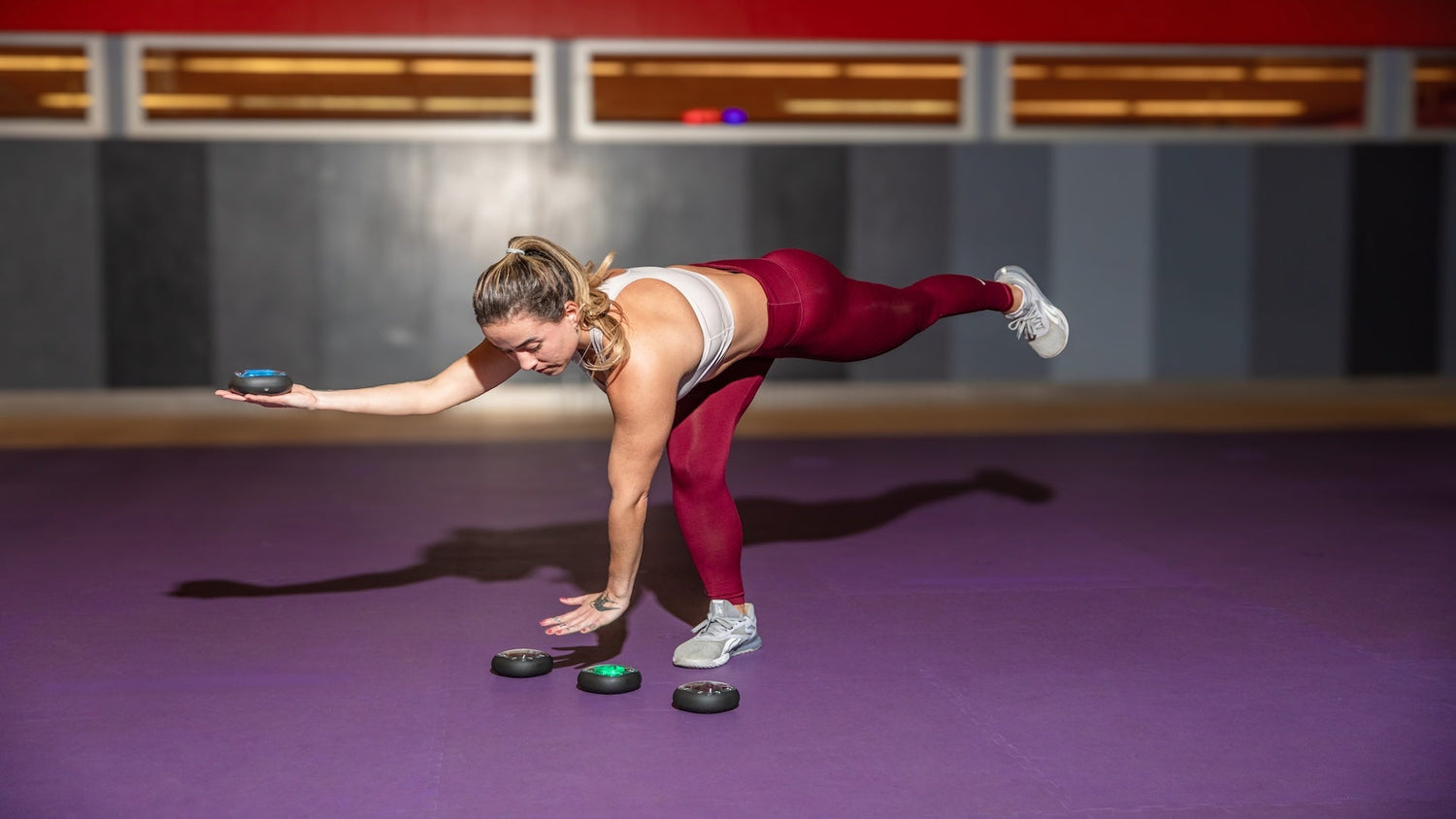

Layer decision-making into every rep with the ROXProX smart training system.
Traditional training has long separated the brain from the body—but in real sport, they’re inseparable. Athletes must not only move fast but also think fast. That’s why A-Champs ROX technology is redefining physical training by layering cognitive demands directly into athletic drills.

What Is Cognitive Load in Athletic Training?
Cognitive load refers to the mental effort required to process information and make decisions. In sports, this means identifying visual cues, analyzing threats or opportunities, and choosing a response—often in a split second. Integrating cognitive load into physical training means making athletes think while they move.
Why Combine Physical and Mental Training?
- Realistic Simulation: In sports, athletes rarely move without processing external stimuli.
- Enhanced Focus: Multisensory drills increase engagement and build decision-making under fatigue.
- Reduced Injury Risk: A 2020 study found cognitive-motor dual-task training reduced ACL injury risk by up to 33%.
How A-Champs Builds Smarter Athletes
The ROX system introduces dynamic light, sound, and vibration cues into movement-based drills. These cues force athletes to perceive, process, and react—building true cognitive-motor coordination.
- Randomized Reaction Training: Athletes adapt to unpredictable sensory input
- Cognitive Overload Modules: Integrate memory, math, or color recognition tasks into physical effort
- Performance Tracking: Real-time metrics via the ROX App monitor reaction times, success rates, and fatigue impact
Make athletes think while they move. The ROXProX layers reaction and decision tasks onto agility drills, building cognitive-motor coordination under fatigue.
Explore the full A-Champs training range to train body and brain together.
Sample Drill: Agility + Decision Overload
Setup: Set 5–6 ROX pods in an agility cone layout
Drill: Player weaves through cones. As pods activate, they must identify a color or number and perform a corresponding action (e.g., jump, sprint, shuffle).
Benefit: Trains neuromuscular efficiency under decision pressure—just like real match scenarios.
Backed by Science
Recent research has shown cognitive-motor training improves reaction time, working memory, and athletic performance. A study on post-injury athletes using ROX devices found over 200ms improvement in decision latency within 8 weeks.
Related reading: The role of coordination in physical fitness, the science of neuroplasticity in ROX training, and Cognitive training exercises for reaction time.
FAQs
What is cognitive load in training?
Cognitive load is the mental effort required to process sensory information, make decisions, and execute responses—especially under pressure.
How does A-Champs integrate cognitive load?
ROX devices use visual, auditory, and tactile cues that force athletes to think while they move—mimicking competitive sport conditions.
Is cognitive training only for pros?
No. Athletes of all ages and skill levels benefit from dual-task training. A-Champs tools scale in complexity for youth to elite users.
Does it really reduce injuries?
Yes. Studies show integrating reaction training with agility work can reduce injury rates by improving neuromuscular control and decision speed.
📚 This guide is part of the Cognitive Training Hub. Explore all our related guides and drills in one place.