

Stefan Peter – Mental-Performance-Coach & Spezialist für Sportpsychologie
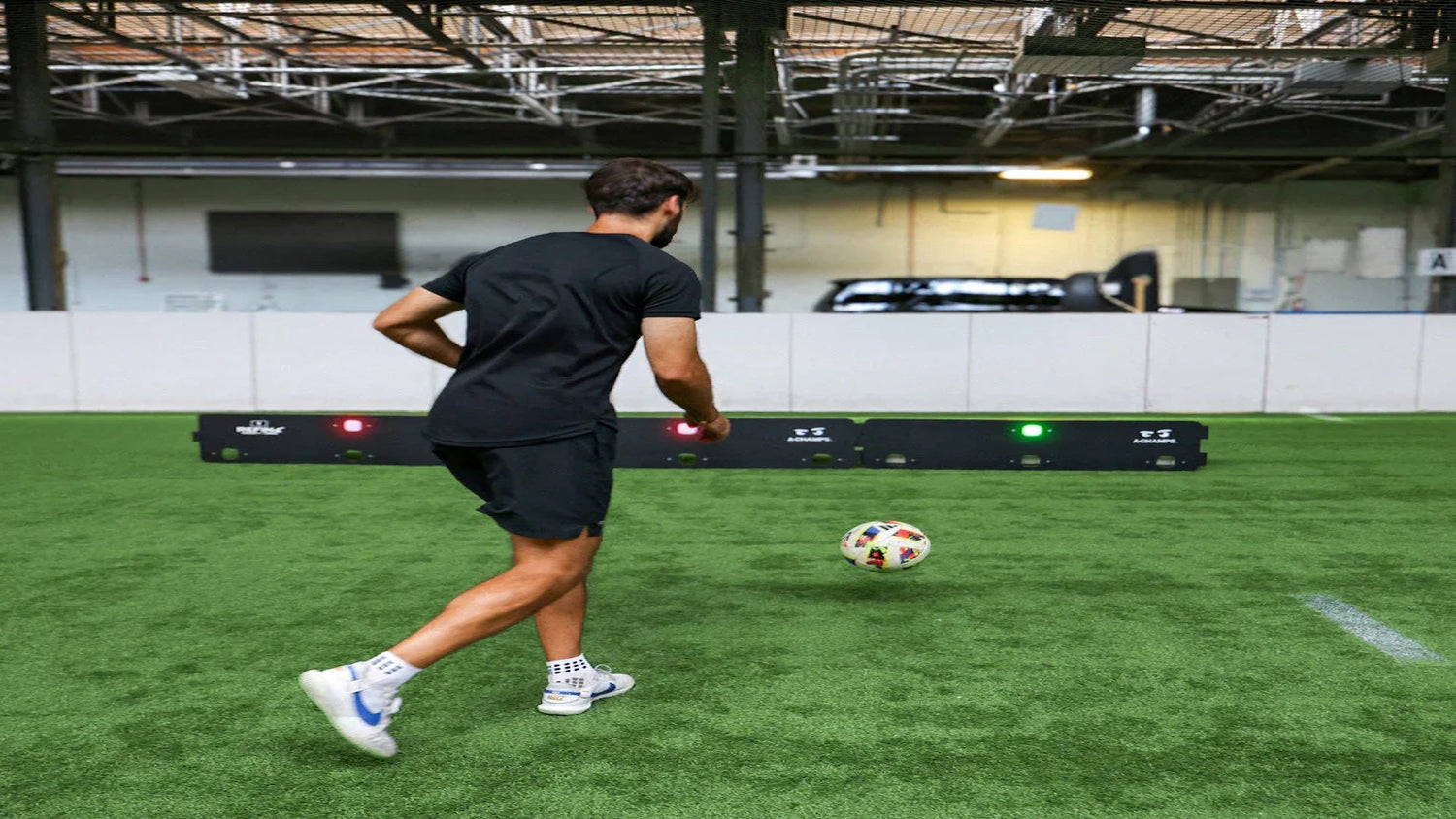
Kombiniere dein Atemtraining mit reaktivem Entscheidungstempo-Training: Der A-Champs ROXProX Reaktionstrainer trainiert besonnene Entscheidungen unter Druck – sowohl im frischen als auch im ermüdeten Zustand.
Entscheidungsfindung ist die unsichtbare Fähigkeit im Fußball – aber oft genau die, die Spiele entscheidet.
Jeder Scan, jede Passwahl, jede defensive Anpassung ist eine Entscheidung, die in Sekundenbruchteilen getroffen wird. Über 90 Minuten trifft ein Spieler Hunderte davon. Die besten Spieler sind nicht nur schneller oder stärker – sie treffen bessere Entscheidungen, besonders unter Druck und spät im Spiel.
Und genau dort liegt meist der Unterschied zwischen guten und herausragenden Spielern.
Als Trainer sehen wir es meistens spät im Spiel. Ein Spieler haut einen Ball überhastet weg, statt das besonnene Aufbaumuster auszuführen, das er Hunderte Male trainiert hat. Oder ein unnötiger vertikaler Pass landet direkt vor den Füßen des Gegners. Wir wissen, dass der Spieler diese einfachen Fehler normalerweise nicht macht, also geben wir der Ermüdung die Schuld.
Und das ist nicht falsch.
Aber meine Aufgabe als Mental-Performance-Coach ist es, tiefer zu blicken und zu erklären, was im Gehirn und Nervensystem passiert – damit Trainer und Spieler tatsächlich dafür trainieren und diese Fehler künftig reduzieren können.

Was unter Ermüdung wirklich passiert
Was passiert in den Muskeln – jenseits von Laktat?
Wenn die Spielintensität hoch bleibt, produzieren Muskelkontraktionen ständig Kohlendioxid (CO₂) als natürliches Nebenprodukt der Energiegewinnung. Je härter der Körper arbeitet, desto mehr CO₂ entsteht. Steigendes CO₂ ist einer der wichtigsten Antreiber der Atmung und erzeugt das Gefühl der Atemnot.
Dieses Gefühl ist eng mit Überlebensmechanismen verknüpft. „Unsere größte Angst ist das Ersticken.“ Spezialisierte Rezeptoren im Körper erkennen steigende CO₂-Werte und signalisieren dem Gehirn, die Atmung zu steigern. Wenn CO₂ schnell ansteigt, kann es eine starke innere Alarmreaktion auslösen. Für manche Athleten ist dieses respiratorische Unbehagen einfach unangenehm. Bei anderen interpretiert das Nervensystem es als Bedrohung und erhöht die sympathische Aktivierung – die Kampf-oder-Flucht-Reaktion des Körpers.
Dieser Vorgang ist kein Fehler. Es ist die Physiologie, die ihre Arbeit tut.
Doch weil Atmung und CO₂-Toleranz selten gezielt trainiert werden, wird dies unter Stress zu einem Leistungsproblem – manche Spieler geraten buchstäblich in Panik, und wir können es an ihrer Entscheidungsfindung sehen.
Wenn das Nervensystem reaktiv wird
Wenn der Körper steigenden inneren Druck als Bedrohung interpretiert und die sympathische Aktivierung zunimmt, verengt sich die Aufmerksamkeit. Entscheidungen werden schneller – verlieren aber oft an Qualität. Sie werden reaktiv statt kontrolliert.
Das eigentliche Problem hier ist die CO₂-Toleranz und das fehlende „Pressure Confidence“, oder was oft als Stressresilienz bezeichnet wird – aber selten in praktischen Trainingsbegriffen erklärt wird.
Wenn Spieler ihre Fähigkeit nicht trainiert haben, erhöhtes CO₂ und respiratorisches Unbehagen zu tolerieren, wird das Nervensystem unter Stress und Ermüdung reaktiver. Und wenn das System reaktiv wird, sinkt die Qualität der Entscheidungsfindung.
Denn Entscheidungsfindung dreht sich nicht nur um Tempo. Es geht um Qualität unter Druck.
Es ist wichtig, Reaktions- und Entscheidungstempo zu trainieren – zum Beispiel mit Tools wie denen von A-Champs und Goal Station im erholten und ermüdeten Zustand. Aber es ist ebenso wichtig, Körper und Nervensystem darauf zu trainieren, spät im Spiel die Kontrolle zu behalten, wenn die Ermüdung jeden Spieler trifft.
Entscheidungstempo ist nur so viel wert wie die Qualität der Entscheidungen unter Druck.
Genau hier kommt das Atemtraining für Fußballer ins Spiel – nicht als Entspannungswerkzeug, sondern als Weg, CO₂-Toleranz und Stabilität des Nervensystems aufzubauen, sodass der Geist nicht mitüberstürzt, wenn der Körper unter Druck steht.
Besonnene Entscheidungen, frisch oder ermüdet. Der ROXProX trainiert Reaktions- und Entscheidungsqualität unter Druck, damit gute Entscheidungen auch spät im Spiel Bestand haben.
Entdecke das gesamte A-Champs Trainingssortiment, um die kognitive Seite der Leistung zu trainieren.
Wenn die Atemmuskulatur die Leistung begrenzt
Atmen ist muskuläre Arbeit. Das Zwerchfell, die Zwischenrippenmuskeln und die Atemhilfsmuskeln verbrauchen Sauerstoff und benötigen Durchblutung – genau wie Quadrizeps oder Beinbeuger. Wenn sie ermüden, leitet der Körper Blut zur Unterstützung der Atmung um und lässt den arbeitenden Gliedmaßen weniger Sauerstoff. Das Ergebnis: Die Feinmotorik lässt nach, die Sprintgeschwindigkeit sinkt, die Präzision schwindet, und selbst kurze, technische Pässe fühlen sich schwerer an, als sie sollten.
Deshalb wird funktionelles Atemtraining auf Eliteniveau zum Standard. Athleten wie Stephen Curry, Verteidiger wie Jonathan Tah und Klubs wie Liverpool FC integrieren strukturierte Atemarbeit, um unter Last effizient zu bleiben.
Stärkere, ermüdungsresistente Atemmuskeln halten die Gliedmaßen stabil, erhalten die technische Präzision und unterstützen die geistige Klarheit – besonders spät im Spiel.
Stresstoleranz: Der Navy-SEAL-Vorteil der Elite
Profiteams wie Bodø/Glimt verbinden dieses körperliche Training mit mentaler Vorbereitung. Sie arbeiten sogar mit einem ehemaligen Kampfpiloten, um Spielern beim Stressmanagement zu helfen. Kampfpiloten agieren unter extremer Herzfrequenz, schneller Atmung und kognitiver Überlastung – und treffen dennoch präzise Entscheidungen. Fußballer können genauso trainieren.
Performance-Atemtraining für Fußballer verbessert die CO₂-Toleranz, stärkt die Atemmuskulatur und trainiert das Nervensystem, unter Druck ruhig zu bleiben. Es ist derselbe Ansatz, den Spezialeinheiten, Kampfpiloten und Rettungssanitäter nutzen, um in chaotischen Umgebungen fokussiert zu bleiben.
Das Ergebnis ist klar: Spieler bleiben schärfer, fokussierter, besonnener und entscheidungsfreudiger, selbst wenn die Ermüdung einsetzt.
Wie Atemtraining für Fußballer Entscheidungstempo und -qualität unterstützt
Ein Spielerbeispiel: Fokus lässt spät im Spiel nach
Ein Spieler, mit dem ich letzte Saison gearbeitet habe, zeigt, warum diese Art Training wichtig ist. Ein 17-jähriger Akademie-Mittelfeldspieler, körperlich stark mit hervorragender Ausdauer und Beinkraft, hatte in den letzten 15–20 Minuten durchgehend Probleme. Die ersten Ballkontakte wurden langsamer, Pässe gingen daneben, und das Scannen des Feldes wurde inkonsistent.
Von der ersten Einheit an war klar, dass seine Atemfunktion gestört war – ein Problem, das in japanischen Studien bei 87,5 % der Athleten nachgewiesen wurde. Unter hochintensivem Spiel waren seine Atemmuskeln überlastet. Steigendes CO₂ löste subtil Stressreaktionen in seinem Nervensystem aus. Die Aufmerksamkeit verengte sich, Entscheidungen wurden reaktiv, und die Gelassenheit schwand – obwohl er körperlich auf hohem Niveau hätte weiterspielen können.

Wie wir trainiert haben
Über sechs Wochen haben wir uns auf Folgendes konzentriert:
- Stärkung seiner Atemmuskulatur
- Aufbau der CO₂-Toleranz
- Einführung einfacher Pre-Performance-Routinen, um in hochintensiven Phasen zurückzusetzen
Das Ziel war nicht, zu ändern, wie er während der Spiele atmet, sondern seinem Körper und Nervensystem die Werkzeuge zu geben, um unter innerem Druck und Ermüdung ruhig und fokussiert zu bleiben.
Das Ergebnis
Am Ende des Programms waren die Pässe spät im Spiel sauberer, die ersten Ballkontakte schärfer, und er berichtete, sich stärker „unter Kontrolle“ zu fühlen, wenn das Spiel schnell oder intensiv wurde.
Das zeigt, dass Entscheidungsfindung unter Ermüdung nicht nur eine Frage der Beine oder Ausdauer ist. Es geht darum, wie Körper und Nervensystem mit Stress umgehen und wie Atemtraining helfen kann, Fokus und Gelassenheit zu bewahren, wenn es am wichtigsten ist.
Abschließende Gedanken
Beim Atemtraining für Fußballer geht es nicht darum, Entspannung zu erzwingen oder die Atmung während eines Spiels zu ändern. Es geht darum, Körper und Nervensystem die Werkzeuge zu geben, um mit dem natürlichen Druck des hochintensiven Spiels umzugehen. Die Atemmuskulatur zu stärken, die CO₂-Toleranz zu verbessern und Selbstwahrnehmung zu entwickeln hilft Spielern, schärfer, fokussierter und besonnener zu bleiben, wenn die Ermüdung einsetzt. Manchmal reicht eine kleine Anpassung darin, wie Körper und Geist mit Stress umgehen, damit sich Entscheidungen spät im Spiel ein wenig klarer anfühlen.
Weiterführende Lektüre: wie du die Entscheidungsfindung im Fußball verbesserst, kognitive Trainingsübungen für die Reaktionszeit und Reaktionszeit-Training.
Häufige Fragen
Was ist Atemtraining für Fußballer?
Es ist eine Methode, um CO2-Toleranz aufzubauen, die Atemmuskulatur zu stärken und das Nervensystem unter Druck ruhig zu halten, damit die Entscheidungsqualität spät im Spiel Bestand hat. Es ist keine Entspannungstechnik, die während des Spiels angewendet wird.
Wie beeinflusst Ermüdung die Entscheidungsfindung im Fußball?
Wenn die Spielintensität steigt, baut sich CO2 auf und die Atemmuskulatur ermüdet, was eine Stressreaktion auslösen kann, die die Aufmerksamkeit verengt und Entscheidungen reaktiv statt kontrolliert macht – und so ihre Qualität senkt.
Wie lange dauert es, Ergebnisse vom Atemtraining zu sehen?
In der hier beschriebenen Fallstudie brachte ein sechswöchiges Programm aus Atemmuskelarbeit, Aufbau der CO2-Toleranz und einfachen Reset-Routinen sauberere Pässe spät im Spiel, schärfere erste Ballkontakte und mehr Gelassenheit.