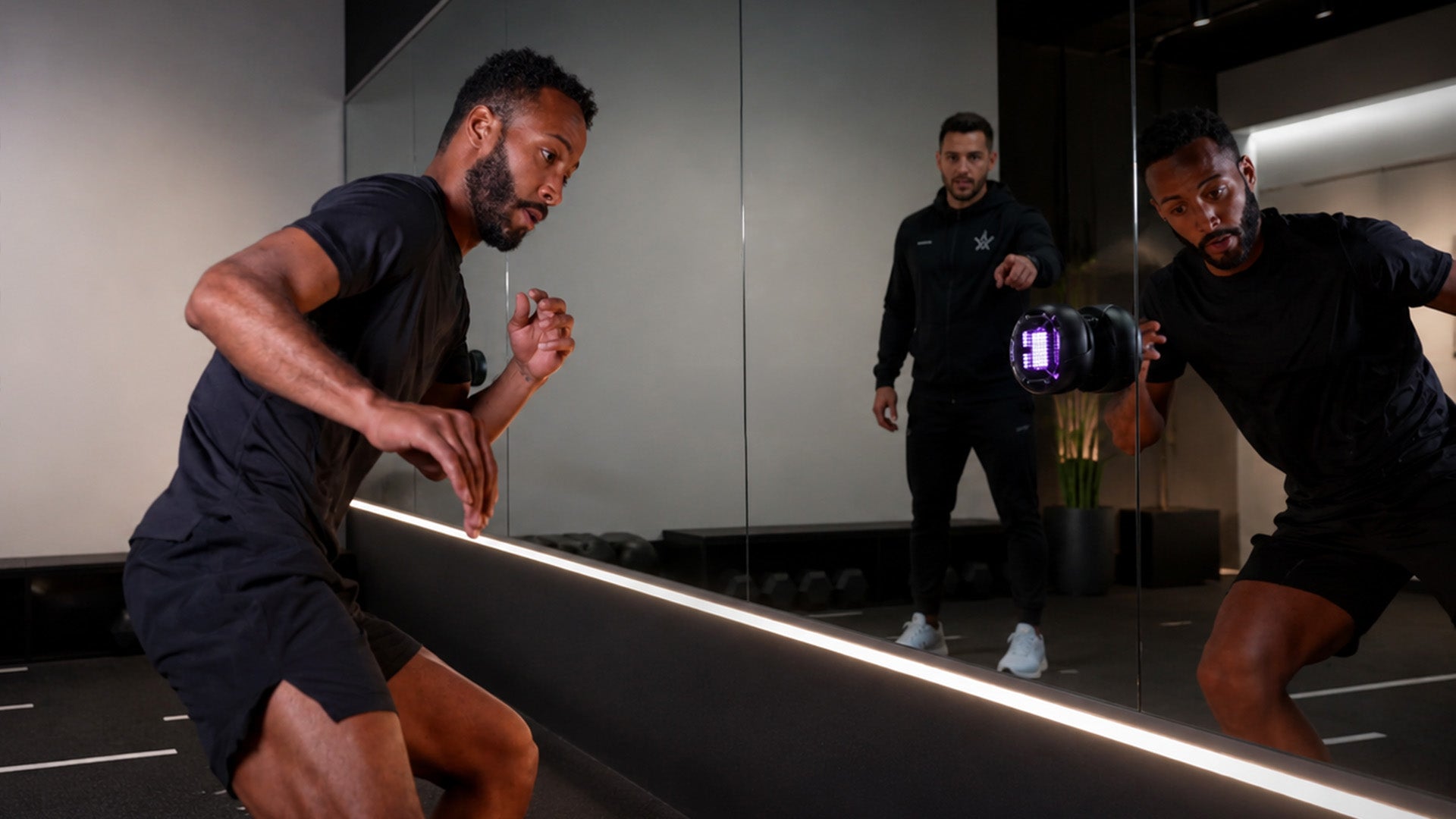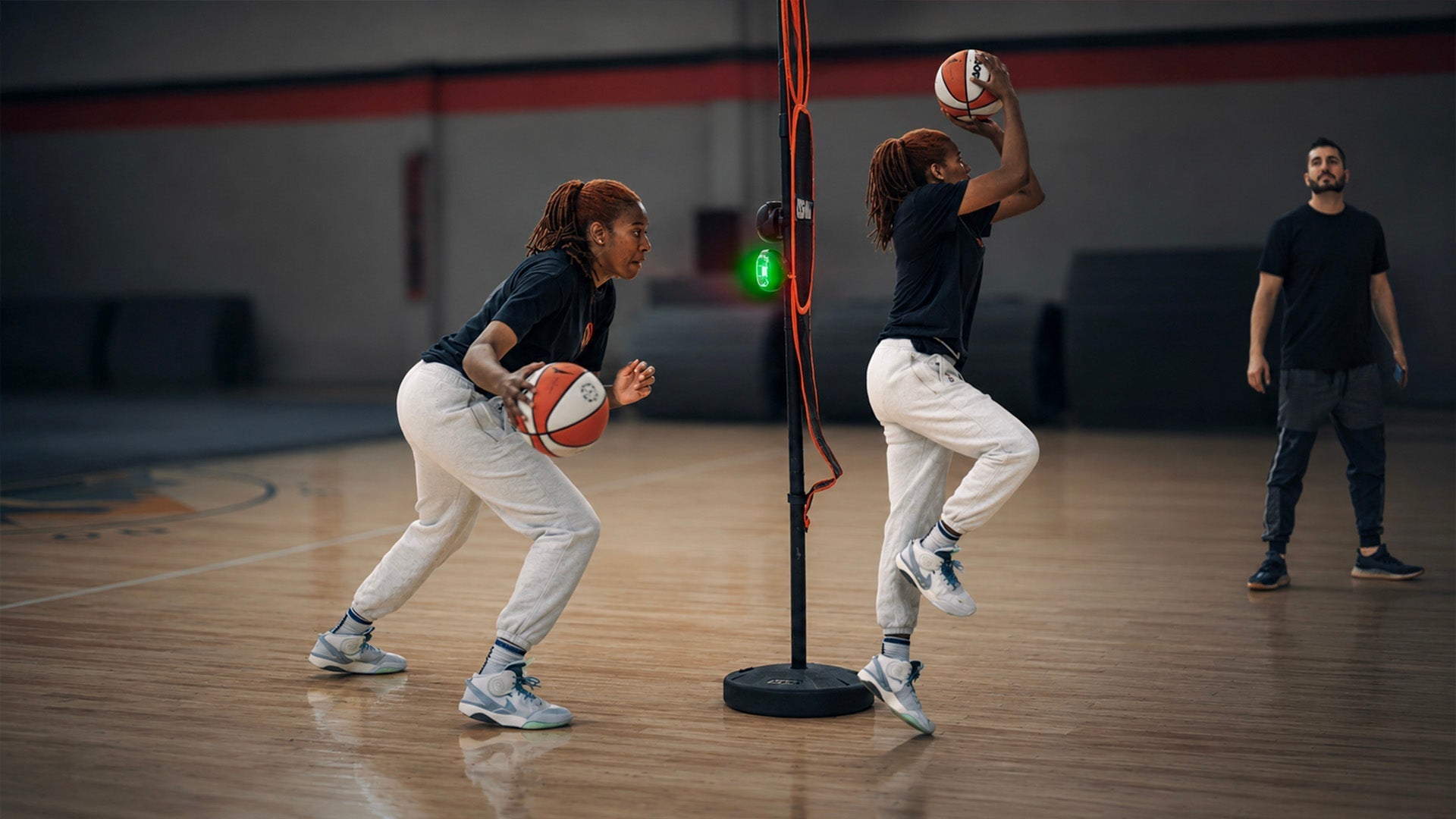

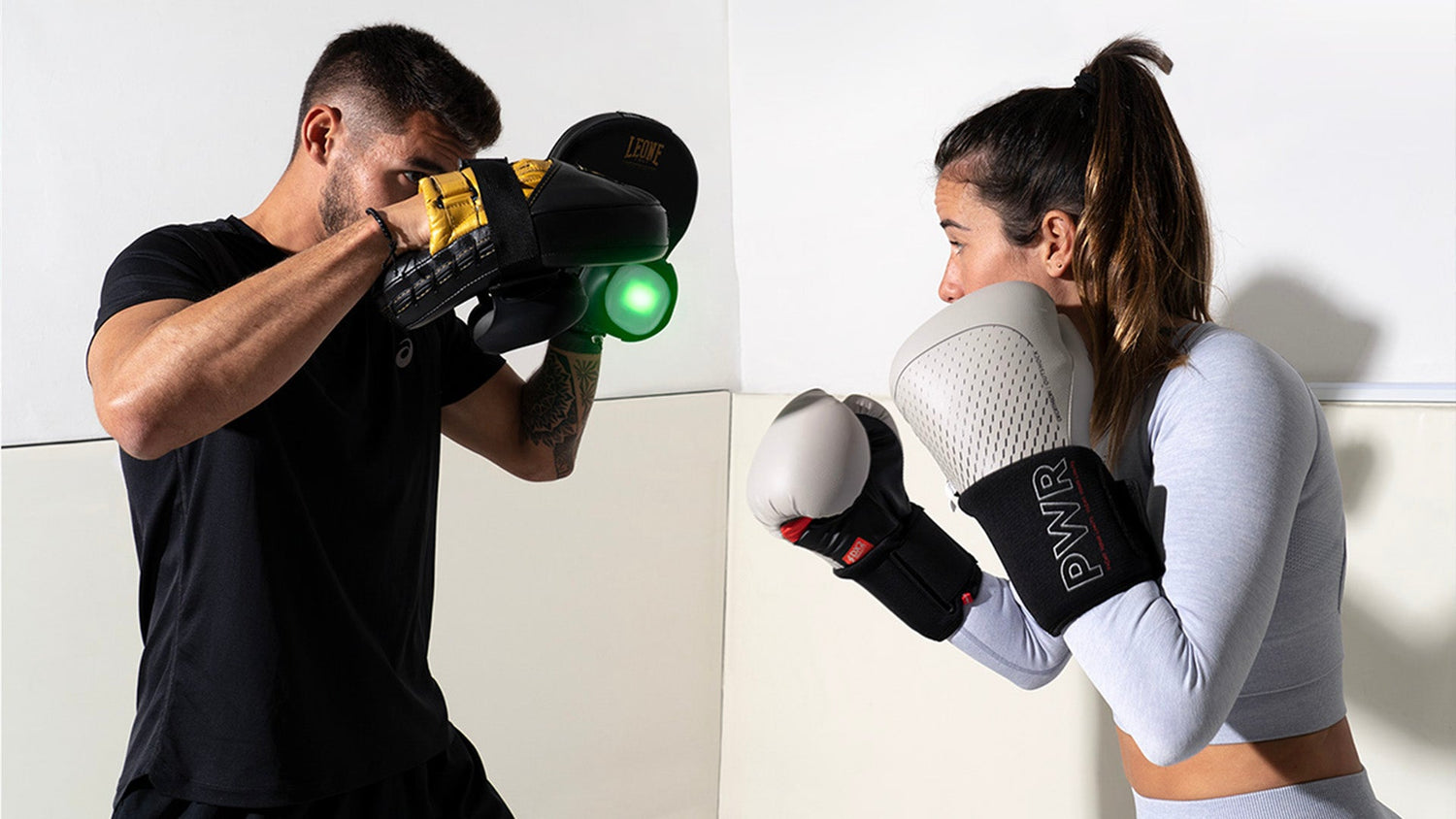
Your fastest athlete is not always the first to solve the situation.
Speed matters. Strength matters. Agility matters. Reaction time matters.
But in sport, your athletes rarely move in a clean, predictable environment. They read pressure. They scan space. They react to opponents. They adjust timing. They choose between options. They move while the situation changes.
That is why performance training cannot stop at physical output.
Your your athletes need to learn how to:
Perceive → Decide → Move
This is where cognitive-motor training becomes important.
For A-Champs, cognitive-motor training for performance is not brain training separate from movement. It is not random reaction drills. It is not faster tapping.
It is professional task design that connects cueing, decision-making, movement, feedback, and progression under controlled but progressively challenging conditions.
The goal is not to make drills more complicated.
The goal is to help your athletes make better decisions in motion.
Performance Is More Than Physical Output
Traditional performance training often focuses on what your athletes can produce:
speed, strength, power, acceleration, deceleration, agility, endurance, and movement quality.
Those qualities matter.
But in open-skill sports, physical output is only part of the picture.
Your soccer player does not simply sprint. They scan before receiving the ball, read pressure, decide whether to pass, turn, carry, or protect the ball, then move at the right time.
Your basketball player does not simply change direction. They read the defender, space, teammate movement, timing, and the next option.
Your tennis player does not simply react to the ball. They read direction, speed, spin, court position, opponent positioning, and recovery demands.
Your combat athlete does not simply move fast. They manage distance, timing, threat, feints, openings, and response selection.
The movement matters.
But the movement only makes sense in relation to the information your athlete is responding to.
That is the performance gap cognitive-motor training is designed to address.

What Cognitive-Motor Training Means for Your Athletes
Cognitive-motor training for performance means designing tasks where your athletes must connect perception, decision-making, and movement.
That means your athlete is not only asked to move.
They are asked to solve a task while moving.
A cognitive-motor task may require your athlete to:
-
read a visual cue;
-
respond to a sound;
-
react to a symbol, number, or color;
-
choose between movement options;
-
scan before acting;
-
inhibit the wrong response;
-
adjust to time pressure;
-
move with control while processing information;
-
receive feedback and progress the next repetition.
The key point is simple:
Your athlete should not only complete the movement. They should understand what information drives the movement.
This is why A-Champs positions performance training under Professional Cognitive-Motor Training, not under basic reaction training. The broader methodology connects perception, decision-making, movement, feedback, and progression in one professional training environment.
Perceive → Decide → Move Under Pressure
A-Champs explains Reactive Intelligence through a simple public model:
Perceive → Decide → Move
Perceive means reading the cue, space, opponent, teammate, body position, timing, or task.
Decide means processing what matters, ignoring distractions, and choosing the right response.
Move means executing with speed, timing, control, balance, and adaptability.
In performance training, this loop matters because sport rarely gives your athletes perfect time, space, or predictability.
They must perceive under pressure.
They must decide under pressure.
They must move under pressure.
You can train this loop by designing tasks where your athlete has to respond to changing information instead of repeating a fixed pattern.
Your sprint can become a decision task.
Your change-of-direction drill can become a perception-action task.
Your reaction drill can become a cognitive-motor task.
The difference is not only the equipment.
The difference is the task design.
Why Reaction Time Alone Is Incomplete
Reaction time has value.
It can measure how quickly someone responds to a signal. It can help create focus, urgency, and engagement. It can be useful inside a larger performance training process.
But reaction time alone is not the full performance problem.
Your athlete’s fast response to a simple light does not automatically mean your athlete is better prepared to read a defender, scan space, choose the right option, or move under real sport pressure.
That is why reaction training should not become the complete definition of performance training.
The better question is not only:
How fast did your athlete react?
The better questions are:
What did they perceive?
What decision did they make?
Did they move in a way that matches the task?
Can the challenge be progressed?
This is where cognitive-motor training goes further.
It places reaction speed inside a larger performance loop: cueing, decision-making, movement, feedback, and progression.
Why Representative Task Design Matters
Better performance tasks should reflect relevant performance demands.
That does not mean every drill must copy the game perfectly.
It means the task should include something meaningful from the situation your athlete is preparing for.
That may include:
-
scanning;
-
timing;
-
space;
-
opponent pressure;
-
direction changes;
-
decision options;
-
sport-specific movement;
-
fatigue;
-
uncertainty;
-
feedback;
-
progression.
A planned agility drill can be useful. But a planned drill does not create the same demand as moving in response to a cue, opponent, teammate, ball, space, or rule.
A clean sprint can be useful. But sport often asks your athletes to accelerate, slow down, redirect, scan, and decide under pressure.
A simple reaction drill can be useful. But performance often requires perception before action and decision-making before movement.
Representative task design helps you make training more relevant to the situations your athletes are preparing for.
It does not guarantee sport transfer.
Transfer is complex. It depends on your athlete, the task, the sport, the environment, the coaching quality, the progression, and many other factors.
The responsible claim is:
Representative task design helps you create tasks that better reflect relevant performance demands.
That is stronger, safer, and more credible than promising guaranteed game improvement. The A-Champs Internal Briefing is clear that A-Champs should not claim guaranteed sport transfer, guaranteed performance improvement, injury prevention, or clinical outcomes without direct product-specific validation.
What Coaches Can Train Through Cognitive-Motor Tasks
Cognitive-motor performance tasks can target many qualities that matter in sport.
These should be understood as training targets, not guaranteed outcomes.
You may design tasks that challenge:
-
visual scanning;
-
attention shifting;
-
inhibition;
-
choice reaction;
-
decision-making under time pressure;
-
movement response;
-
reactive agility;
-
acceleration and deceleration;
-
balance and body control;
-
timing;
-
coordination;
-
adaptability;
-
movement under cognitive load.
The value comes from how these targets are built into the task.
For example, you may ask an athlete to accelerate only when a specific cue appears. Then you may add a second cue, a fake cue, a symbol, a movement rule, or a time constraint.
A task may begin simple.
Then it becomes more complex.
Then it becomes more representative.
That progression is what separates professional cognitive-motor training from random reaction activity.
You Remain the Decision-Maker
Technology can provide cues.
Technology can create timing.
Technology can measure responses.
Technology can help structure progression.
But you still define the objective.
You decide what your athlete should perceive.
You decide what decision the task should create.
You decide what movement should follow.
You observe the response.
You interpret the feedback.
You progress the challenge.
That is essential to the A-Champs position.
A-Champs is not a magic performance tool. It is not a gadget that replaces coaching expertise.
It is a professional system that gives coaches more ways to design, control, and progress cognitive-motor tasks.
How A-Champs Supports Cognitive-Motor Performance Training
The methodology comes first.
The products make it practical.
A-Champs helps you build tasks that connect cueing, decision-making, movement, feedback, and progression.
That is the foundation of Professional Cognitive-Motor Training for Reactive Intelligence.
ROXProX Laser is the flagship A-Champs system for advanced Professional Cognitive-Motor Training. It combines visual, auditory, and tactile cueing with laser-beam sensing, LED matrix cognition, seamless movement, and advanced task design. You can use lights, sound, vibration, symbols, numbers, letters, movement rules, and laser-based interaction to create tasks that challenge perception, decision-making, movement, feedback, and progression without forcing tap-first responses.
ROX Touch is the professional entry point into the A-Champs ecosystem. It supports accessible cognitive-motor tasks through visual, auditory, and tactile cueing, with 12 sensitivity levels that allow you to adjust the interaction to the user, the task, and the training environment.
CogniCage expands the methodology into an immersive facility-level environment. It supports whole-body cognitive-motor tasks involving space, movement, scanning, reaching, jumping, landing, balance, coordination, and 360° interaction.
The product hierarchy matters.
ROXProX Laser remains the flagship proof of the methodology. ROX Touch, CogniCage, and accessories extend the ecosystem without replacing the flagship story. The Brand & Operational Playbook defines this hierarchy clearly and warns against presenting the product ecosystem as equal hero products.

The Transfer Question: Stay Honest
You care about transfer.
They should.
A drill is only useful if it supports the broader training process.
But no responsible company should claim that one product or one training method automatically guarantees better game performance.
Cognitive-motor training does not guarantee sport transfer.
A-Champs does not guarantee that an athlete will make better decisions in competition, improve game performance, or become faster in sport because they completed a task.
The credible position is more disciplined:
A-Champs helps you design cognitive-motor tasks that better connect cueing, decision-making, movement, feedback, and progression under controlled, progressively challenging conditions.
That is still a strong claim.
It respects the complexity of sport.
It respects your role as the coach.
It protects the scientific integrity of the brand.
What You Should Ask Before Designing a Cognitive-Motor Task
Before you add more cues, complexity, or technology, ask better questions:
-
What performance situation is this task preparing for?
-
What should your athlete perceive?
-
What decision should they make?
-
What movement should follow?
-
What pressure or constraint is relevant?
-
Is the task appropriate for their current level?
-
What feedback will guide the next repetition?
-
How should the task progress?
-
Is this training decisions in motion, or just adding noise?
These questions keep cognitive-motor training professional.
They also prevent the common mistake of confusing complexity with quality.
A task is not better because it has more cues.
A task is better when the cues, decisions, movements, feedback, and progression serve the training objective.
Train Decisions in Motion
Performance is more than physical output.
Your athletes need speed, strength, power, and agility.
But they also need to read information, make decisions, and move effectively under pressure.
That is the role of cognitive-motor training for performance.
It helps coaches move beyond isolated reaction drills and toward tasks that connect:
Perceive → Decide → Move → Feedback → Progression
A-Champs gives you a system to design and progress these tasks through Professional Cognitive-Motor Training.
The objective is Reactive Intelligence.
Not faster tapping.
Not random complexity.
Better decisions in motion.