

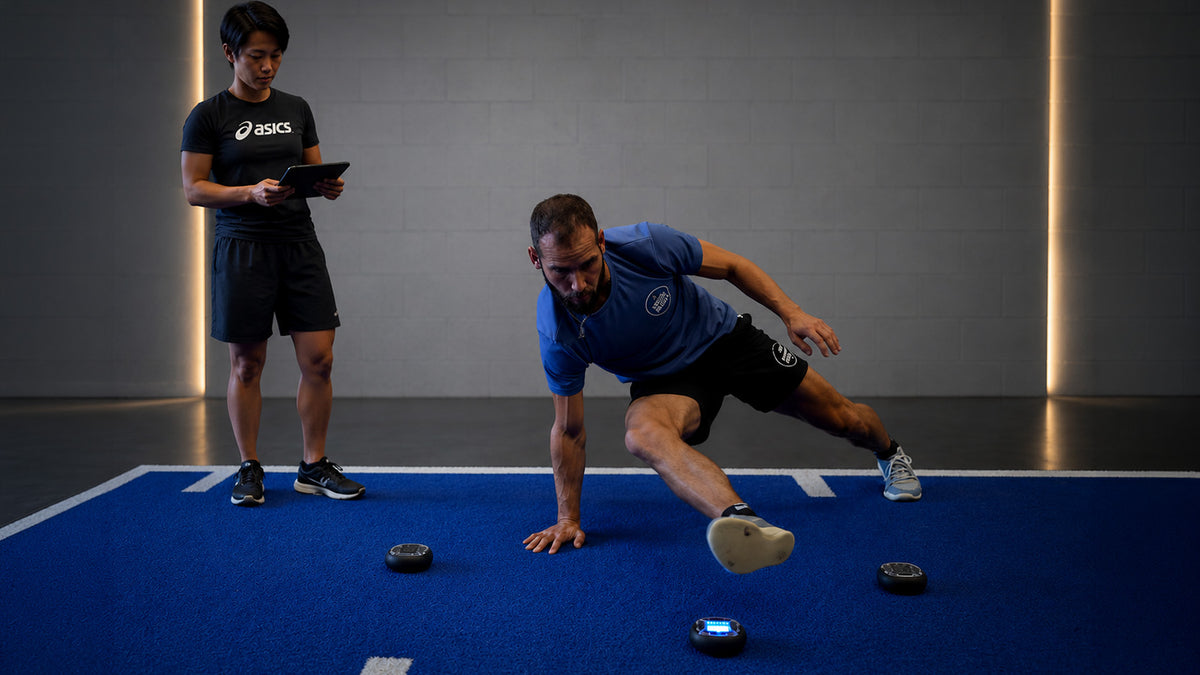
Keep Attention in the Task
Use changing cues and response rules to keep the patient actively involved.
Create adaptive rehabilitation tasks that connect perception, decision-making, and controlled movement — while you remain in control.
Repeated practice is essential. But when every response is known in advance, attention and movement quality can fade.
Use changing cues and response rules to keep the patient actively involved.
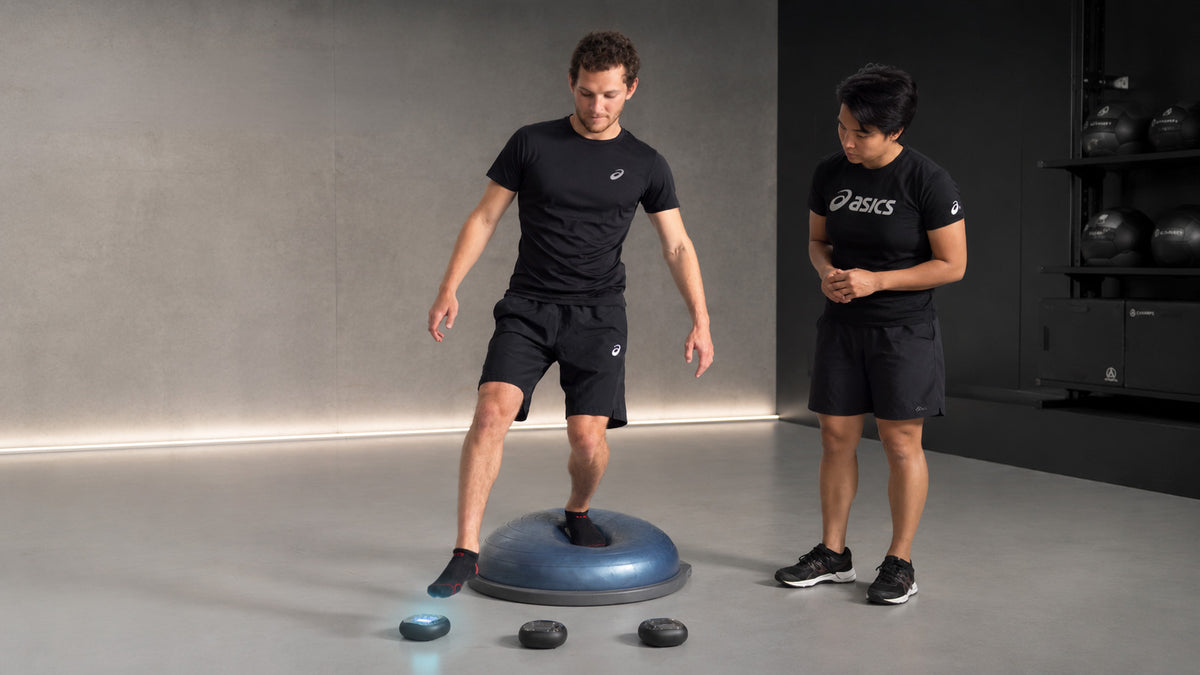
Connect reaching, stepping, balance, or direction changes to information the patient must interpret.
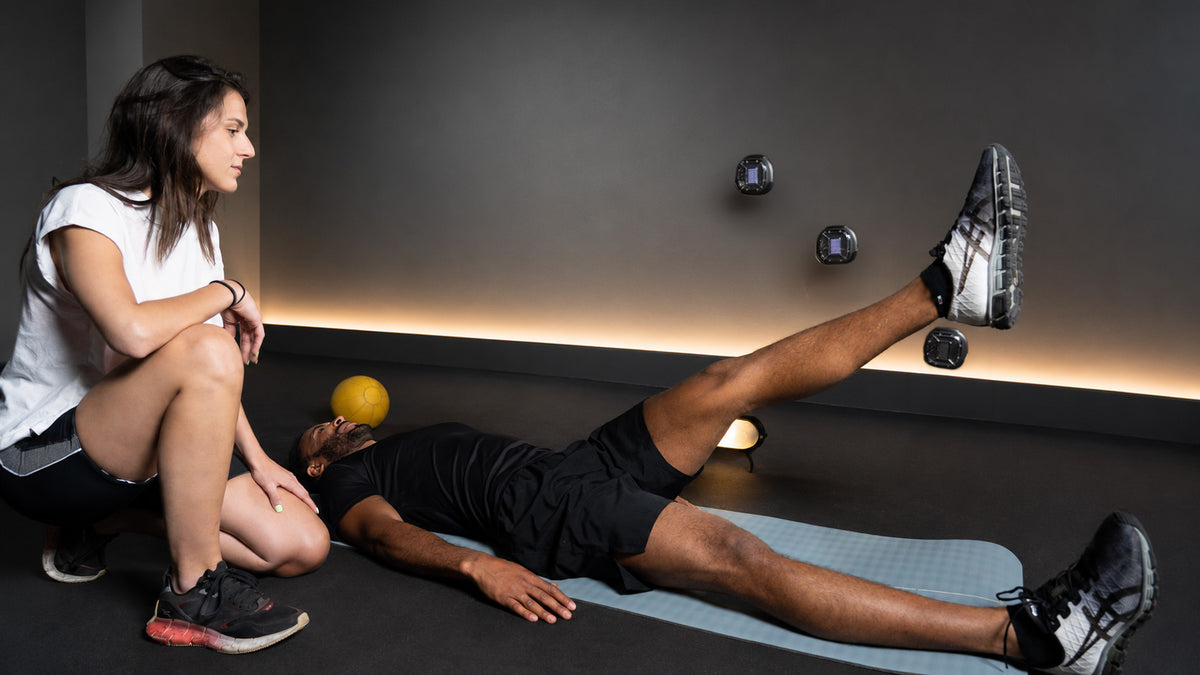
Adjust one demand at a time—cue, timing, decision, movement, or feedback.
See the MethodologyA-Champs helps you add structured cues, decisions, and movement variability without turning therapy into entertainment.
Turn familiar exercises into Professional Cognitive-Motor Training tasks. The patient perceives a cue, decides what it means, and moves with timing and control.
Notice a visual, auditory, or tactile cue, direction, target, or task condition.
Filter what matters and select the required response.
Reach, step, stabilize, shift weight, or change direction under your guidance.
Use an existing exercise, adapt the setup, or create your own task around the rehabilitation goal.
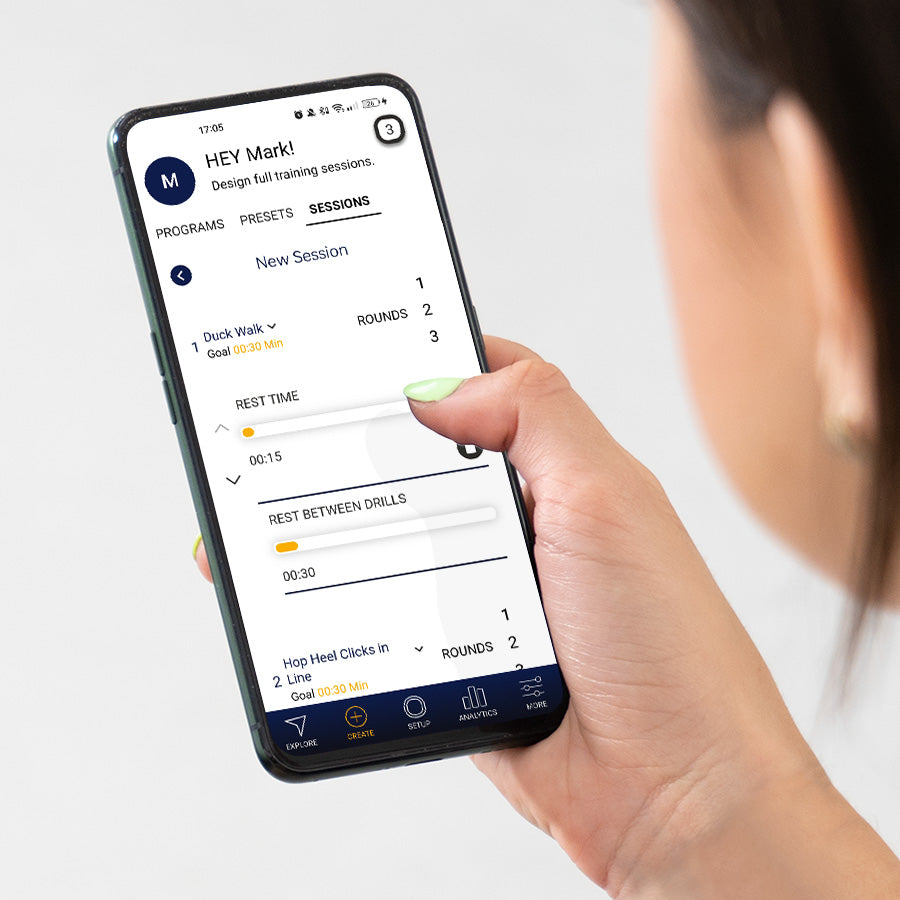
Select an exercise, define the rule, and set the movement demand.
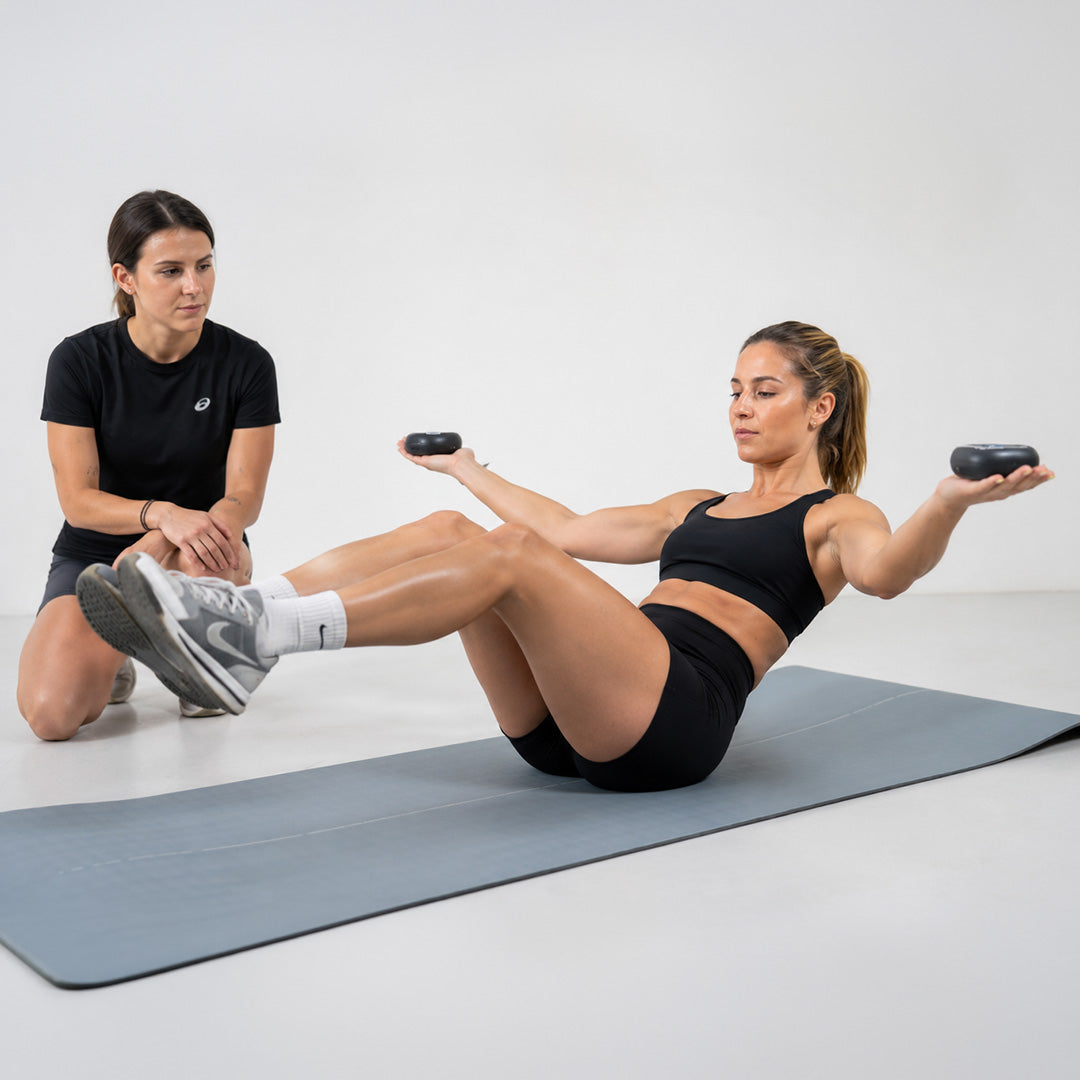
Coach the patient through Perceive → Decide → Move.
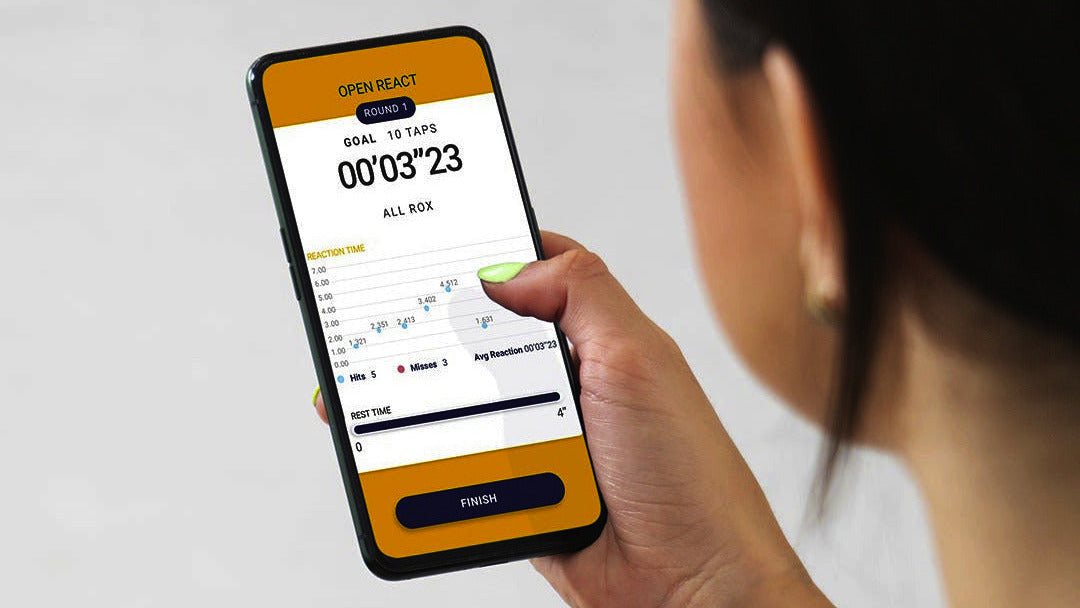
Review returned information and adjust difficulty, timing, or movement demand.
The A-Champs app supports exercise selection, task setup, session delivery, and progression.
You control the goal and progression. A-Champs gives you more ways to shape the task.
Basic reaction-light tasks often stop at see-and-tap. A-Champs helps you build richer tasks with multisensory cueing, decision rules, natural movement, and structured progression.
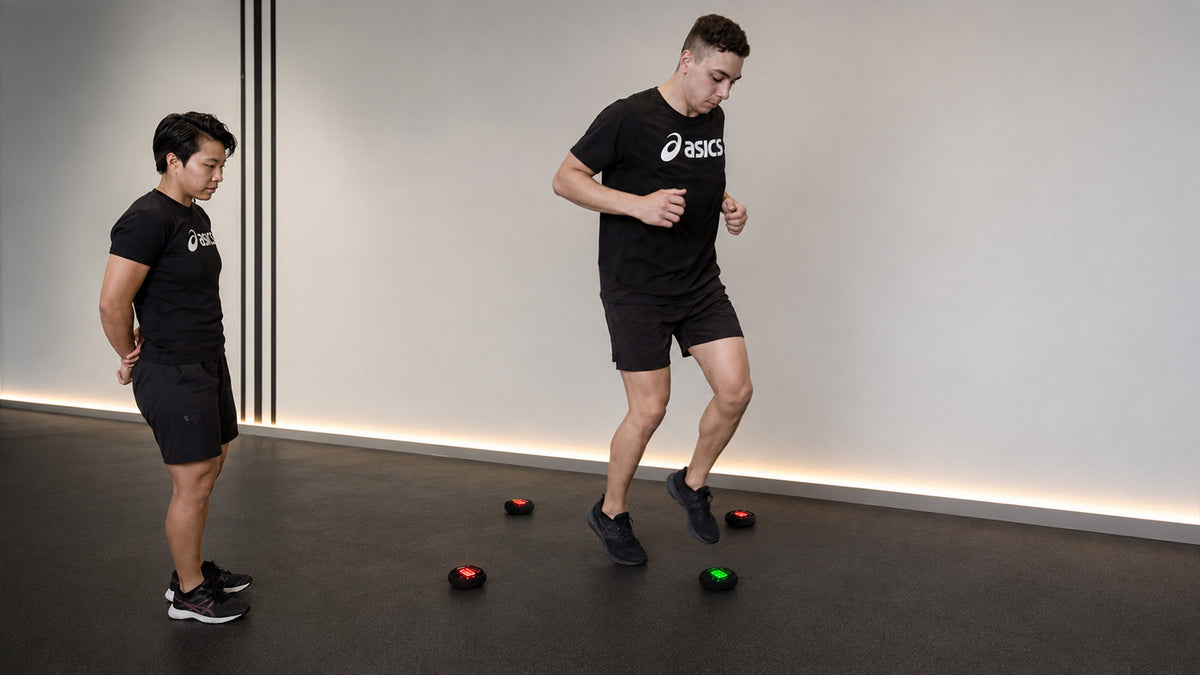
Use visual, auditory, and tactile cues where they fit the task.
ROXProX Laser detects movement through the beam, so the patient can keep moving instead of stopping to touch a device.
Use letters, numbers, symbols, and response rules to add decisions to movement.
A therapist can combine a cue, a response rule, controlled movement, and returned information inside one structured task.
You set the goal, rule, movement demand, and progression.
A vibration can signal the required response during a selected task.
Adjust cue type, timing, decision demand, or movement complexity.
Adapt the same Professional Cognitive-Motor Training method to different goals, ability levels, and professional settings.
Choose the system that fits your space, task design, and level of control. Products enable the methodology; they do not replace clinical expertise.
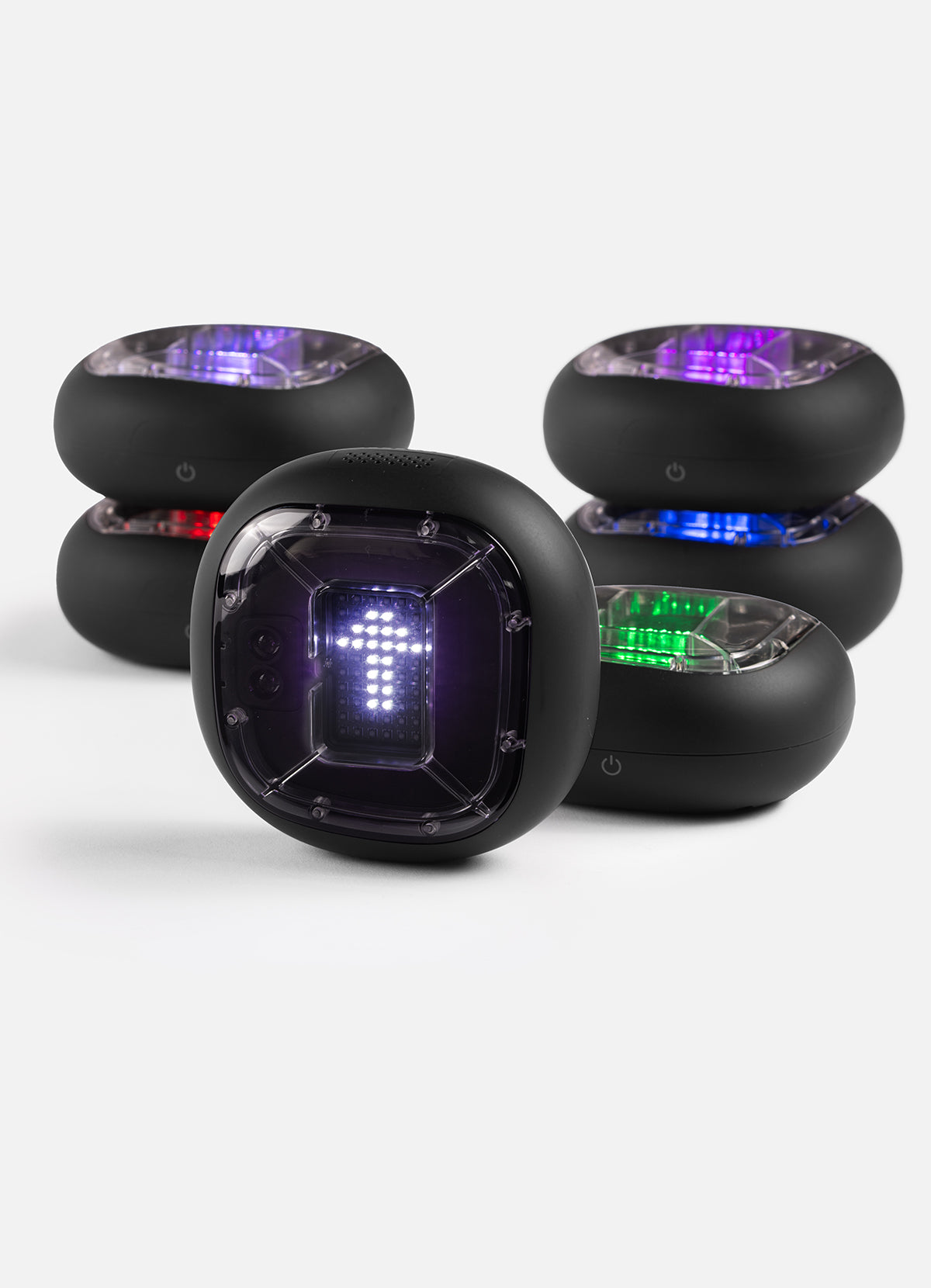
The most advanced system for natural movement, laser-beam sensing, LED matrix cognition, and advanced decision-based tasks.
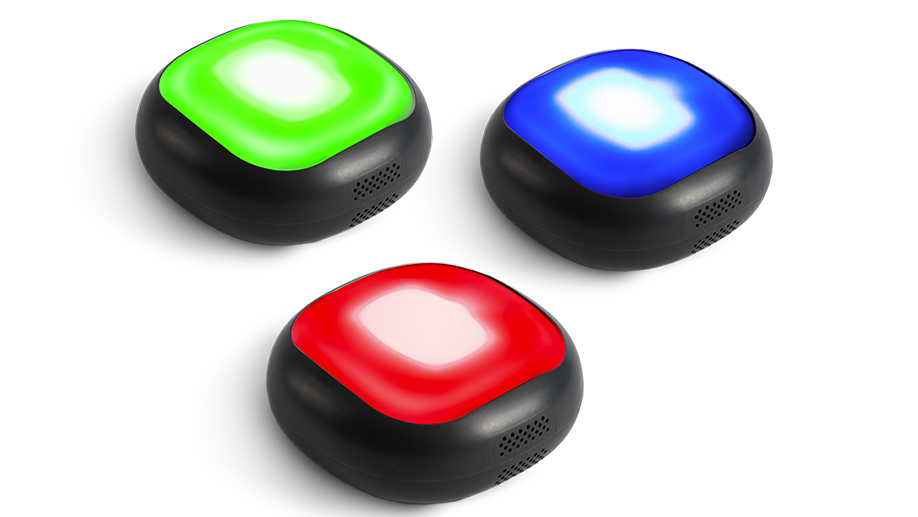
The professional entry point for visual, auditory, and tactile cueing, with 12 sensitivity levels for controlled task setup.
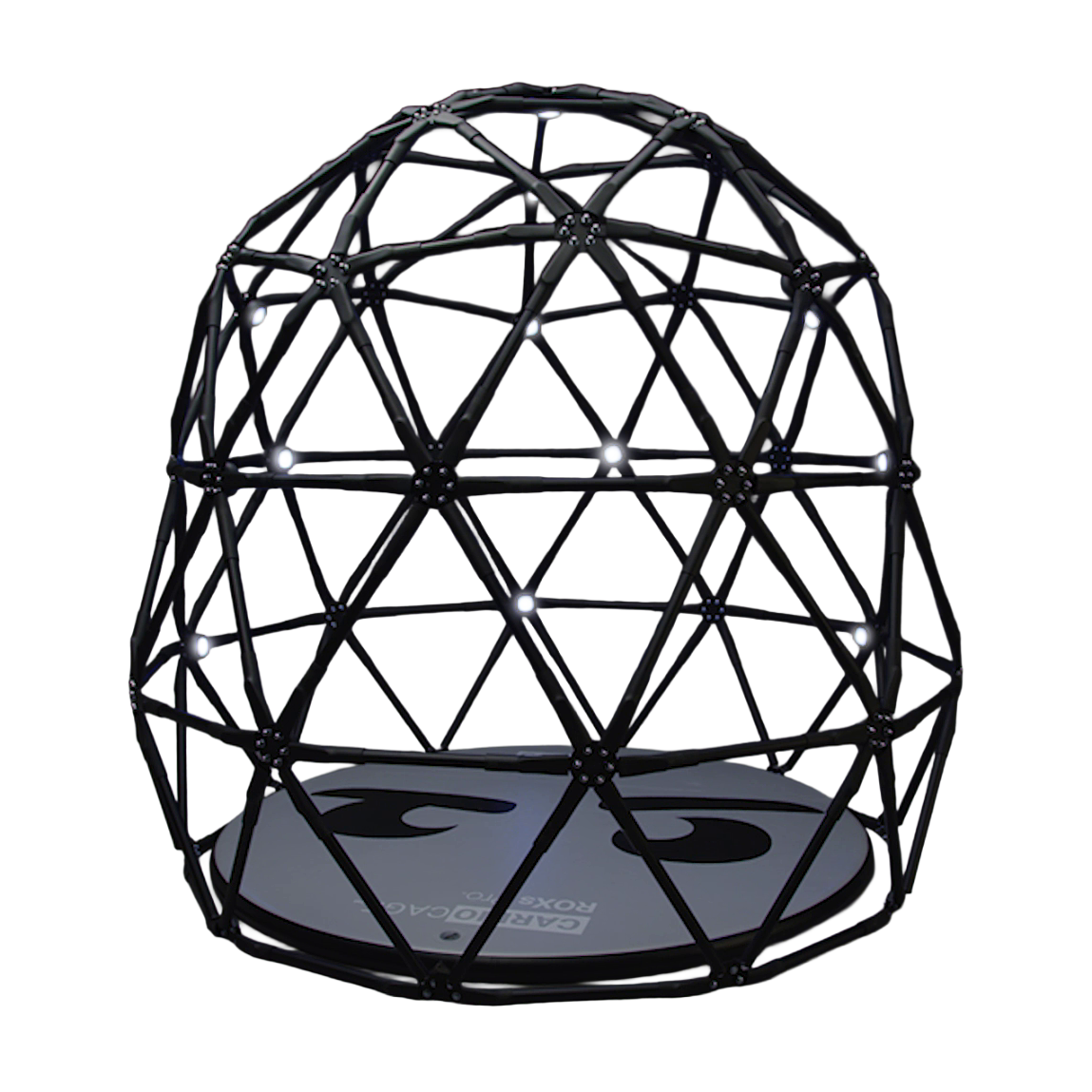
A facility-level environment for whole-body Professional Cognitive-Motor Training at space scale.
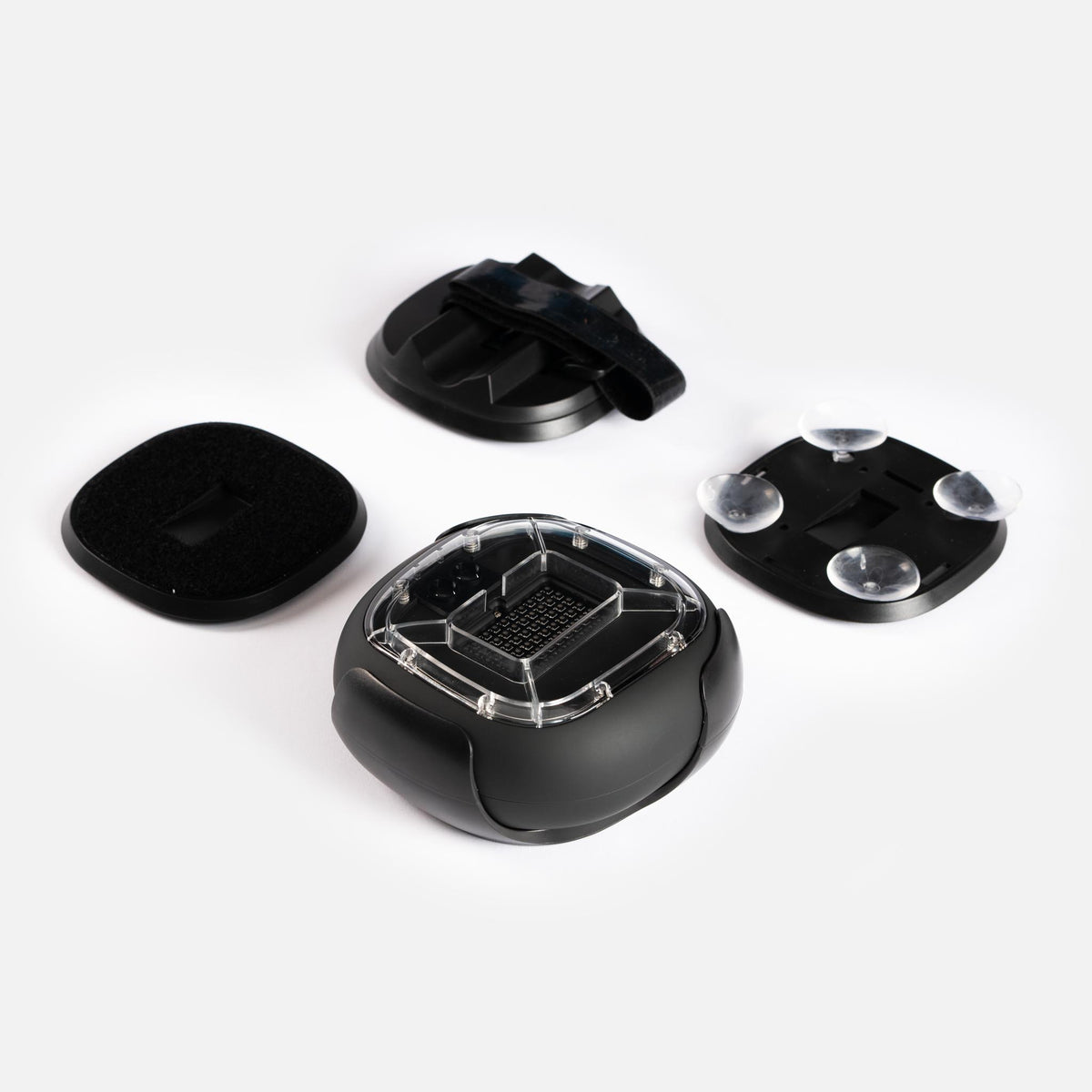
Application extenders for functional, sport-specific, balance, and clinic setups.
You define the rehabilitation goal. You select the task. You guide the movement. You adjust the progression. A-Champs helps you make that work more interactive, adaptive, and repeatable.
It does not diagnose, treat, or replace clinical judgment.
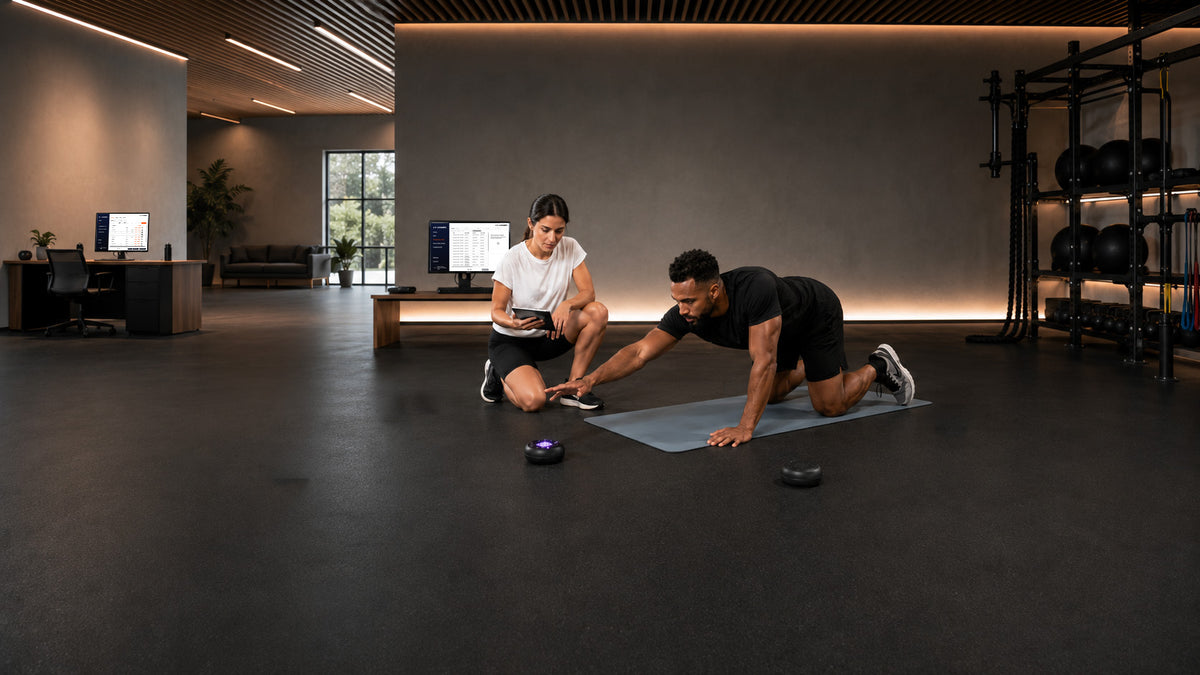
Create therapist-led tasks that connect perception, decisions, movement, and progression — inside a system built for professional workflow.
Core day-to-day training is included with every A-Champs system.
Choose exercises, create tasks, adapt setups, and progress sessions.
You remain responsible for the goal, judgment, and progression.
A-Champs is a professional Cognitive-Motor Training ecosystem. It helps therapists create structured tasks that connect perception, decisions, movement, cueing, feedback, and progression.
Qualified professionals can use A-Champs to design therapist-led tasks for physical therapy, return-to-function, and performance-rehabilitation contexts. You define the goal and control the progression.
No. A-Champs does not diagnose, treat, cure, prevent injury, or replace professional assessment. It supports task design within a qualified professional's rehabilitation process.
Basic systems often focus on visual tapping. A-Champs supports broader task design through multisensory cueing, natural movement, laser sensing, LED matrix cognition, decision rules, feedback, and progression.
ROXProX Laser is the most advanced option for decision-based tasks, natural movement, laser sensing, and LED matrix cognition. ROX Touch is the professional entry point for visual, auditory, and tactile cueing with 12 sensitivity levels. CogniCage is designed for facility-level environments.
Yes. The professional workflow supports exercise content, task setup, custom task creation, and progression. You can start with an exercise, adapt it, or create your own.
No. Core professional day-to-day training is included. Optional subscriptions may support dashboards, analytics, reporting, organization or team management, partner tools, and enterprise capabilities.